Show 863: Papradiste by Mnemonic45 (for Kanal 103)

Papradiste

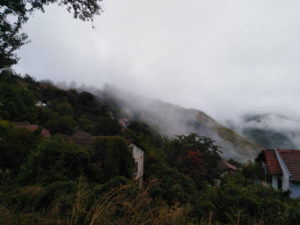
More than a year ago he moved from his native town of Bitola to the mountain village of Papradiste. He made his home there as a host of the mountain hut, a former school building in a now almost abandoned village.

This audio collage is a heartfelt homage to the beautiful village of Papradiste:

the winter loneliness, the birds in early springtime, unexpected encounters and spontaneous music collaborations… in the heart of the mountain different worlds coexist in harmony.

Mnemonic45 (Goce Gligurovski) is a musician and sound artist from Macedonia.

https://mnemonic45.bandcamp.com/

Show 862: Confusion, Reflection, Joy, a radio drama in Sonata Form (Soundart Radio)

Three movements, each exploring our location at Dartington Hall as somewhere where time slips between different years, decades, centuries. In August, when musicians gather for the Summer School, as you wander around the medley of medieval and modernist buildings different musics seep out of every door and window. The musicians and audiences bring and share memories of their visits here over the years, and make new ones.

Participants in the Summer School’s Radio Drama course, run by Soundart Radio, walked, listened and collected. Their studio was the whole of the Dartington Estate, their script was words found on gravestones amongst the ancient yew trees, and their scores were signs around the buildings. Many fragments were then pulled together into three movements. Confusion explores the problems of collective music making in a Covid wary environment. Reflection provides space to mourn and remember. Finally, Joy brings together old memories and new music with attempts at happiness.

Dartington Summer School began in 1948 and has only been cancelled once, in 2020. The planned events would have coincided with Beethoven’s 250th anniversary, and a new work, “Joy” was commissioned for choir and string quartet. In 2021, amongst sudden changes, partial closures and socially distanced outdoor music, Joy was rehearsed and performed for the first time. Snippets of Joy, by John Barber and Hazel Gould, pop up here, as well as many other half formed performances, captured whilst wandering around the site.
Special thanks to Sara Mohr-Pietsch.


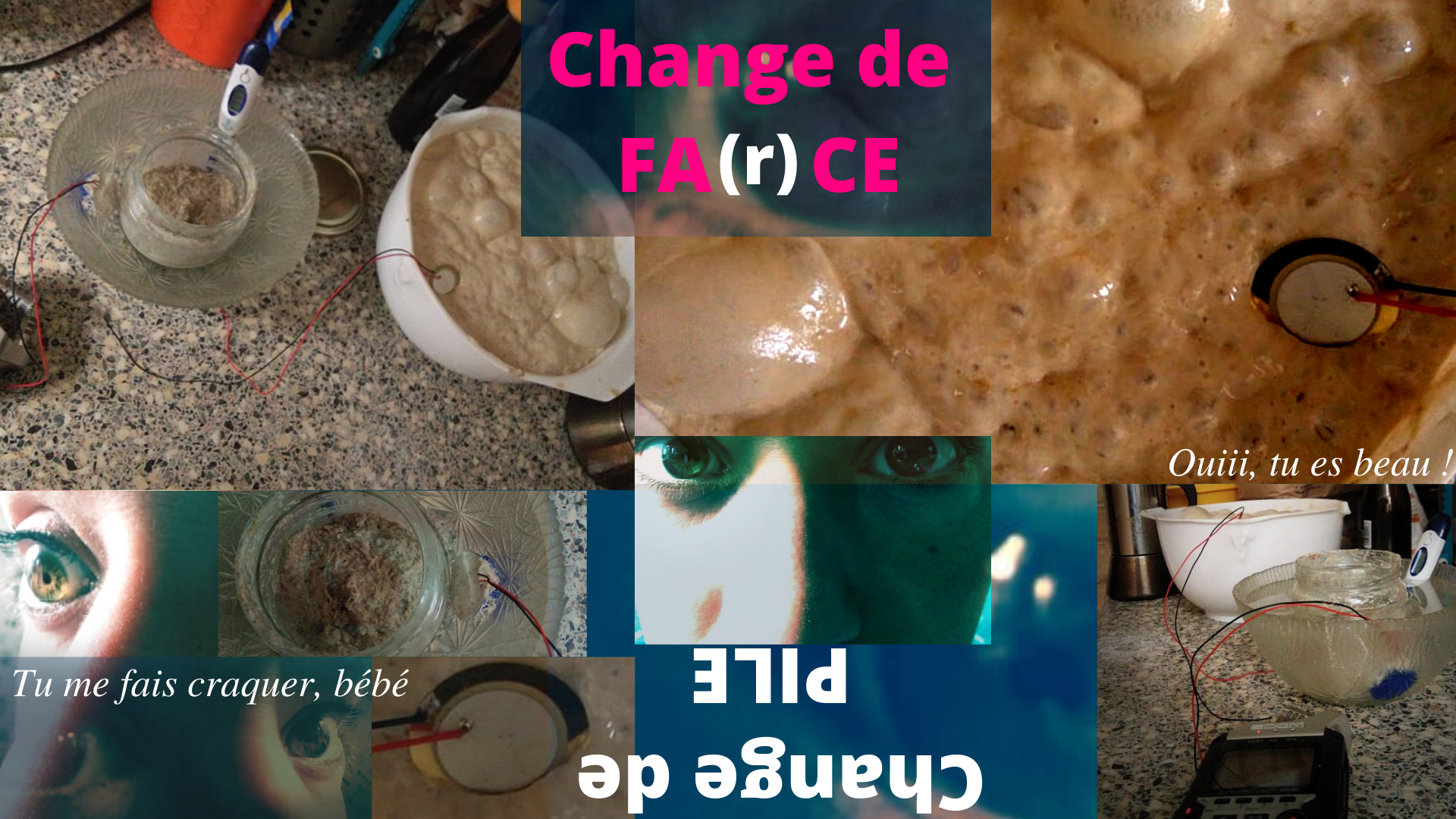
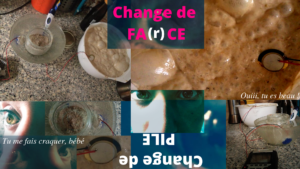
Show 861: Change de FA(r)CE by Mathilde Lacroix for Radio Campus Bruxelles

***
Stop/Play. Change de fréquences… !

Pile ou face ? Et si on jouait à ça pour changer nos perceptions du monde ? Et si on capturait l’extérieur, on le transformait et on le réécoutait un peu plus à notre oreille, depuis l’intérieur ? Je suis sûre que mon bébé serait tout heureux…

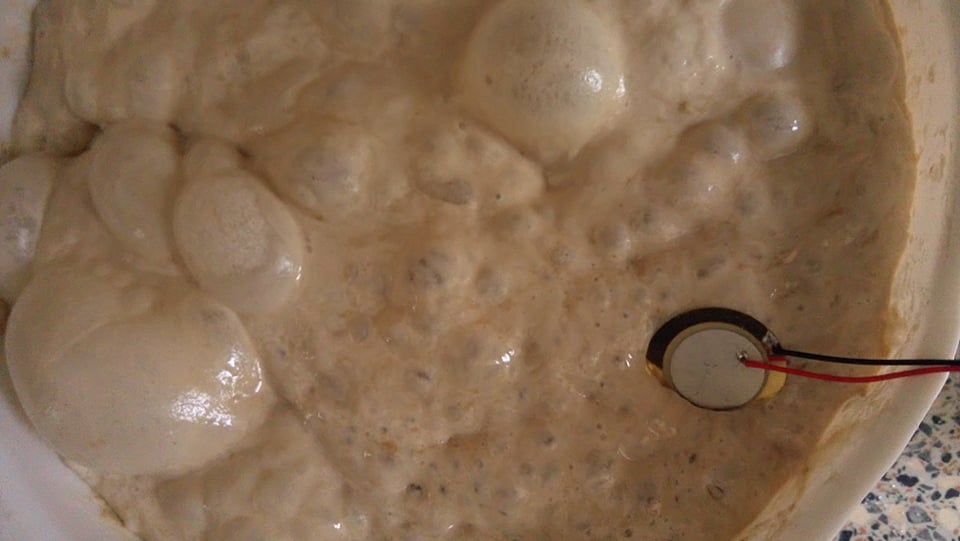
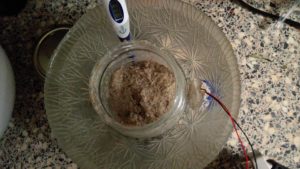
C’est ça le secret de la « Fermentation authentique », garantie «depuis des générations» !
On a un autre secret : « On a du pain sur la planche ! »

Encore une dernière chose et après Stop/Play :
………« Ecoute……. »

Mathilde Lacroix est basée à Bruxelles. Après des études de traduction et de documentaire sonore, elle étudie la musique électroacoustique.
Elle explore les paysages mentaux et physiques, vivants et abandonnés, qui ouvrent à d’autres manières de percevoir et ressentir le monde. Elle s’intéresse à la transformation, aux matières à pétrir, organiques, à la (dé)composition des sons, des mots, des hasards. Concrètes ou abstraites, avec des instruments acoustiques ou virtuelles, dans l’air ou ailleurs, ces matières cherchent à s’émanciper d’une forme définie et à trouver une poésie entre les formes.
Elle collabore régulièrement avec la photographe belge Nathalie Hannecart et l’artiste Aurélie Bay pour explorer trois regards, trois formes, trois joyeuses combinaisons (Les terribles ténébres). Elles ont également exploré la thématique des traces et de l’érosion à travers l’industrie minière et sidérurgique, aux côtés de la graveuse Weronika Siupka (
Kierunek Gruba). Elle a accompagné musicalement le film de Miléna Trivier « Le Murmure des lieux qui nous habitent », et a collaboré à plusieurs reprises avec Maxime Coton, en questionnant la place de la poésie dans la mixité des formes. A travers le projet Living Pages, elle a fait la rencontre du peintre Jamil Mehdaoui.

CREDITS
Création sonore : Mathilde Lacroix
Compositions sacrées : Camille Lacroix
Avec la voix de Franck Seng, comme Youtubeur pétrisseur.
Avec la complicité et le jeu de Shakira & Beyoncé, les chat.x, et le soutien de Xiri Tara Noir dans cette lente fermentation.
Merci à Carine Demange pour son invitation, son écoute et ses bons échanges.

***
Stop/Play. Change frequencies, change your mind !

Aids of tails ? What about playing this to change perceptions of the world ? What about record outside, transform it and ear it more confortable from inside, with a new perception ? My baby would be very happy.

This is the secret of authentic fermentation, guaranteed since several generations !

We also have an other secret : We have a lot to do. In french, we say :
« We have a lot of bread to cook ».

Last thing before to really Stop/Play :

…………….« Listen…. »

Mathilde Lacroix is staying in Brussels. After learning translation and sound documentary, she’s studying electroacoustic music.
She’s exploring mental and physical soundscapes, alive or deserted, and try to open other perceptions to feel the world, and translate it with combinaison of poetical forms. She likes transformation, kneading and organical matter. She likes to decompose sounds, words, coincidences. Concret or abstract, with acoustic or virtual instruments, in the air or somewhere else, there is not permanent definition.
She collaborates with photograph Nathalie Hannecart and Aurélie Bay to explore three regards, three forms, three happy combinaisons (Les terribles ténébres). They also worked with engraver Weronika Siupka on the thematic of coal and steel industry. She also composed soundstrack of Miléna Trivier ‘s movie « Le Murmure des lieux qui nous habitent », and collaborates several times with Maxime Coton, exploring the place/space of poetry mixing different forms. Through project Living Pages, she meets of pinter Jamil Mehdaoui.

CREDITS
Sound creation : Mathilde Lacroix
Sacral compositions : Camille Lacroix
With the voice of Franck Seng as youtuber carrying kneading.
With the complicity and actoring of Shakira & Beyoncé, and the support of Xiri Tara Noir in this long fermentation.
Thanks to Carine Demange to invite me in Radia, for her good listening and exchanges.

Show 860: Invisible Choreography (Radio Grenouille | Euphonia)

A creation from the residence of Radio Grenouille | Euphonia at the University of Toulon: Mer Invisible.

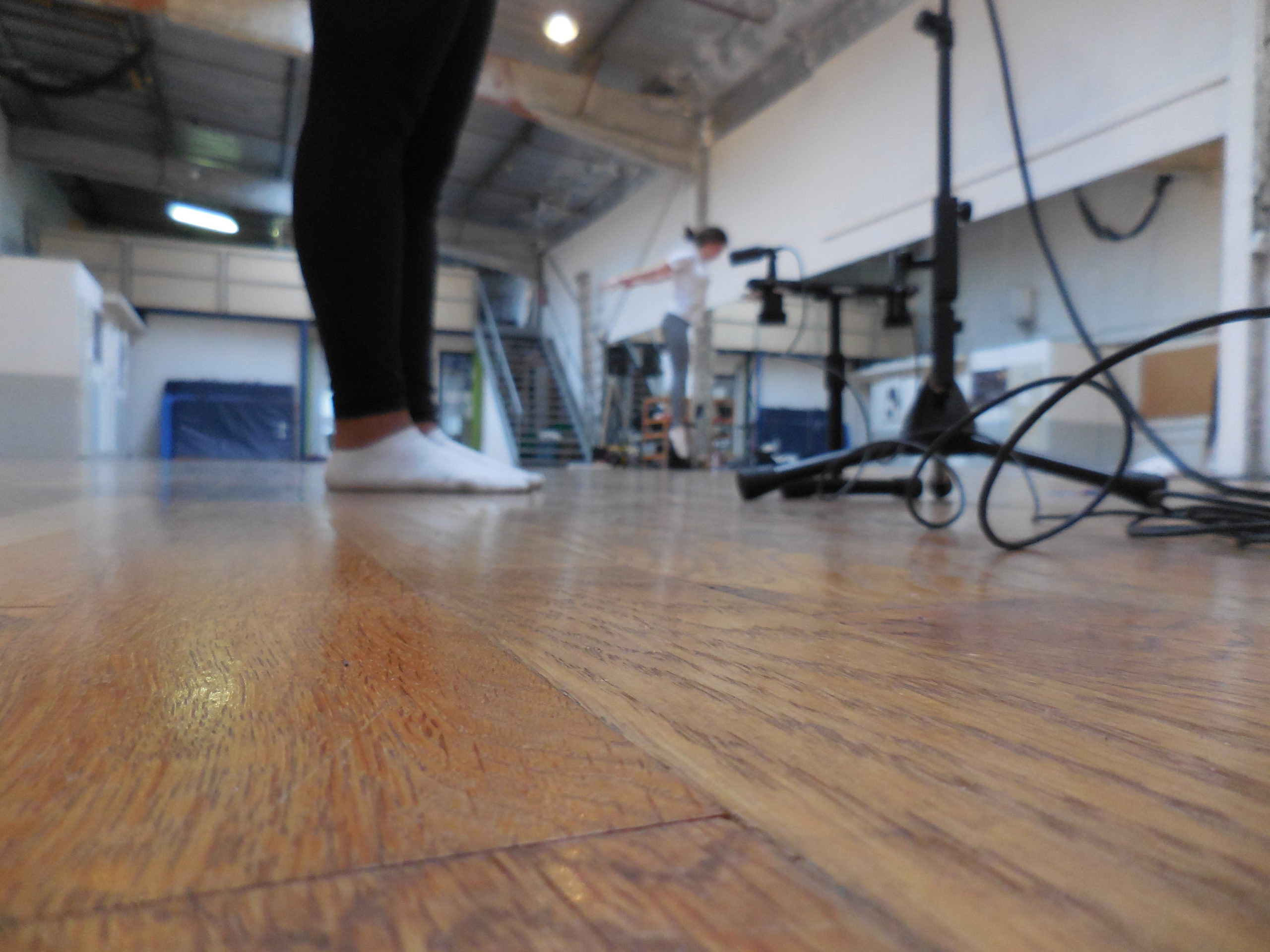
The starting point is a series of “sound” dances proposed by the dance students: voices, body percussion, slides, steps,…
Then, the microphones recorded the dancers’ movements at different heights (micro contact, ambient stereo microphone and proximity stereo microphone).

The selected extracts were played in the multimedia creation software of Pure Data.
A random and mastered arrangement that follows rhythmic intentions so that this sound piece can be danced again.

A composition of movements based on a choreographic sound writing.
An invisible choreography.

Directed by : Jean-Baptiste Imbert & Guillaume Brevet

////////////////////////

Le point de départ est une suite de danses « sonores » proposées par les étudiantes en danse : voix, percussions corporelles, glissements, pas, …
Puis, les micros ont enregistré les mouvements des danseuses à différentes hauteur (micro contact, micro stéréo d’ambiance et micro stéréo de proximité).
Les extraits sélectionnés ont été joués dans le logiciel de création multimédia de Pure Data.

Un agencement hasardeux et maitrisé qui suit des intentions rythmiques afin que cette pièce sonore puisse à être dansée à nouveau.

Une composition de mouvements à partir d’une écriture chorégraphique sonore.
Une chorégraphie invisible.

Réalisation : Jean-Baptiste Imbert & Guillaume Brevet

Création issue de la résidence de Radio Grenouille-Euphonia à l’UTLN, Mer Invisible, soutenue par l’Université de Toulon et la DRAC PACA pour favoriser la rencontre des artistes, des œuvres et des étudiants au cours d’une résidence de création artistique.

Show 859: The Desire Of My Heart by Manja Ristić (RadioZero)

Where does it come from?
The impulse, plucking my neural plexus, leaving behind open doors for the algorithm of consciousness to inscribe the new path. Memories compressed in cells’ membranes, wriggle, dissolve, combust and ripen. Nothing remains in your name* until paths are cleared and psyche’s sediment is purged.

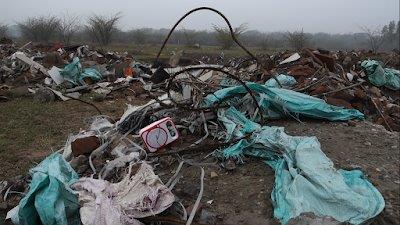
The Desire of My Heart is a collection of intimate interventions extracted from my daily life and observations of my immediate environment from the perspective of transcendental attuning. On the trace of early 20th century esoteric practices of automatic painting and writing, I build a meta narrative in three stages, using field recordings, sonification and improvisation on amplified objects, exploring and manipulating basic frequencies from electrical fields.

Instruments used –
thick jar with the ice cubes
broken radio receiver inside the thick jar with the ice cubes
home fan
radio receiver tuning to a FM scale (excerpts from HRT3 programme about WWII)
wheelchair wheel salvaged from shallow waters in the Adriatic, played with wooden sea debris, electrical coffee mixer, soft xylophone stick and a pine cone
radio receiver placed on the wheelchair wheel
cardboard tube rubbed against a window
refrigerator
kitchen sink
stones rubbed with the soft xylophone stick
baby megaphone toy

field recordings –
Porec marina, ventilation behind the restaurant in the park (June 2021)
hydrophone and field recorder buried in the stranded sediments of a dry Posidonia oceanica algae, Dobre vode bay, Silba island (July 2021)
St. Marco’s Cathedral church bells, Korcula town (December 2020)

instrumental excerpt from the Depression for the Bass Clarinet graphic score, interpretation Vasa Vuckovic (April 2018)

All sounds gathered, played and edited by Manja Ristić contact mic & hydrophone built by Jez riley French Mastering La Plant Studio Belgrade
August 2021

*from the poem by Liu Xiaobo – You Wait For Me With Dust

Show 858: Toxic Temple by Anna Lerchbaumer and Kilian Jörg (Ö1 Kunstradio, guest slot)

Depleted soil, over-asi: dic seas, polluted atmospheres.
People are haunted by what they have suppressed. They can no longer escape the toxic.

In their long-term art project “Toxic Temple”, Anna Lerchbaumer and Kilian Jörg, approach the beauty of oil streaks, the grandeur of techno scrap, the sublimeness of radioactivity and the tran: scen: dence of extinction.

Building on their previous research for their project “Toxic Temple”, the two young artists acoustically and poetically explore the connections between spiritu: ality and tox: isi: ty.
Toxic Temple by Anna Lerchbaumer and Kilian Jörg

The piece in its whole length can be heard on kunstradio.at

Show 857: Sambatas Soundings by Red Forest for reboot.fm

Sounding Sambatas
 
Many other walled towns have been razed to the ground by mighty movements of the earth, and many cities, citizens and all, have sunk to the bottom of the sea.

– Titus Lucretius Carus, De Rerum Natura

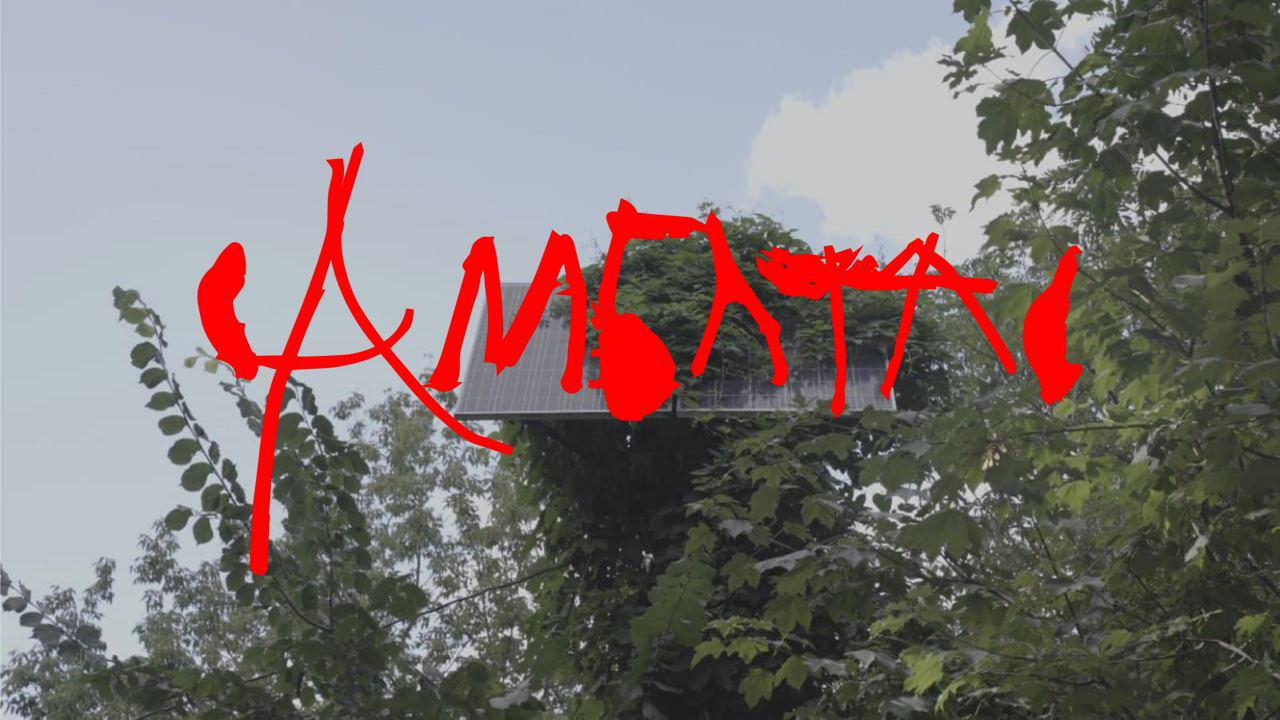
Sounding Sambatas riffs off of SAMBATAS STAGINGS, an experimental performative project that drew on the imagery of urban ruin to find new ways of using the public space in times of social distancing. It took form as a series of process-oriented, collectively produced performances, readings, rituals, writing sessions and audio transmissions that depart from the poem De Rerum Natura by Titus Lucretius Carus. Opening up the hidden potentials of urban and acoustic space, these practices activated the abandoned ruins in a garden off of Petrivska street in central Kyiv. This process culminated in a public gathering and performance on August 19th, 2021.
 
Sambatas is alleged to be an ancient city that may or may not have existed alongside Kyiv. Sambatas is thought to have been raised to the ground in the first millennium AD. Today, in the second millennium, a similar fate is threatening certain parts of the city of Kyiv, like the area of Petrivska street that fell prey to a number of landslides. Sambatas Stagings takes place at the site of those landslides to make Lucretius’ philosophies of flux present in contemporary Kyiv.
 
Sambatas Stagings was realized by Red Forest together with Maryana Bodnaruk, Sasha Dolgiy, Artem Kanischev, Lyuba Knorozok, Oleksiy Kuchanskyi, Nastya Teor, Ihor Sokolo and Nika Zenova, in and around the abandoned territory of Petrivska Street in Kyiv aka ХАЩІ featuring analog synthesizers, drums, a magnetic harp, alto saxophone, vocals and strange interference.

Sounding Sambatas was produced by Nika Zenova with Red Forest.

Red Forest is a collective that works on the intersections of research, art, political imagination, and social actions. Red Forest are: David Munoz Alcantara, Mijke van der Drift, Diana McCarty and Oleksiy Radynski.  

Sambatas Stagings was organized by the Visual Culture Research Center and ХАЩІ with the support from the International Co-Production Fund / Goethe Institut Ukraine / Haus der Kulturen der Welt, Berlin.

Show 856: LOST ORIGINS by GABI SCHAFFNER for radio x

radia season 46 – show #856 (radio x) – LOST ORIGINS – by GABI SCHAFFNER
– playing from August 23 to August 28, 2021 –

LOST ORIGINS
by GABI SCHAFFNER

A journey along the subtle outlines of a fragmented map made up of sounds, signals, songs, chimes and rhythms
From a Buddhist monastery to bird calls to wandering drones, this piece is all about tracking and breaking the kinship between natural and man-made frequencies.
The curtain of time, woven from the thin fabric of oblivion, is sewn together by bumblebees and sewing machines alike, and its hem is embroidered with the song of cicadas and the sound of one hand clapping.

Recordings and composition: Gabi Schaffner 2021
Occasional percussive elements: FX Schroed ‘Air
Folk song: Courtesy / by Romina Casile, 2018 (rominacasile.com)

GABI SCHAFFNER
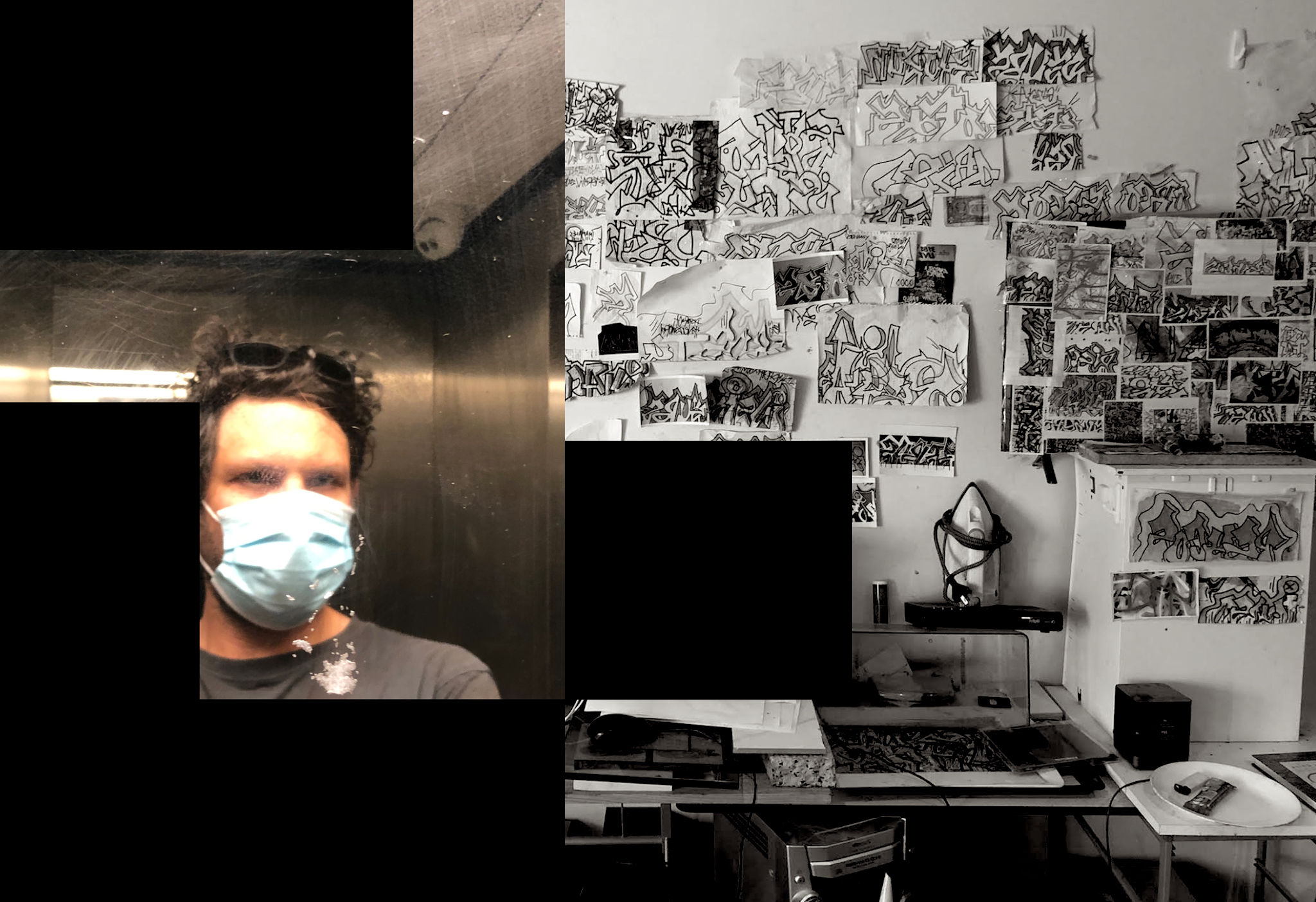
Gabi Schaffner works as an interdisciplinary sound artist and curator.
Her artistic practice is determined by the methods of poetic ethnography in connection with fluxus-like mise-en-scènes, radio-making and sound art performances. Much of her work originates from journeys. Next to her radiophonic productions, Schaffner creates speculative musical genres and inserts them into music history in order to raise awareness for cultural, gender-related and/or geographical conditions.
Schaffner has been realising award-winning productions with Deutschlandfunk Kultur, radia.fm, Hessian Cultural Radio and ABC Australia. Since 2012 she maintains DATSCHA RADIO, a nomadic transmission project that links the medium of radio to current ecological issues.

Find out more about DATSCHA RADIO at www.datscharadio.de
and about GABI SCHAFFNERs projects in a broader perspective at www.schaffnerin.net

credits:
great many thanks to GABI SCHAFFNER for LOST ORIGINS … and we also say thank you to her artistic collaborators, contributors and donators, especially FX Schroed ‘Air and Romina Casile!

metadata:
LOST ORIGINS by GABI SCHAFFNER
radia production: miss.gunst [GUNST + radiator x]
production date: august 2021
station: radio x, frankfurt am main (germany)
length: 28 min.
licence: (cc-by-nc-nd) GABI SCHAFFNER
www.radiox.de – www.gunst.info – www.datscharadio.de – www.schaffnerin.net

additional info:
includes radia jingles (in/out), station and program info/intro (english)

links:
radio x & radiator x: www.radiox.de – www.radiox.de/radiator-x
GUNSTradio & radiator x: www.gunst.info – www.gunst.info/radiator
Gabi Schaffner: www.datscharadio.de – www.schaffnerin.net

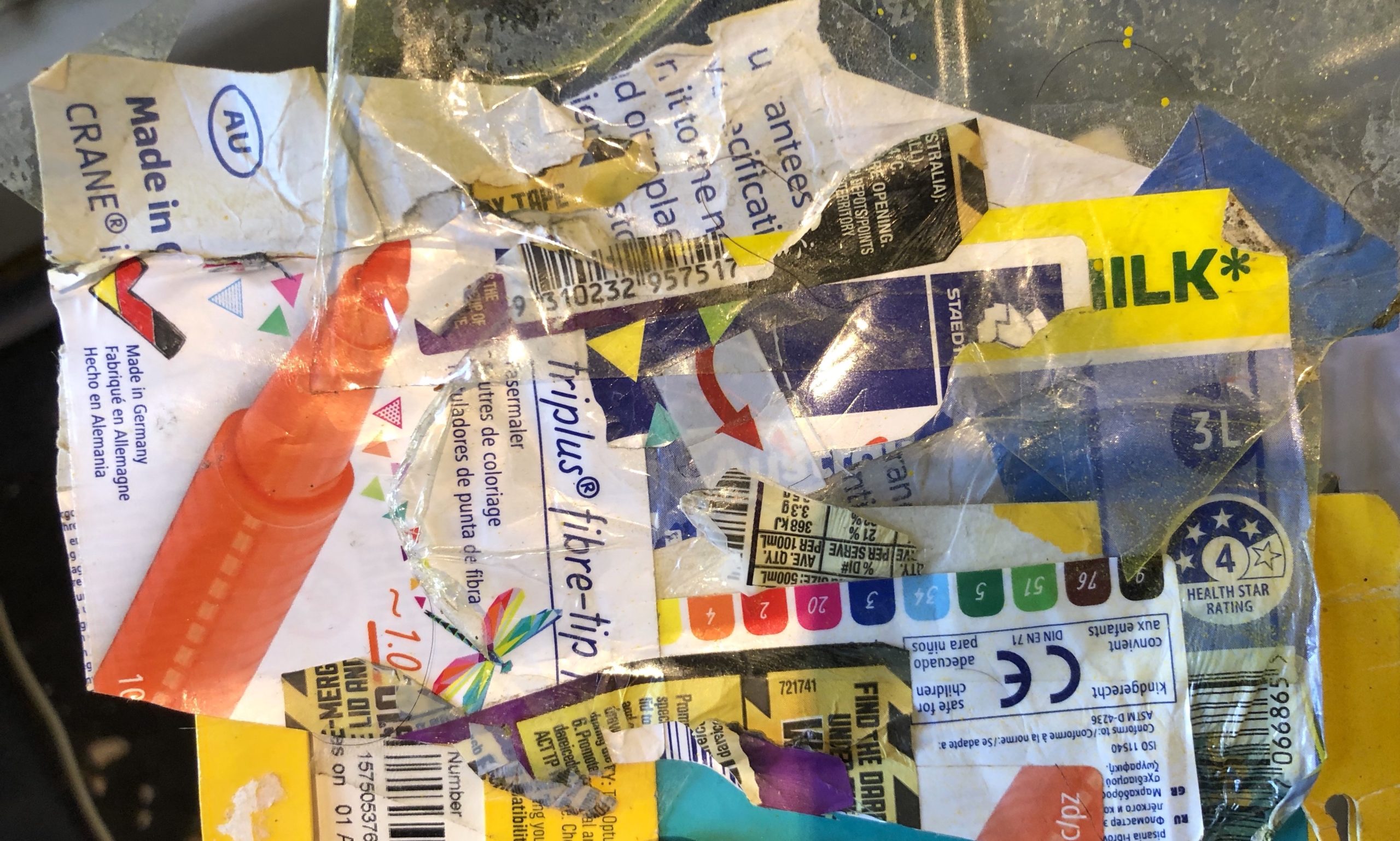
pics: (c) Gabi Schaffner

Show 854: Conditioning Silence: a Sound Recording for the Living and the Dead, by Martin Kay (Radio One 91FM)

++++

Conditioning Silence: a sound recording for the living and the dead  

“Towards the end of 2020, about a month after our (Melbourne’s) 111-day lockdown, my brother passed away in his single-room apartment in a rooming house for people requiring special care. He was a brilliant, troubled and intense person who had a profound influence on my life. 

In the days following his death, my mother and I went to his apartment to retrieve some of his possessions and finalise his tenancy. Stepping into his room proved to be one of the most intense experiences of my life. His presence lingered on through his strong odour and his highly idiosyncratic and personal selection and assemblage of various objects scattered around the room. The whole experience felt like I was trespassing into someone’s mind and world – a world which would normally demand some sort of invitation and regulation.  

After our initial visit, I had a strong urge to come back to his room alone, with no criteria or time constraints, and just sit and meditate; attempt to experience the space as he arranged it, as he lived it, and in doing so attempt to connect with him on some level one last time.  

Two days later, in 35 degrees heat, I went back to his room and sat down on his red lounge chair; my feet resting on the spot where he most likely took his final breaths. As I fell into a state of meditation, I couldn’t help but drift off and inadvertently focus my attention on the sounds of the busy world emanating from the other side of his window: the passing of traffic, the brakes and compressors of busses and trucks, car doors shutting, sirens, birds, wind in the trees, people going about their daily lives with their own rhythms and objectives.  After focusing on this busyness, I began to develop an appreciation for the contrasting yet interconnected acoustic conditions of his room which possessed a perfect stillness, a serenity, a sense of containership. A sense which spoke of protection, privacy, belonging and home.  

My attention then drifted towards the sounds emanating from his door and walls. The sounds of a semi-private residential rooming house: the faint echo of footsteps, music playing, elevator bells, residents pottering about, conversations, etc,. Whilst subtle and faint, these sounds were charged with a particular level of intimacy, delicacy and vulnerability. 

At this point, I started to become consciously aware of myself listening and realised that this listening was unlike anything I’d experienced before. The outside world appeared to have slowed right down and my auditory perception seemed to be completely defined by the withdrawn and solitary conditions of my dead brother’s room. No longer was I implicated with the world at large, with its rhythms, concerns and demands, but rather I was momentarily enmeshed in a liminal space between the living and the dead. A one way space  in which I could observe without the relational constraints of being observed.  

With this sonic placement in mind, I then started to wonder how such sounds may have presented themselves in the final moments of my brother’s life. What meaning might they have possessed? What weight might they have carried? What stories might they have told?  In pondering these questions, I was suddenly hit with an acute realisation that all these public, semi-private, private and so called ‘mundane’ urban sounds were in fact absolutely extraordinary; possessing all the secrets, knowledge and intricacies of our universe and just as magnificent and precious as anything one could ever imagine. And,  just like the incomprehensible rhythms and actions of my brother’s life, these sounds in no way needed qualifying or explaining. They were perfect as they were and appeared to exist well beyond the boundaries of my own level of comprehension and appreciation.   

The next day I decided to come back and record his room in order to hear what sound the microphone could shed on the situation. I recorded myself both observing a period of silence and recounting out loud these very reflections from a range of different acoustic perspectives in his space. Including, a stereo room recording using two spaced omnis, the sound of my own body using a geophone, the sound of his walls and floor recorded through a contact mic, weighted down by some of his personal possessions.   

These recordings don’t seek to offer a morbid representation of listening in the final stages of one’s life, but rather can be heard ­­ as an exercise in searching for sound in a special place and then reconnecting to that place through the body or prism of written sound.” 

This work is a precomposed iteration of a performance piece first realised as part of Starlings – Inhabitation Spatial Sound Showcase at McClelland Sculpture Park+Gallery, Langwarrin, Victoria, 27 February, 2021.

Dedicated to my loving brother Maurice Kay. 

– Martin Kay, 2021. 

++++

Martin Kay is a Melbourne-based sound artist whose current interests lie in producing environmental sound recordings that can be understood as coming from a type of second person perspective; charged with a degree of emotional resonance and psychological alterity. Through employing a technologically limited (recording focused) approach, he strives to experiment in-situ with a range of recording techniques that produce estranged representations of the environments and situations that he engages with, providing a material body through which to consider and reimagine his surrounds.

Martin’s works have been published through 3LEAVES, AVANTWHATEVER, BCSC, and/OAR, Earwitness, Herbal, MOOZAK and Espaces Sonores.

++++