Tag Archives: guest slot

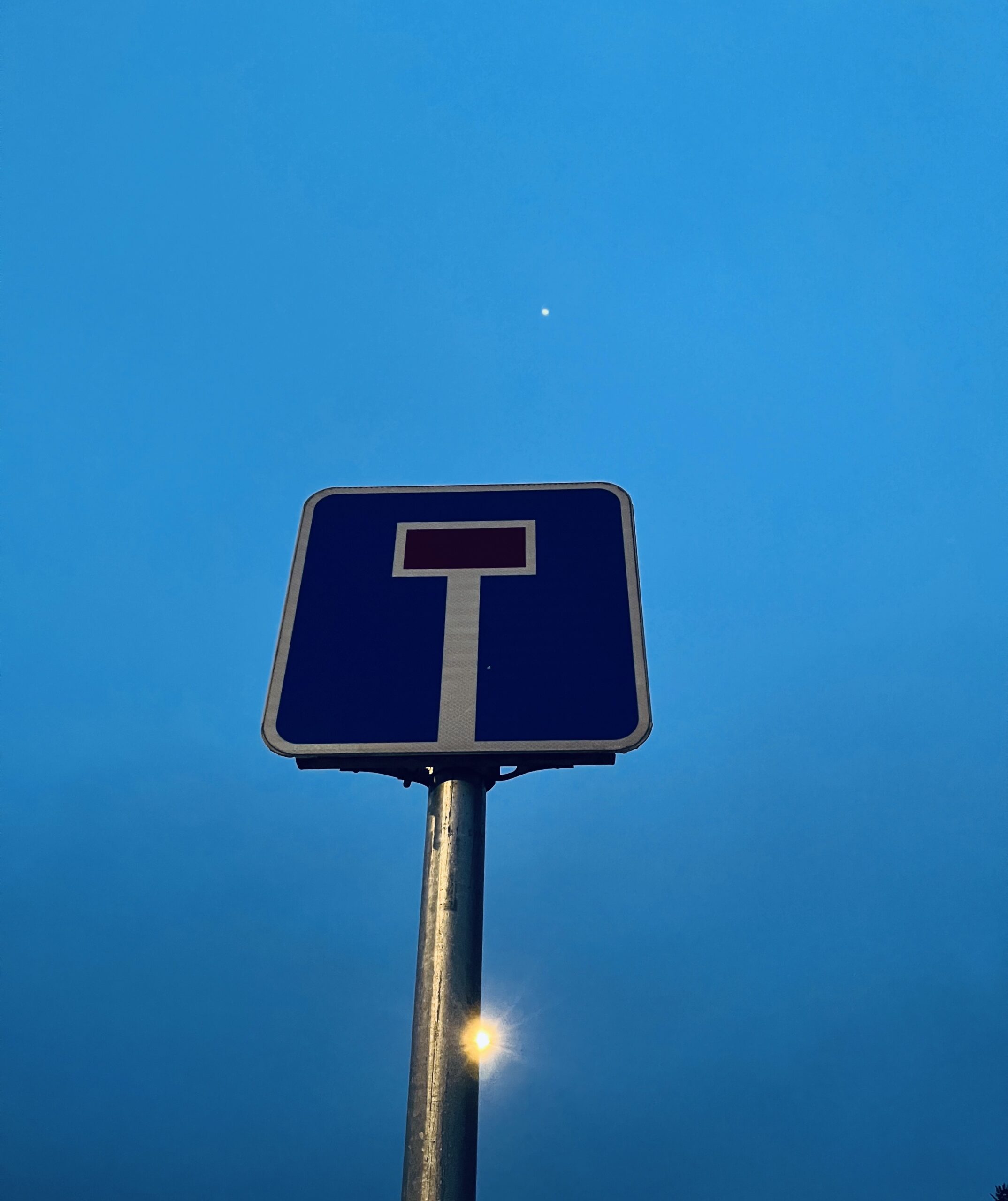
Show 1124: Cul-de-sac by Radio Atatakai (Guest Slot)

Cul-de-sac Show

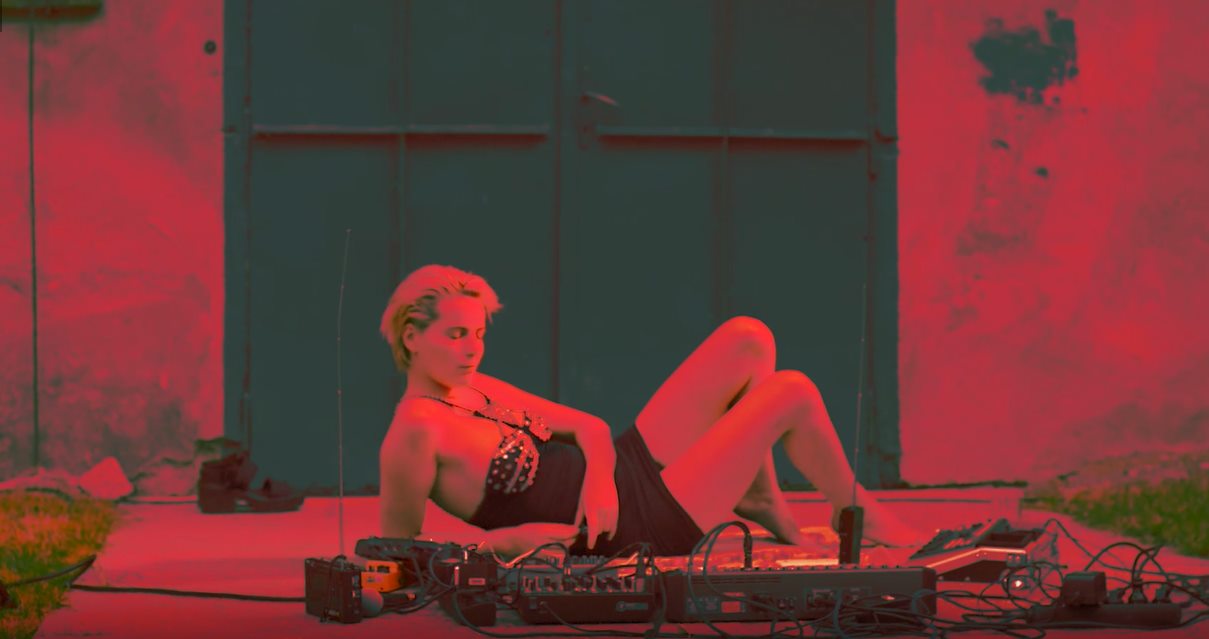
Radio Atatakai is a radio art project and station run by artists Tata Frenkel and dr. Jan Glöckner. Jan’s research interest is choreographic potential of fungi and humans, with a focus on biotechnology, deep tank fermentation, radio and dance. And Tata’s artistic practice encompasses radio, radio-acoustic instruments, diagrammatic drawings, and performative narratives in which the limits of articulation, themes of health and care, and the communication physics intertwine. Radio Atatakai calls itself a tiny intergalactical station that runs two big sub-programs called “Autonomous education for radio spectrum” and “Fundamental principles of permanent fun”. But maybe that’s the least interesting thing about it. Jan lives with rapidly progressing ALS, while Tata is Jan’s main caretaker. Hence the radio exists in the routine of palliative care. Since the beginning of the Radio Atatakai, it has been transmitting through the high resistance of medical crisis, it was and still is bringing meaning, ground and freedom to create, communicate, share and just to stay yourself when the disease takes one’s ability to participate physically. Radio Atatakai wants to emphasize voices, unseen bodies, radio sky that belongs to everybody. Palliative arts is something that cares for the end, doesn’t ignore it, doesn’t mystify it, it is about care in multitude of its forms. At the same time, for us, it mainly affects the framework, the flexible curation of the transmissions – station is completely adjusted so it’s good for one’s condition, so it’s fun without any damage to energy levels, a producer is also a caregiver, we totally live by unpredictability, by easying the symptoms.

In this show, we have a small restrospective trip that happens somewhere outside. Music and editing by Tata Frenkel. Voices: Jan Glöckner and Tata.

Show 1112: The Sonic Epidermis of Lake Léman by Paul Courlet (Guest Slot)

Radio drama 2026 by Paul Courlet
produced by the International Institute for Research for Radio and Magic

An introduction to the concept of the undulatory epidermis.
This is the story of Jaklos, a young man who, following in the footsteps of his uncle Perdida, embarks on a long journey that will take him to the shores of Lake Léman, where he will make his fortune. In this epic tale, Lake Léman exerts a fascination over him that goes far beyond mere aesthetic admiration.
Very quickly, the lake will become an essential element of this tragedy, representing far more than a mere detail of the landscape, as it exerts a profound influence on his psyche. Like an oracle, it will reveal itself to be an evil creature, and Jaklos will not be its only victim.

A radia guest slot from L’Institut International de Recherche sur la Radio et la Magie
https://iirrm.ch/

Epiderme sonore du Léman

Œuvre radiophonique 2026
Par Paul Courlet produit par l’Institut International de Recherche sur la Radio et la Magie

Introduction à la notion d’épiderme ondulatoire.
C’est l’histoire de Jaklos, un jeune homme qui, suivant les traces de son Oncle Perdida, entamera un long voyage qui le conduira au bord du lac Léman où il fera fortune. Dans cette épopée, le lac Léman exerce sur lui une forme de fascination qui va beaucoup plus loin que la simple admiration esthétique.
Très vite le lac va devenir un élément essentiel de cette tragédie, et représenter bien plus qu’un simple détail du paysage, agissant sur sa psyché. À la manière d’un oracle, il se révélera être une créature maléfique et Jaklos n’en sera pas la seule victime.

Show 1077: Entrances as Other Exits By Andrew Backhouse (Guestshow)

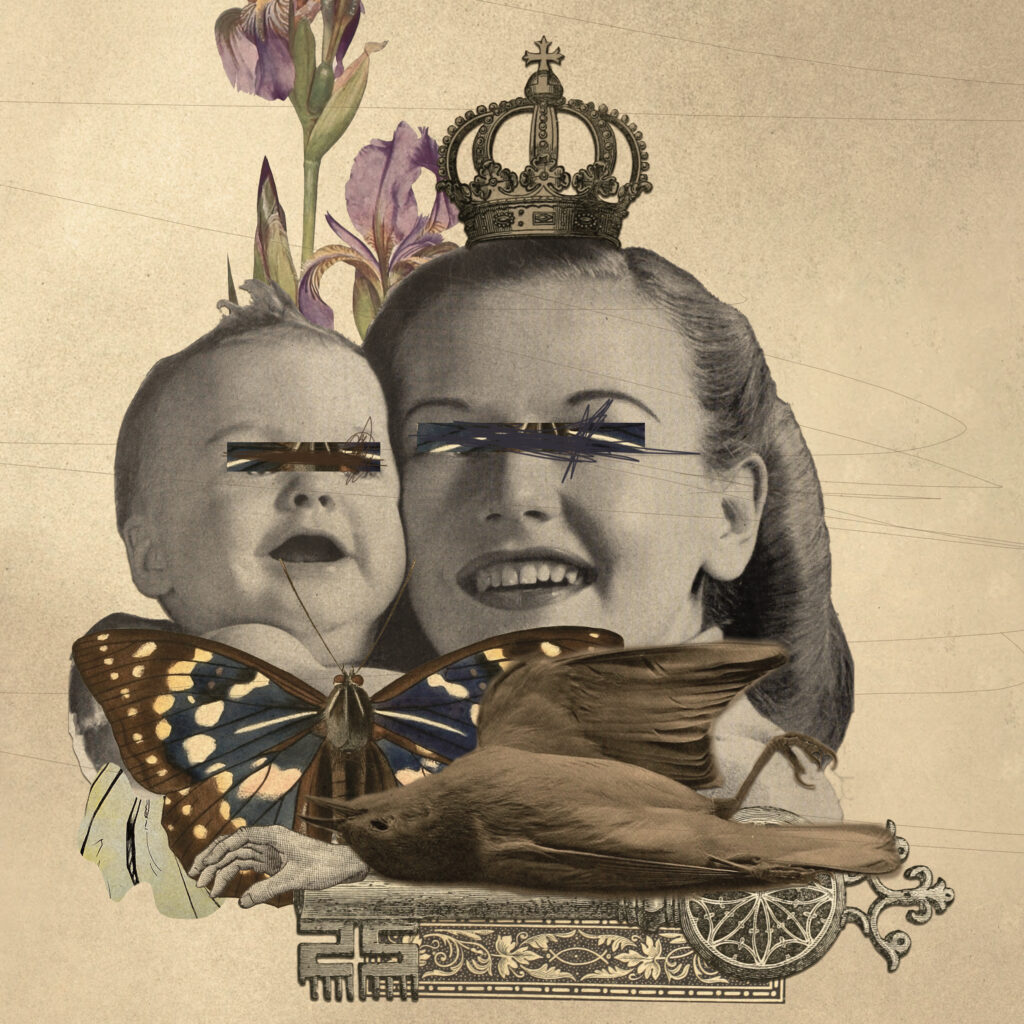
Surreal collage of a smiling woman and a baby with their eyes obscured by stitched lines, a crown floating above the woman’s head, irises behind them, and a large butterfly and reclining seal layered in front on ornate vintage engravings; muted beige background.

This radiophonic piece is improvised from live broadcast, dubbed and mixed across four channels in real time, with effects layered in the moment. It explores the fleeting quality of sound — how something can be summoned into being just by pressing Play. It’s about listening as a kind of magic, where the act of playback becomes the act of creation, unfolding outward like a ripple
from the centre. A quiet celebration of the ephemeral, the accidental, and the everyday wonder of tuning in.

Andrew Backhouse is one of the founders of Harrogate Community Radio and an artist in his own right. Born in East Anglia and somewhat superstitious, Andrew has lived across the UK but now happily calls Harrogate home.

More about Andrew Backhouse can be found at
www.backhouse.wtf.

Show 1054: Partitura Para Um Sino Independente (Guest Slot)

===scroll down for english===

Partitura para um sino independente

E assim arranca o quotidiano. Uma subtileza feita de sons que reconhecemos, mas tantas vezes ignoramos. É só um ruído de fundo. Hoje, não há bruxas — há culpa. A voz como espelho do incómodo, da tosse, do grito. E os sinos, sempre lá. Ao longe, persistentes, como uma entidade que dita o compasso dos nossos passos. Num tempo em que ‘liberdade’ se tornou palavra frágil, sussurramos, segredamos, entoamos — e transformamo-nos na multidão que, por instantes, se faz ouvir acima dos sinos.

Foi a partir desta escuta atenta — e inquieta — que, em março de 2025, um grupo de curiosos sonoros se reuniu em Braga para um workshop de arte radiofónica, promovido pela Braga Media Arts, no âmbito de Braga 25 – Capital Portuguesa da Cultura. Sob a orientação de Sarah Washington e Knut Aufermann (Mobile Radio), nasceu uma emissão construída a partir desse fundo sonoro.

Ao pensar-se na identidade sonora de Braga — marcada por uma presença religiosa notável, que lhe valeu o epíteto de “Roma portuguesa” — chega-se sempre aos sinos. Eles habitam as torres das inúmeras igrejas da cidade, marcam o tempo, entoam melodias sagradas, convocam à oração. E parecem, por vezes, perscrutar as almas em busca de pecados. Por existirem — e por se fazerem ouvir — os sinos moldam, inevitavelmente, o nosso quotidiano.

Os sinos e os cordofones que ouvimos nesta peça foram gravados durante ensaios e apresentações do projeto artístico “Novos Ecos de Uma Paisagem Sonora”, do Grupo de Percussão da Universidade do Minho, com direção de João Dias, acompanhados à viola braguesa e cavaquinho por Luís Capela.

Conceção e gravações: Bernardo Pinheiro, Brendan Hemsworth, cátia faísco, José Costa, Líria Varne, Luís Pinto, mi, Pedro Rui, Rui Tavares, Sara Pereira, Steffi Koch, Virgínia Valente, Marta Durão.

Montagem e edição: Brendan Hemsworth

Agradecimentos: João Dias, Luís Capela, Fábio Saraiva, Filipe Abreu, Pedro Arrieche, Simão Veiga, Carlos Jerónimo, Francisco Novais e Sara Borges; Circuito Braga Media Arts / Braga 25; Rádio Universitária do Minho; Fundição de Sinos de Braga.

Score for an independent bell

And so everyday life begins. A subtlety made up of sounds that we recognise but so often ignore. It’s just background noise. Today, there are no witches — there is guilt. The voice as a mirror of discomfort, of coughing, of screaming. And the bells, always there. In the distance, persistent, like an entity dictating the pace of our steps. At a time when “freedom” has become a fragile word, we whisper, we murmur, we chant — and we become the crowd that, for a moment, makes itself heard above the bells.

It was from this attentive — and restless — listening that, in March 2025, a group of curious sound enthusiasts gathered in Braga for a radio art workshop, promoted by Braga Media Arts, as part of Braga 25 — Portuguese Capital of Culture. Under the guidance of Sarah Washington and Knut Aufermann (Mobile Radio), a broadcast was created from this soundscape.

When thinking about the sound identity of Braga — marked by a notable religious presence, which earned it the epithet ‘Portuguese Rome’ — one always comes back to bells. They inhabit the towers of the city’s countless churches, mark time, sing sacred melodies, call people to prayer. And sometimes they seem to scrutinise souls in search of sins. Because they exist — and because they make themselves heard — bells inevitably shape our daily lives.

The bells and chordophones heard in this piece were recorded during rehearsals and performances of the artistic project ‘Novos Ecos de Uma Paisagem Sonora’ (New Echoes of a Soundscape), by the Percussion Group of the University of Minho, directed by João Dias, accompanied on the Braguesa guitar and cavaquinho by Luís Capela.

Concept and recordings: Bernardo Pinheiro, Brendan Hemsworth, Cátia Faísco, José Costa, Líria Varne, Luís Pinto, Mi, Pedro Rui, Rui Tavares, Sara Pereira, Steffi Koch, Virgínia Valente, Marta Durão.

Editing and production: Brendan Hemsworth

Acknowledgements: João Dias, Luís Capela, Fábio Saraiva, Filipe Abreu, Pedro Arrieche, Simão Veiga, Carlos Jerónimo, Francisco Novais and Sara Borges; Circuito Braga Media Arts / Braga 25; Rádio Universitária do Minho; Fundição de Sinos de Braga.

Show 1031: Field Transmissions by Tuukka Kaila for OOO Radio (guest slot)

Field Transmissions

In 2023, OOO (Out of Office) Radio visited Tuukka Kaila’s studio in Herttoniemi to hook into his set up for receiving live audio streams of terrestrial and cosmic weather events that appear as disturbances in the Earth’s electromagnetic field. The resulting natural radio waves on the VLF band (3—30 kHz) are picked up and broadcast as real-time audio streams over the internet by dedicated radio amateurs.

OOO (Out of Office) Radio is a mobile community radio station for experimental sound and curious ears, founded by James Prevett and Samantha Lippett. Based in Helsinki, it is a set of tools and internet broadcasting equipment that can be borrowed and used to broadcast remotely from any space (including outdoors using battery power).

Show 1012: SONIC HUGS BY COLIN BLACK FOR THIS SONIC LIFE (Guest Slot)

No matter where we live in the world, we all feel alone from time to time, some of us more than others, some of us to the point we can’t bear it anymore … this collection of new works entitled Sonic Hugs is a reminder that we are not alone. With this objective at hand, I invited nine of Australia’s most distinctive & esteemed artists to create original new works that express their interpretation of a “sonic hug.” At the time, I remember wondering, just how will these artists combine the ideas of “sonic” and “hug” into their new works? If we explore the word “hug” by itself, then we usually start to think of the following: hug … to anticipate a hug, to be hugged, to have been hugged, and that research has shown that a hug can reduce feelings of loneliness and the harmful physical effects of stress. A hug can also boost feel-good hormones such as dopamine and serotonin, the antidepressant hormone that reduces feelings of loneliness, controls anxiety and elevates mood. Psychologically, a hug builds trust, boosts self-esteem, and creates a sense of safety, creating a pathway towards a deeper connection.

But this was not just a hug, but a Sonic Hug … then I also remembered a quote from an interview I did for my PhD with Andrew McLennan about his experiences as an ABC radio producer working with artists at The Listening Room program where he explained, “But artists don’t always do expected things …”[1] In this context, McLennan is discussing the potential awkwardness between the public media programming directives and the artist’s desire for creative, uncensored, boundless possibilities. While with the Sonic Hugs collection, there are differences (e.g. there is no overarching government programming directive other than the request to compose a sonic hug), artistsboth delivered works that met and challenged my expectations, all of which I found sonically highly stimulating and was touched by. What emerged from this diverse mix and treatments of the subject matter is a multi-faceted creative exploration of embrace, connectedness, and community.

If we listen deeper into these individual new works, in the order that they will be presented, we can hear that with Cat Hope’s 7 Options (as performed by The Low Tone Orchestra), we are listening to how musicians empathise with each other during a live recording as they are “moving in and out of each other’s timbre,” in effect exploring varying degrees of sonic connections. With Ros Bandt’s Sonic Hugs, we enter a personal autobiographical soundscape of tenderness that, as Bandt explains, “metamorphose into a new magical energy empowering love, kindness, sharing, community, co-operation and selflessness, a larger hug from nature and the cosmos.” In Eve Klein’s Mantra of Enfolding we imagine our first embrace and connection as a zygote in our mother’s womb. Robert Sazdov’s “I Cried” Spasovden, electroacoustic compositional structure is based on “20-second sonic sections that aim to deliver 12 sonic hugs.” Next, Stephen Adams brings us Close To Your Ears in which a single vocal gesture develops and is augmented with other elements to create intimacy, as Adams asks the question, “What is a sonic hug?” With, Claire ‘Furchick’ Pannell’s Berjalan, amongst other things, reaches across cultural boundaries by using music as a type of universal language. In Jim Denley’s Mixmaster Troposphere we explore embracing the Australian environment and place and is intended as a sonic hug to the Aboriginal people (Wayilwan, Gamilaraay and Wiradjuri) who had previously gathered on the remote site in the Warrumbungle National Park where the work is recorded. With David Chesworth’s Cohesion Calisthenics we are listening to the “personal experiences of embodied hugs and being in larger social gatherings, which we sometimes struggle to be part of.” Finally, with Colin Black’s Embosomed, we are exploring the light and shades of embrace, a reaching out for connection and fragility.

I now invite you all to open your ears to this new collection of works that affords vulnerability, speaks from different levels and dimensions and brings focus to the need for more interpersonal/social connectedness and cohesion.

Colin Black, August 2024

www.thissoniclife.com

Download the album from https://thissoniclife.bandcamp.com/album/sonic-hugs

Find more info here (pdf).

Artwork by Nuša Smolič / Instagram: nusa.smolic


Show 985: A los cuatro vientos by Félix Blume (Guestslot, Radio Campus Paris)

“Nature is an aeolian harp, a musical instrument whose tones are the re-echo of higher strings within us.” – Novalis

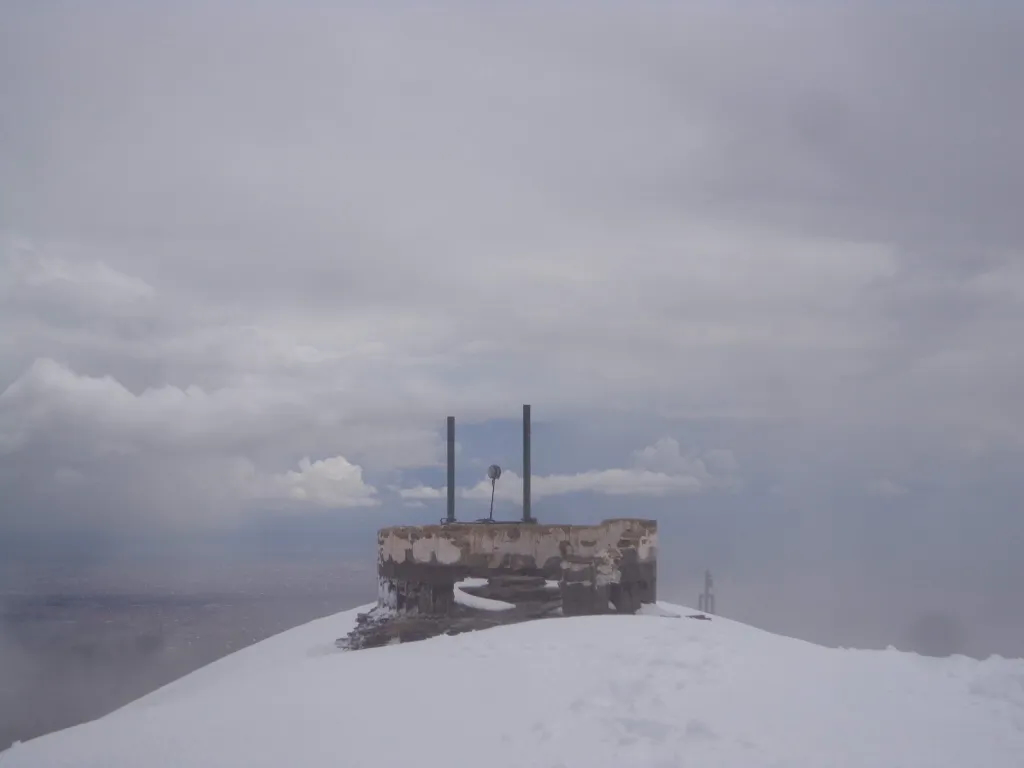
In ancient civilizations, the god of wind (Eole, Aiolos, Aeolus) has an important place. He manifests himself through aeolian harps built for him. In his piece “A los cuatro vientos”, French sound artist and sound engineer Félix Blume presents wind sounds being played in four different places of America, recorded between 2011 and 2014. In one case only it is an aeolian harp (Chile), built with the purpose of interacting with the wind. In other cases, there are power posts of low and high voltage (California, Chile, Mexico) or posts of an old ski lift (Bolivia). The electrical wires are the ropes; posts and steel structures are the resonant body; tubes are the organ… Are these modern buildings the aeolian harps of our times?

For Radia, Félix Blume remixes the recordings used for “A los cuatro vientos” in order to present a new, continuous 28-minute sound work under the same name.

As R. Murray Schafer comments in “The Soundscape”, the installation of electricity in the houses at the beginning of the nineteenth century changed the rural soundscape with the high voltage power lines. Dr Philip Dickinson from the “Research Institute of Sound and Vibrations” mentions the case of a woman who attempted suicide because she continually heard a sound inaudible to others. After several tests, they discovered that some power lines resonated and produced sound between 30 and 40 Hertz. This same sound has been recorded in other places, depending on temperature, humidity and wind.

—

Félix Blume is a sound artist and sound engineer. He currently works and lives between Mexico, Brazil and France.

He uses sound as a basic material in sound pieces, videos, actions and installations. His process is often collaborative, working with communities and using public space as the context within which he explores and presents his works. His practice involves an extended understanding of listening, as a way to encourage the awareness of the imperceptible and as an act of encounter with others. His work incorporates the sounds of different beings and species, from the buzzing of a bee, the steps of a turtle or the chirp of a cricket, as well as human dialogues both with natural and urban contexts. He is interested in myths and their contemporary interpretation, in what voices can tell beyond words.

Show 934: SONIC COLLECTIVITY by Trashkot (Guest Slot)

Trashkot is the name under which artists Jo Caimo and Sjoerd Leijten have been making radio since 2018 on Radio Centraal 106.7 FM in Antwerp. SONIC COLLECTIVITY is a collage piece created from their extensive audio archive. The piece explores the invisible space in which we connect: the sonic. Artistic, activist, dadaistic, musical and other sonic collectives can be heard throughout this piece forming a massive community of resonance and resistance. The piece consists of fragments of interviews, works, music, field recordings and other hard-to-categorize audio material that could be heard earlier on Trashkot by Verena Barié, , Gerri Jäger, Jeanne-Marie Knops, Andreas Malm, numina_gneisspecker, Varkenshond, Stijn Verhoeff,  and different pieces from the radio makers themselves. The contributions by Peter Cusack, Davide Tidoni and Salomé Voegelin are fragments from the larger sonic essay RADICAL MURMUR by Trashlinie, which was published in Collateral.

Trashkot is a bi-weekly radio program by Jo Caimo and Sjoerd Leijten on Radio Centraal in Antwerp. A rancid tissue of sounds, conversations and garbage forms a shaky bridge between music and politics.

Every two weeks on Sunday from 3 pm to 4.30 pm. Radio Centraal broadcasts in and around Antwerp on 106.7 FM. Outside of Antwerp you can listen via tShhe stream: http://streaming.radiocentraal.org/

All archived episodes can be found down here

Show 858: Toxic Temple by Anna Lerchbaumer and Kilian Jörg (Ö1 Kunstradio, guest slot)

Depleted soil, over-asi: dic seas, polluted atmospheres.
People are haunted by what they have suppressed. They can no longer escape the toxic.

In their long-term art project “Toxic Temple”, Anna Lerchbaumer and Kilian Jörg, approach the beauty of oil streaks, the grandeur of techno scrap, the sublimeness of radioactivity and the tran: scen: dence of extinction.

Building on their previous research for their project “Toxic Temple”, the two young artists acoustically and poetically explore the connections between spiritu: ality and tox: isi: ty.
Toxic Temple by Anna Lerchbaumer and Kilian Jörg

The piece in its whole length can be heard on kunstradio.at

Show 830: Holy Mary Sinners Wave by Edyta Jarząb for Radio Kapitał (Guest Slot)

Holy Mary Sinners Wave

(c) Rafał Milach

A soundscape made with field recordings from the streets of Poilsh cities in protest and close listening to the technology and radio waves as a space of interference.
Mixing fragments from performance based on the practice of microcasting, here pirating polish catholic radio Maryja (Holy Mary) on its own frequency with transmission of poetry and sounds of politic, electric body.

Produced by Edyta Jarząb for Radio Kapitał