Show 334: radioradar5 by Marold Langer-Philippsen

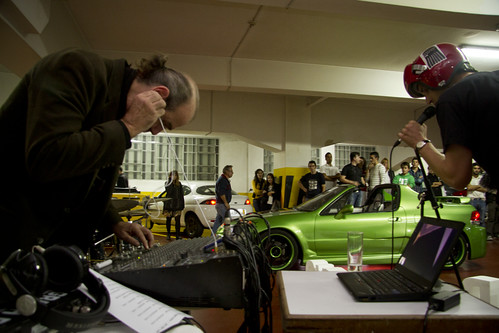
radioradar5 is a soundscape about “how to show copenhagen to a stranger?” – based on a collective work by workshop participants & mlphilippsen, recorded, cut & partly performed during the KUNST & ÆTER festival in Copenhagen/Denmark (24.-28.05.11).

Author is the radio- and performance-artist Marold Langer-Philippsen from Radio CORAX, also working in the field of theatre and video – living in Berlin.

Show 332: HEARTS/MINDS by Matt Middleton

radia season 26, show #332 ::: a contribution by Radio One 91FM, Dunedin, New Zealand ::: HEARTS/MINDS by Matt Middleton

——

[HEARTS/MINDS]

a new sound/media art composition by Matthew Middleton crafted in the lead up to the 2011 New Zealand parliamentary elections, Hearts/Minds explores how media language influences public opinion during election campaigns. Interweaving a haphazard collection of media samples and spoken word excerpts from media commentators, philosophers and political theorists, Hearts/Minds evolves through various loosely delineated movements to evoke the delirium of the mass mediascape’s presentation of the political arena, while simultaneously turning a critical and irreverent ear toward the Western press’s ideological mechanisms. Recalling the subversive media experiments of W S Burroughs and John Oswald’s concept of Plunderphonics, Hearts/Minds can also be heard as something of a meta-commentary on authorship and censorship, an analysis of broadcast radio as a medium historically harnessed to ideological and political purpose, and the role of the news media as politically collusive information moderator, c. 2011. Presenting initially as a crude radio documentary, the piece develops into an acerbic mulch of industrial psychedelia.

——

[MATT MIDDLETON]

a multimedia artist based in Dunedin, New Zealand. Working under the Crude moniker for nearly 15 years, Middleton received modest national recognition with the release of his Inner City Guitar Perspectives album on Flying Nun in 1996. Around the same time he garnered interest in the USA which resulted in the release of Refute a Myth Society on Ecstatic Yod records (a collaboration between Ecstatic Peace and Father Yod records). Riding the U.S. interest, the album My Right To Riches by Middleton’s noise-rock band The Aesthetics was released on Ecstatic Peace in 1998. Around this time he began self-releasing his work via his own Dirtlove imprint, an increasinly prolific publishing project which currently continues as the label Artless Intent.

Middleton received a grant in 2006 to travel to New York City to perform, and it was on his return to New Zealand that he began to explore more seriously the possibilities of installation art and multi-media practice. Middleton’s most recent exhibition, Even More Austerity Measures, at None Gallery, Dunedin, for the week inclusive of July 22–27 2011, explores the relations between current events, political economy and the role of the ‘performer’.

Radio sound and radio art is an occasional but strong motif in Middleton’s recordings, especially the deeply affecting psycho-physical power of short-wave drone. His own show on Radio One 91FM, End Times Jukeboxx, explored the sound worlds of the experimental/electronic/av​ant garde/obscure/eclectic with studio guests and live-to-air performances, and is archived here : http://endtimesjukeboxx.bl​ogspot.com/2011_02_01_arch​ive.html

Middleton’s work can be followed up on his blog La Decennie Brut, or via his homepage. His extensive discography can also be viewed here

——

creative commons 2011, Matthew Middleton in collaboration with Radio One 91FM and the Radia Network. Commissioned and developed by Sally Ann McIntyre. Text by Matthew Middleton and Sally Ann McIntyre. Many thanks to Creative New Zealand for their support in the commissioning of this work.
NB : the following samples from other media sources were used in this composition :

1. Middleton reads a section of an article by political journalist Gordon Campbell – “Horse Race Journalism”, scoop.co.nz, September 2008.
http://gordoncampbell.scoop.co.nz/2008/09/15/’horse-race’-political-journalism/

2. A computer voice (adobe pdf ‘read out loud’ function ) ‘reads’ a section from Media Argumentation: Dialectic, Persuasion, Rhetoric, by Douglas Watson (Cambridge University Press 2007).
http://www.amazon.com/Media-Argumentation-Dialect-Persuasion-Rhetoric/dp/0521700302

3. Treated section of ‘Budget Debate’ from www.inthehouse.co.nz, featuring John Key and Phill Goff (June 7, 2011).

——

[some further reading] :

“•News Values prioritise stories about events that are recent, sudden, unambiguous, predictable, relevant and close (to the relevant culture/class/location)
•Priority is given to stories about the economy, government politics, industry and business, foreign affairs and domestic affairs – -either of conflict or human interest – disasters and sport.
•Priority is given to elite nations (the US, the UK, Europe etc.) and elite people (celebrity).
•News values often involve appeals to dominant ideologies and discources. What is cultural and/or historical will be represented as natural and consensual.
•News stories need to appeal to readers/viewers so they must be commonsensical, entertaining and dramatic(like fiction), and visual. ”

-definition of ‘News Values’, from Communication, Cultural and Media Studies: Key Concepts; John Hartley, Routledge Key Guides, 2002.

“The Ad Hominem, or personal attack, argument is now highly familiar in politics, especially in the use of negative campaign tactics in elections. This form of argument has been studied previously in the argumentation literature, but it has some special features of interest as a mass media argument strategy….it is shown how it has some features comrable to apeals to fear and pity when it is used in mass media as a device of persuasion….it is shown how he or she must use prolepsis by probing into the commitments of the respondent and confirguring them in a certain way prior to the attack. These insights into the multi-agent structure of the ad hominem reveal how the proponent must collect evidence proactively, and then use this evidence to attribute a plan to the respondent. The aim is not just to reveal how to use such a tactic of personal attack in the mass media. The analysis is meant to be helpful to both voters and political campaigners, giving them a better understanding of how to deal with ad hominem arguments by identifying analyzing, and critically evaluating them. The ad hominem argument is not a new phenomenon is american political discourse. A pamphlet was circulated telling of Andrew Jackson’s “youthful indiscretions”. In the 1860’s, Northern newspapers attacked Lincoln’s policies by attacking his character, using the terms “drunk”, “baboon”, “too slow”, “foolish”, and “dishonest”. Steadily on the increase in political argumentation since then, the argumentum ad hominem has been carefull efined as an instrument of “oppo tactics” and “going negative” by the public relations expert who now craft political campaigns at the national level. It has been so prominently used in the major political campaigns, debates, and ads of the past few years that there has even been a reaction against it – a feeling that we have gone too far in this direction and that some kind of restraint is needed. But there has been no evidence of such restraint in the argumentation used in recent campaigns.”
Media Argumentation: Dialectic, Persuasion and Rhetoric; Douglas Watson, Cambridge University Press, 2007.

“The centre of captalism, the bourgeoisie, is a neutral, unmarked, self-evident centre. Ideology, or at least, the overarching ideology which defines the others, is in the system itself, and precisely this all-encompassing ideological character of capitalism makes its ideological nature and characteristics invisible. They are ‘normal’ and ‘normative’: other ‘ideologies’ are measured against the ideological zero-point, capitalism. The ideological enemy, in Barthes’ view, is thus not liberalism, Gaullism or communism, but ‘l’ennemi capital (la Norme bourgeoise)’ (1957:8), the invisible and self-evident systemic core which we fail to recognise as ideological because it is OUR ideology.”
Discourse: Key topics in Sociolinguistics; Jan Blommaert, Cambridge University Press, 2005.

“There were individual cases in which the news media appeared to have been decisive , and not simply influential. The role of television appeared to be crucial, for instance, Brazil’s 1989 presidentials contest, when privately owned TV Globo – the fourth largest television network in the world – gave a disproportionate amount of favourable coverage to the conservative candidate Fernando Collor de Mello (De Lima, 1993). According to others, it was the tabloid newpaper The Sun that had won the 1992 British General election for the conservatives, in the evidence of a disproportionately large shift in electoral support amongst its predominantly blue-collar readership (see McKie, 1995). But in spite of such studies, there has been ‘little agreement’ on the nature and extent of media effects, a failure that appears to owe something to the ‘complexity of the processes and the inadequacy of research design and methods’ (McQuail , 2000, pp 416,419) , and the literature is still characterised by a ‘great deal of uncertainty and contradiction’ (Street,2001 p89). Bartels, indeed, goes so far as to describe the current state of research on media effects as ‘one of the most notable embarrasments of modern social science’ “
Media Effects and Russian Elections , 1999-2000; Stephen White, Sarah Oates & Ian McAllister

The Prime Minister is defending his decision to loan $43 million of taxpayer money to private media companies. John Key claims the loan scheme was designed to help the whole radio industry. But a ONE News investigation has revealed MediaWorks was the big winner after some hard lobbying. Key is known for being media friendly, but he’s facing criticism from Labour that he’s become too cosy with MediaWorks which owns TV3 and half of New Zealand’s radio stations. It has been revealed the government deferred $43 million in radio licensing fees for MediaWorks after some serious lobbying. Key and the former head of MediaWorks, Brent Impey, talked at a TV3 Telethon event. “I just raised it as an issue but we’d been looking at it for sometime. My view was it made sense. It’s a commercial loan, it’s a secured contract,” Key said.It’s believed the loan is being made at 11% interest. But in answer to parliamentary written questions, the Prime Minister said he had “no meetings” with representatives of MediaWorks to discuss the deal. Two days later that answer was corrected, saying he “ran into” Brent Impey at a “social event” in Auckland where the issue was “briefly raised” and he “passed his comments on” to the responsible minister. Labour MP for Hutt South Trevor Mallard said he doesn’t believe the Prime Minister with his first answer,”I mean you have a meeting with a chief executive, it doesn’t matter if it is social, he asks you for money, you get a system going, you remember it,” said Mallard. The government maintains that all radio companies were allowed to delay payments of radio licences and says it’s not a sweetheart deal for MediaWorks. But MediaWorks are the big winners. The total government loan for all nine radio stations is $43.6 million. Of that, MediaWorks were loaned $43.3 million and the other radio stations were loaned $300,000. And official documents obtained by ONE News show a request was made to rush the deal through Cabinet for MediaWorks. The documents said: “An urgent decision is necessary due to financial restructuring decisions facing MediaWorks at the end of October.” Key defends deferring the stations’ licence payments. “Frankly I’d rather see people paying over a longer period of time if it means they stay in business,” said Key. ONE News reported on Thursday night that the $43 million loan was made to MediaWorks despite official advice warning against it. In the documents obtained by ONE News, the Ministry of Economic Development said it “does not see a strong case” for the loan, and warned the deal will “carry a financial risk” for the government. Treasury said the loan would effectively see the government “acting as a bank” and taking on additional risk. Initially Communication and Information Minister Steven Joyce had declined the deal. But then Impey had taken the matter higher, lobbying Key during the Telethon, and eventually Cabinet approval was given. Joyce told ONE News in Thursday’s report that the lobbying didn’t have an impact on the government’s decision.”
TVNZ One News website, April 8 2011

Show 329: TIME INVENTORS’ KABINET RADIO: BRATISLAVA SHORTCUTS


radia season 26 – show #329 (radio x) – TIK RADIO: BRATISLAVA SHORTCUTS
– playing from july 18 to july 24, 2011 –

tik radio bratislava shortcuts 001

BRATISLAVA SHORTCUTS
by TIME INVENTORS’ KABINET RADIO

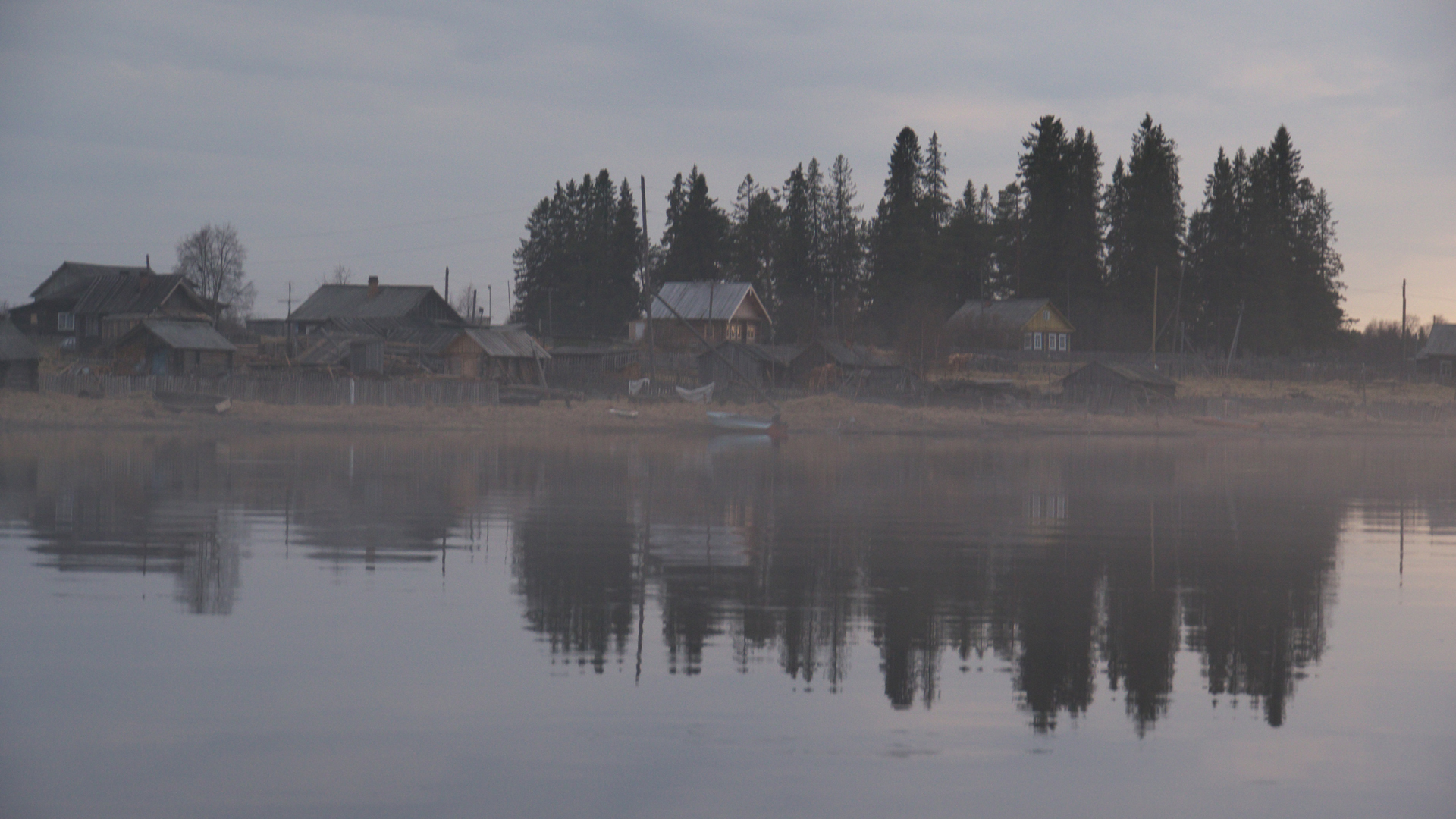
in march 2011, members from of TIME INVENTORS’ KABINET (TIK) met in bratislava for a week of collective research on radio as a tool for investigating alternate traces of time.
we used a wide range of methods (a.o. city walks, field recordings, investigations in individual as well as collective imaginations, deliberate data dreaming) to explore topics like time bending, hazy time, wind time, lichen clocks, ecotime zones, shortcuts – the latter to become the focus topic for our radio show.
based on our observations and findings we developed, performed and broadcast a live radio show on friday, march 18, 2011, as part of the research week’s public closing event at hacklab progressbar.

TIK RADIO: BRATISLAVA SHORTCUTS is a collaborative effort by
Guy van Belle (BE), Michal Cudrnak (SK), Nina Czegledy (HU), Barbara Huber (AT/SK), Kruno Jost (HR), Marton Andras Juhasz (HU), Michal Kindernay (CZ), Laszlo Kiss (HU), Verena Kuni (DE), and Jürgen Rendl (AT/SK).

TIME INVENTORS’ KABINET (TIK)
is a collaborative artistic research project at the intersections of ecology, art, and media,
taking an ecological approach to observing patterns in time and time control systems.
find out more about TIK at www.timeinventorskabinet.org

tik radio bratislava shortcuts 002

credits:
special thanks to all radio active time inventors;
barb huber and michal cudrnak from col.me for organizing the TIK radio research week;
hacklab progressbar (progessbar.sk) for hosting us;
eu culture programme and goethe institute bratislava for funding us.
in addition to that, miss.gunst wishes to thank the following artists and sound collectors for additional material that has been used for the post-production of the show:
bent grandfather’s clock based on the sound of a grandfather’s clock recorded by digifish from freesound;
cuckoo clock recorded by morgantj from freesound;
find out more about freesound at www.freesound.org

metadata:
BRATISLAVA SHORTCUTS
by TIME INVENTORS’ KABINET RADIO
radia production: miss.gunst [TBC radio + GUNST + radiator x]
production date: july 2011 [based on a live radio performance + broadcast, bratislava, march 18, 2011]
station: radio x, frankfurt am main (germany)
length: 28 min. (and 11 secs.)
licence: cc-by-nc-sa TIK radio collective

links:
radio x & radiator x: www.radiox.dewww.radiox.de/radiator-x
GUNSTradio & TBC radio: www.gunst.info
TIME BENDING CLOCK WORK: www.under-construction.cc/tbcw
TIME INVENTOR’S KABINET: www.timeinventorskabinet.org

pics:
verena kuni (cc-by-nc-sa)

tik radio bratislava shortcuts 003

Show 328: LA RADIO A PEDALI by Alessio Ballerini


radia season 26 – show #328 (radio papesse) – LA RADIO A PEDALI by Alessio Ballerini
– playing from july 11 to july 17, 2011 –

‘La radio a pedali / Radio on wheels’ is a project produced by Radio Papesse in collaboration with the Maggio Musicale Fiorentino Theatre and Radio 3 Rai.
‘Radio on wheels’ is a participatory project with which Radio Papesse tried to trigger a reflection around the ideas of energy – released by art and culture – and sustainability of both cultural consumption and environmental habits.

On the occasion of the last Nuit Blanche of Florence, on april 30th, 2011 we invited cyclists to join a parade, to bring their own radios and to tune in to Radio 3 Rai, that would have aired the live concert at the Maggio Fiorentino Theatre that very night: Beethoven and Liszt interpreted by Daniel Barenboim and the Maggio Fiorentino Orchestra, under the direction of Zubin Mehta.
We invited the sound artist and musician Alessio Ballerini to record the sounds of the parade and the show he has produced for Radia – along with the sound postcard of the ride – is just a bit of the entire and multilayered audio project he is still developing:

“Along the run with many other bikers I held a 4 channel portable audio recorder in one hand, forward facing the two onboard mics and fastening the two other external mics on my backpack. That allowed me to record sounds both in front of me and in the rear.
This was meant to allow me to postproduce the field recordings in two different forms. On one hand I decided to use and mix the frontal stereophonic recordings with other field recordings, original scores and extracts from Beethoven and Liszt; the output are both a 25 minutes long radio piece and a 6 tracks release. On the other hand, thanks to the 4 channel recordings I recreated the acoustic environment of the bike parade just adding more sounds to enhance the imaginary/imaginative experience of those visitors who will listen to it in a dark room absorbed by a quadraphonic reproduction.
I decided to start with the recording of an interview* with Zubin Mehta released by Radio 3 Rai just before the beginning of the concert. I think Mehta’s words are good food for thoughts about technology – at large – and the role of music in the evolution of our society since the beginning of the XX century. I find those words even more meaningful since I recorded them in Piazza dell’Indipendenza where more than 200 bikers came together tuning in their portable radios to Radio Rai, waiting the parade to begin. I recorded chit-chats, background noises, Mehta’s voice coming out the radio speakers and the resulting field recording was appealing to me also in terms of poetics; everything was connected, Beethoven, Zubin Mehta, people ‘playing’ their radios and myself recording them. I did use Beethoven and Liszt, along with original scores and field recordings, according all of them the same standing. This experience has been both a generational comparison and a way to find a common ground between two opposite poles: internet and vinyls, cars and bicycles, till my compositional approach that combines rough recordings and post-production mix. The discourse around technology though is hopeful- be my creative approach to it, be Mehta’s call for a more conscientious use of it or the dreamy memories of a group of old men who remember the time when cars and the Mille Miglia Race were synonyms for technology; all these facets positively decline the technological issue.” [A.B]

* Synopsis of Zubin Mehta’s interview translated from Italian:
The interview concentrates upon the diverse media through which people have been listening to music since the age Zubin Metha started playing and directing: the long play was yet to come and people did think that a record was definitive. Mehta has always felt unconfortable with this idea and on the contrary he still thinks that changing interpretations in music are the real miracle.
He also reflects on the return of people to live performances and – once having got the highest quality of the cd – to the first person experience of the concerts. Mehta also remembers a conversation he had around the beginning of the 70s with Arthur Rubinstein who already reported the issue of the ‘new audience’. Comparing with the 20s – when more than 25% of his audience was educated to the music he used to play – he had witnessed a shift in the music education and knowledge of people. Internet flourished on that already changing ground; Mehta credits internet the much broader flux of informations but invites the youngest generation to interpret and try to disentangle the flow of available informations in order to turn them into education. For his part he appreciates Youtube but he hardly manages to have free time; he also admits to behave childishly: once started he would never quit the ‘game’.

Links:
Radio Papesse www.radiopapesse.org
Radio Papesse – Sound Postcard by Alessio Ballerini
Alessio Ballerini – Homepage & Projects www.alessioballerini.com
FB I: La radio a pedali on Facebook
FB II: La radio a pedali on Facebook – Photo Galleries

Show 327: nitropic by Karl Schoenswetter


nitropic

this sound collage is an offer to contemplate “expectations”. intros and interludes are little sound sculptures which are preparing the listeners for the main feature. this time you will have to deal with the fact, that the emotional energy of these little ‘push-ups’ is potentially increased by consuming only this type of sound. the question is – what will happen to you when you are listening to such a great amount of emotional uplift? Do listeners really believe in the power of music or will they rather be afraid of the epic shift in consciousness?
technical info: you are listening to original samples. there are no effect overdubs on this mix.

artists in sort of appearance:
can, the roots, eminem, brian eno & david byrne, pink floyd, dj shadow, five deez, polarkreis 18, gorillaz, gustav mahler, neu!, muse, gorillaz, within temptation, alkbottle, peter gabriel, massive attack, boards of canada, octogon man, palmskin productions, basement jaxx, sigur rós, gustav, dr. dre, east flatbush project, jimi hendrix, john forgerty, manu chao, gianna nannini, iron maiden, james lavelle, kinderzimmer productions, mono & nikitaman, kraftwerk

conducted and produced by karl schönswetter
for Orange 94.0, Vienna, and the radia.fm network
speaker maria herold

please note that this radio show is not distributed under creative commons licence

official project page: nitropic.com

Show 326: Anarchy in the Brewery

It’s an improvised assembly of found footage, gathered over the last three months, from broadcasts we set up in collaboration with the fine people of radio de la Liberté at the Belle Vue brewery in Brussels.

Our Plan B was A Narchy,

X – elle – Air

Show 325: The audible after-effects of drinking ether by LOKAALRAADIO


Lokaalraadio“The audible after-effects of drinking ether” is a radioshow that finds the hosts somewhere between lucid dreaming and automatic speech, exploring the interesting phenomena of drinking ether, somewhere in the southern parts of Estonia. The show has been produced for Radia network for Resonance FM in London.

LOKAALRAADIO is a radio art station founded by Raul Keller and Katrin Essenson based in the Contemporary Art Museum of Estonia in Tallinn and an experimental live group giving live performances while exploring the immediate surroundings through radio medium. In March 2011, they organized the first radiophonic art festival “Radiaator” in Estonia. See: lokaalraadio.ee