Some morning voices who told with texture in situ and a live performance with found material.
A sonar experience in three stages: gleaning dreams (recorded), gleaning sounds, collective trance.
This performance art workshop, organized by Le Bruitagène, took place at the second Utopie Sonore manifestation, a sound and radio residence near Angers in France at the end of August 2017.
A dozen people participated in addition to the fourty people who recorded their morning voices surrounding the theme of their dreams. The idea: to create a soundtrack based on these recordings, and added interesting sounds made by instrument-objects collected in situ, to deliver a live performance by broadcasting the editing of voices and playing with instrument-objects.
Des voix du matin qui racontent, de la texture in situ et une perf live avec la matière récoltée. Expérience sonore en trois étapes: glanage de rêves (enregistrements), glanage de sons, transe collective.
Cet atelier-performance a eu lieu lors de la 2e édition d’Utopie Sonore, résidence radiophonique et sonore près d’Angers fin août 2017, organisée par Le Bruitagène.
Une dizaine de personnes y ont participé, en plus de la quarantaine de personnes qui ont enregistré leur voix du matin autour de leurs rêves. L’idée: réaliser une trame sonore à partir de ces enregistrements, y ajouter des sons d’objets-instruments récoltés sur place, livrer une performance en direct en diffusant les montages des voix et en jouant des objets-instruments.
IGITUR FLOTSAM - a stream of deserted anthems, disembodied voices, morse signals, crank calls,
corroded tapes, radio statics, counting games and wanderings through empty buildings.This radioplay is based on the unfinished gothic tale IGITUR - a collection of texts abandoned by its
writer Stéphane Mallarmé in 1869.A man wakes up in the middle of the night. Is there something there? or has something disappeared?
Outside are opaque constellations of stars, the radio plays random sounds from beyond and the phone
is dead. It seems as if something has been accompanying him already all the time, stealing his identity
by being a double. Trying to escape this double he leaves his room and outside on the stairs he
happens upon more reflections, shadows and doubles.He tries to conjure these multiples by counting steps and doors on the way.
Finally downstairs everything vanishes in the dark when all the sounds of the world enter the
large open space.
Credits:
music: Reinier van Houdttext: Stéphane Mallarmé/Reinier van Houdtvoice: David TibetThank you: David Tibet, Ossian Brown, Rita Knuistingh Neven, Andere Baustelle,
Simon Lenski, Susanne Fröhlich, SaschaSulimma
produced by Worm/Klangendum
This week’s show is the Wiener Radia Kollektives journey into “Austrian Angst”. Listen to a group’s access to our spaces of Angst. And how a collective deals collectively with the collection of individual angst.
A show by the wiener radia kollektiv, Orange 94.0, in the 2017.
Tobias Dankl, Maria Herold, Barbara Huber, Milada, Niklas, Barbara Kaiser, Lale Rodgarkia-Dara, Karl Schönswetter and Maria Sulzer.
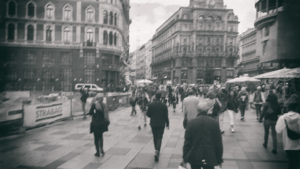
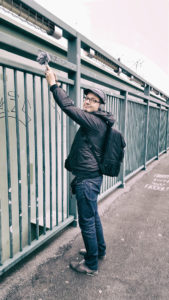
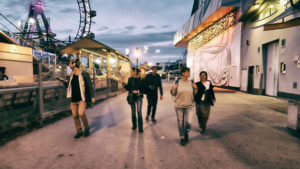
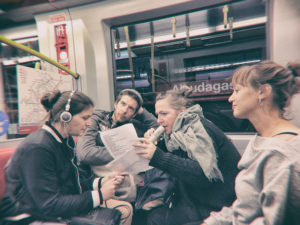
Wiener Radia Kollektiv recording Austrian Angst.
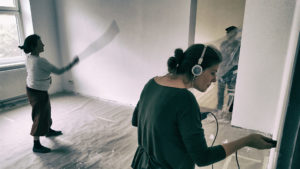
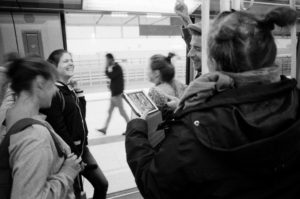
Lale & Tobi cutting Austrian Angst.
Wiener Radia Kollektiv recording Austrian Angst.
Wiener Radia Kollektiv recording Austrian Angst.
Wiener Radia Kollektiv recording Austrian Angst.
Wiener Radia Kollektiv recording Austrian Angst.
Wiener Radia Kollektiv recording Austrian Angst.
Wiener Radia Kollektiv recording Austrian Angst.
Wiener Radia Kollektiv recording Austrian Angst.
The German language differentiates between fear (Furcht) and Angst (Angst)
Furcht is clearly directed, rooted in our consciences.
We know what we are afraid of, can name it, sometimes, we don’t dare to express it but it is not labeled with a shattering uncertainty.
The Austrian Angst is like the misty evening. Fog between the lines of conscience reception and anticipation. Blurring boundaries. We embody the present, we cannot flee escape from the present. The present is present. We cannot estimate the risks and vulnerability of the threat. We fight, freeze, focus, or flee based on the essence of our temper but between the foggy lines of this present a thought turns into a tree with little shiny fruits of terror.
The Austrian Angst is quiet, a solidification of our breath. The moment turns into eternity; every scream is inverted into your body that suddenly is the object of angst itself. The outside threat is no longer separated from the inside we merge with this threat from the outside. We cannot do anything to avoid the immediate danger. We react and act in a quiet time-less, space-less sphere.
The picture is never complemented if you only look at one generation, so we borrow other generations, look at our children or argue with our mothers and fathers. Rage is the soft variant of angst. It might seem aggressive and uncontrollable but in most cases is precludes the arousal of the real feeling. This is Austrian Angst and it means, it treats your body without any shifting, development.
The creation of experience, in fact, involves a degree of forgetting. Austrian Angst offers a huge traditional cake of sweet joyfulness. Every spoonful of this creamy tasteful cake prevents us from this process of forgetting. We detain our memory, sentence it for life. Free floating fear. Uncertainty itself becomes the object of our Angst. We can no longer set any references in time, space, lose the others, our body, our essence. And this angst is merging with desire. For some this means a joyful experience of life.
Die Tendenz in der unbelebten Welt zu immer größerer Unordnung, ist die Entropie
Eine meiner persönlichen Ängste besteht darin, den Kampf gegen die Entropie zu verlieren. In der belebten Welt sehe ich Angst, irgendwann den Kampf gegen das Kompostieren zu verlieren.
Transference and countertransference – the Austrian Angst is shiny and frosted at the same time. It is equipped with an insect’s antenna beyond our imagination. A gentle exploration of our manifold selfs, interspecies meetings a wishful exchange of perception, in fact an encounter of death.
Flow is the Antagonist of Austrian Angst. Flow shuts out this indescribable boredom of the Austrian existence. We cherish this fadesse, the tedium sticks our soul together. Our senses are integrated in the eternal conjunctive. The terror of our soul is the vital life others might have. We stare in envy. No single sign of shame, we are proud of this fadesse. Resonance with it.
You were listening to Austrian Angst. A show by the wiener radia kollektiv, Vienna 2017.
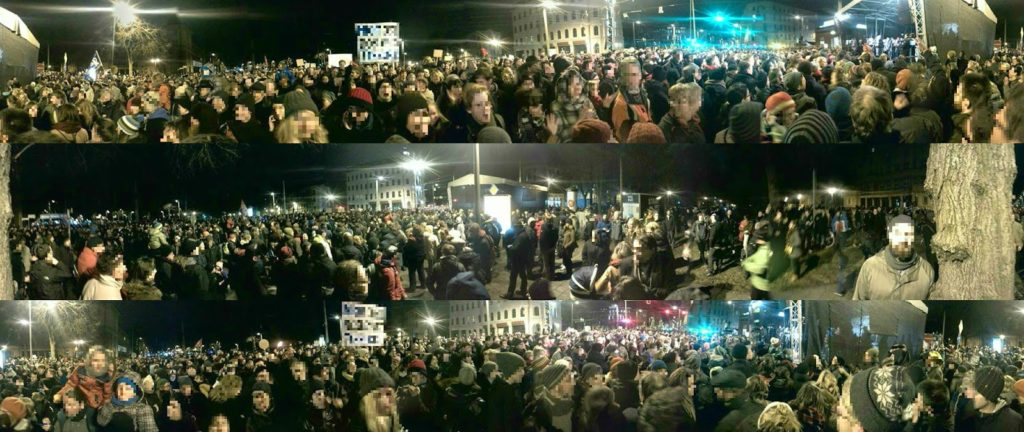
The performance-collective Friendly Fire recorded Protest Sounds in Leipzig during the racist mob actions in the last 3 years. You will hear the inner life of protest, scanning the potential of energy, loudness, movement and power.
Friendly fire are: Melanie Albrecht, Michael Wehren and Helena Wölfl and act in public space and radio as well.
Much like the main character Gwen, I too like to procrastinate. This entire piece was created in 24 hours.
The Trouble With Trees is a radio drama written and produced by storyranger for CFRC. The voice of Gwen was Emily Townshend. The voice of Eli was Michael McLaren. The music featured in this work was created by Disparition, storyranger, Our Last Night, Lindsey Stirling, Jackson Parodi, and HARBOR. Any resemblance to real events or persons, living or dead, is entirely coincidental.
1. intro
2. Drama Queen
3. Slander/Backstabbing
4. Victim(self)blaming
« In a time where so much is thought, said and done on behalf of women’s rights you would think that we, as women would support each other even more. But this is not always the case. I was wondering, what it is, that we women do, that doesn’t help our case ?
Inspired by a Buddhist doctrine, which says that our karma is created by what we do, what we say and what we think, I was looking for stories, and I found them : the tale of one woman trying to control another woman’s feminine appearance for the sake of profit, the woman who is backstabbing another woman in her machinery of fear and jealousy, and the woman who’s blaming herself for being raped. It wasn’t easy to find them, no one wants to tell things like this. This is why I found it even more important to share them, not to point fingers, but to shed light and plead for forgiveness and reconciliation among women.
Desmond Tutu said: “Forgiving and being reconciled to our enemies or our loved ones are not about pretending that things are other than they are. It is not about patting one another on the back and turning a blind eye to the wrong. True reconciliation exposes the awfulness, the abuse, the hurt, the truth. It could even sometimes make things worse. It is a risky undertaking but in the end it is worthwhile, because in the end only an honest confrontation with reality can bring real healing. Superficial reconciliation can bring only superficial healing.”
I invite you now, dear listener, to be part of this reconciliation, a re-creation of this karma. While you listen, please forgive these women, and reflect upon how we can think, talk and act differently than them »
Thanks to Daphne Tsiouni, Coralie Maurin and Julia Stern for lending me their voices. Thanks to Sonia Rose Gouia for letting me use samples of her cello playing.
Lola Ajima is a musician, singer and composer from Denmark, currently living in France. She is an active performer in the audio-visual group Lola And Yukao Meet and she also composes for mixing classical and electronic music. She is studying Electro-acoustic composition under Christine Groult, Marco Marini and Jonathan Prager at Pantin Conservatory, Paris.
Based on field recordings from gas production, the piece creates a comfortable yet eerie soundscape.
The monotonous sound of gas production has been described as hearing the rumbling, eternal sounds of the earths core. It is the sound of ancient matter transformed to energy, energy we easily and affordably use to maintain our comfortable western life styles. The soundscape allures the idea that everything is fine and well. At the same time, we know that maintaining the status quo is leading to fast and radical changes, with more devastating effects than we want to imagine.
IGOR ŠTROMAJER
is a pseudo-/para-artist researching tactical emotions, intimate guerrilla, and traumatic low-tech communication strategies. Štromajer exhibits worldwide, his works form part of the permanent collections of several museums and galleries, among them Le Centre Pompidou in Paris, and the Museo Nacional Reina Sofía in Madrid. He lives between Frankfurt am Main and Ljubljana.
metadata:
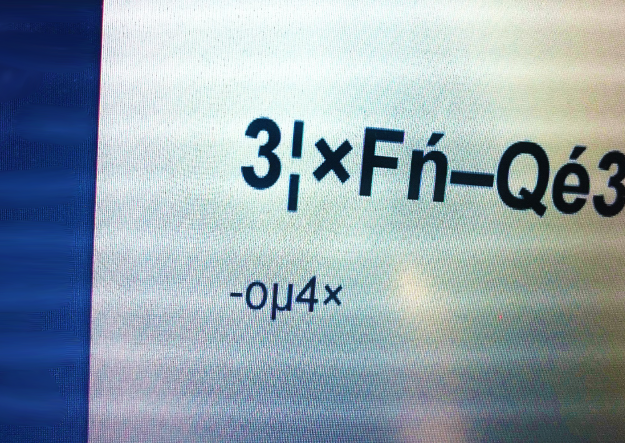
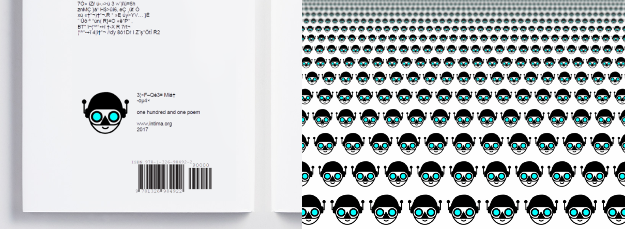
3¦×Fń–Qé3 = Mià†
by IGOR ŠTROMAJER
radia production: miss.gunst [GUNST + radiator x]
production date: july 2017
station: radio x, frankfurt am main (germany)
length: 28 min.
licence: (cc-by) IGOR ŠTROMAJER www.radiox.de – www.gunst.info – www.intima.org
credits:
great many thanks to IGOR ŠTROMAJER as well as all the software and hardware involved (code is poetry, indeed)!
additional info:
includes radia jingles (in/out), station and program info/intro (english)
In our attempt to re-write new and unheard geographies of sound we invited artists and producers to reflect upon the Mediterranean discourse; the personal cartographies as a tool of re-appropriation of places and memories; the use and the circulation of audio archival materials in sound art and experimental audio production. This carte blanche traces some of the answers we got and opens our – the listeners – ears to unexpected latitudes.
100717 is a conceptual live improvisation with FM transmitters, FM recievers and electronics for the Radia network contribution from Radio Helsinki in Graz.
100717 plays with the medium radio itself. FM transmitters and radio receivers are connected together and brought into a self oscillating feedback loop. This sound is supported, modified and extended by live electronics software.