Radia Show 1096 : Schnìtzelbànk 3000 (TT Node)

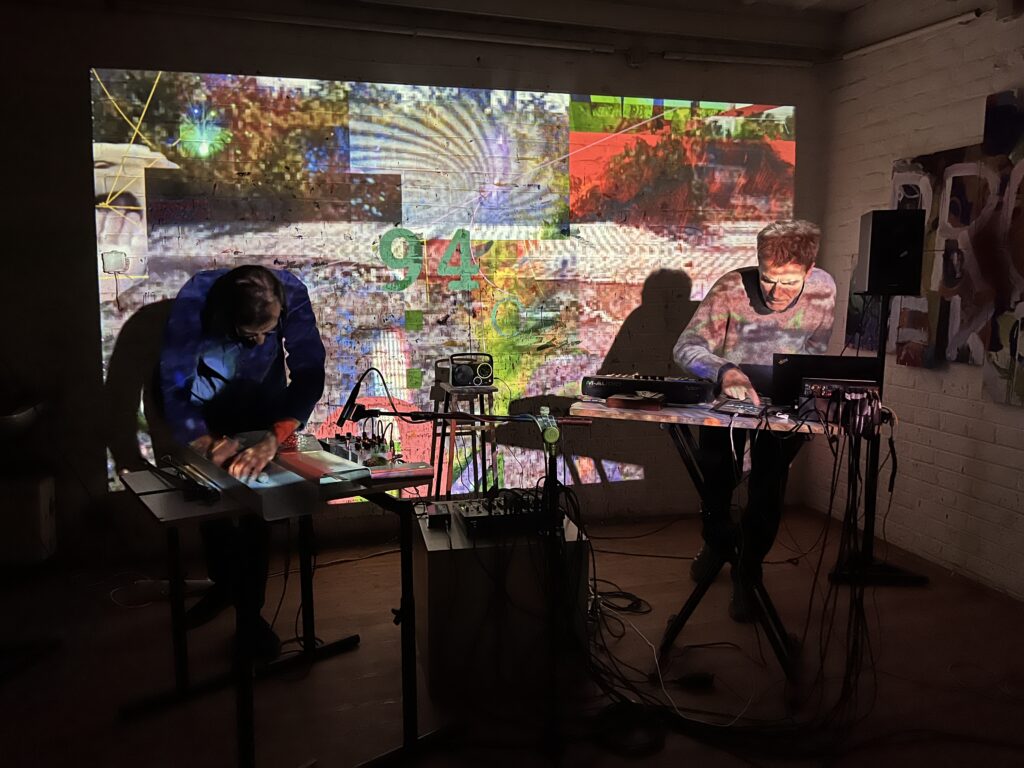
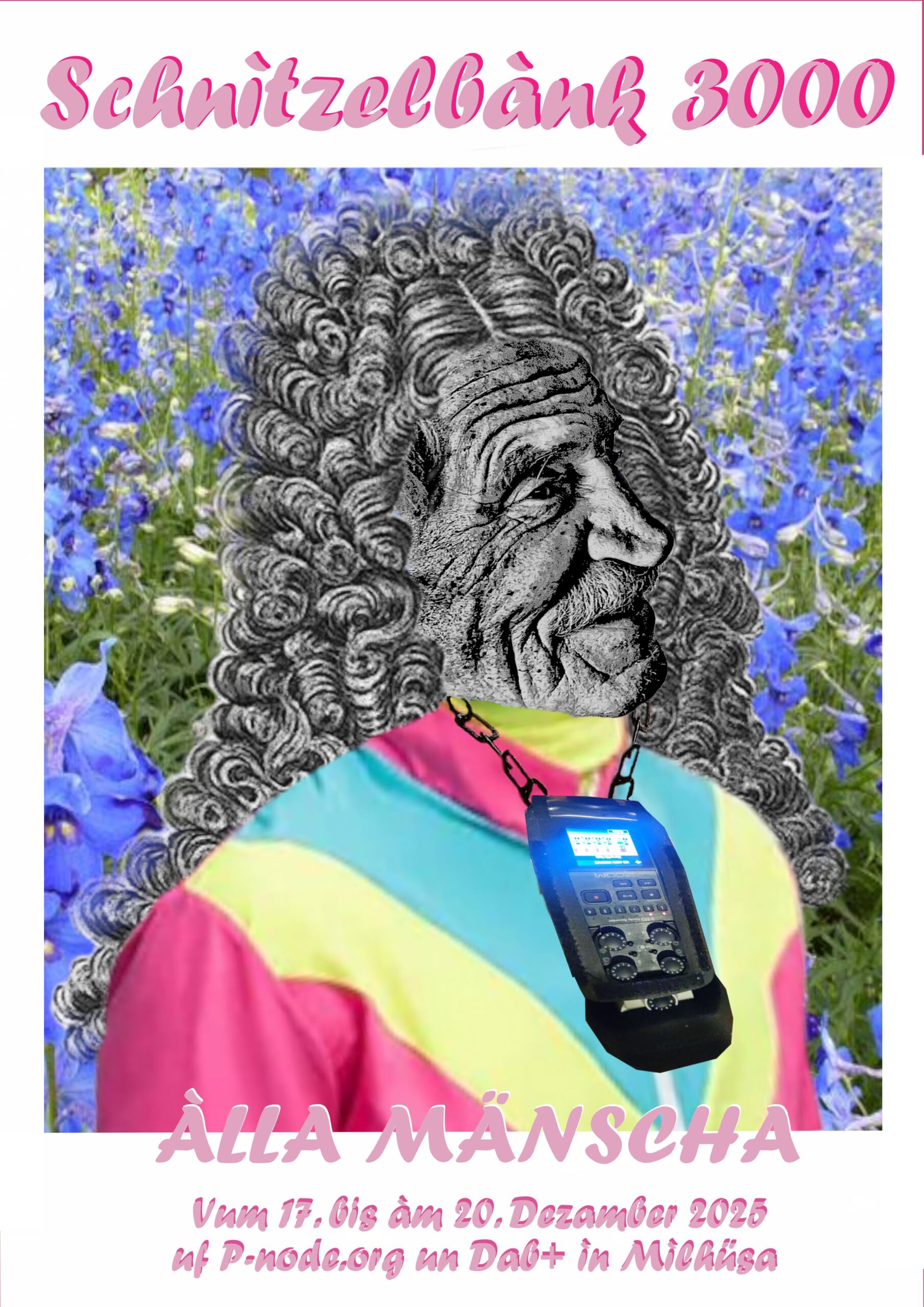
A jumble of sounds taken from Schnìtzelbànk 3000, but set in 2025
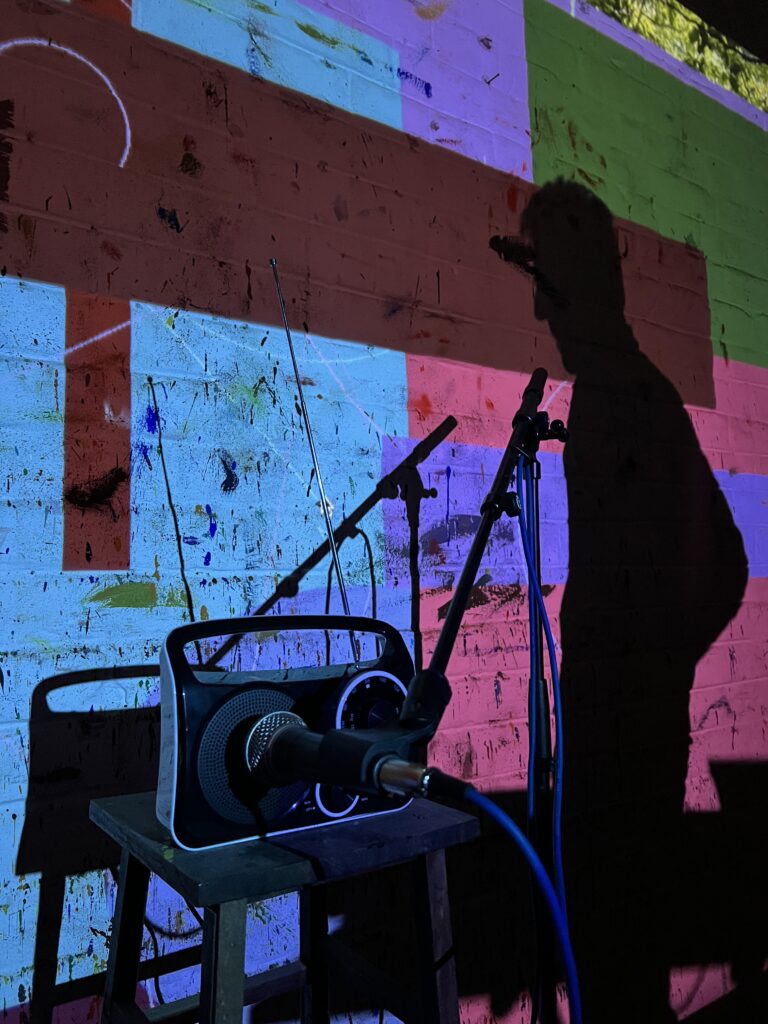
A ghostly journey created by the Mopiilettla streaming platform for the annual Schnìtzelbànk event, a four day radio exploration of Alemannic and Franconian dialects.
The main recordings were extracted from Mopilettla’s live 1kbps internet streams.

The elements:
A recitation of love by Frédéric Danos
Voices of Sylvie Reff (excerpts from her books), Sabine from Réunion, Daniel Muringer, Irmgard and Buki.
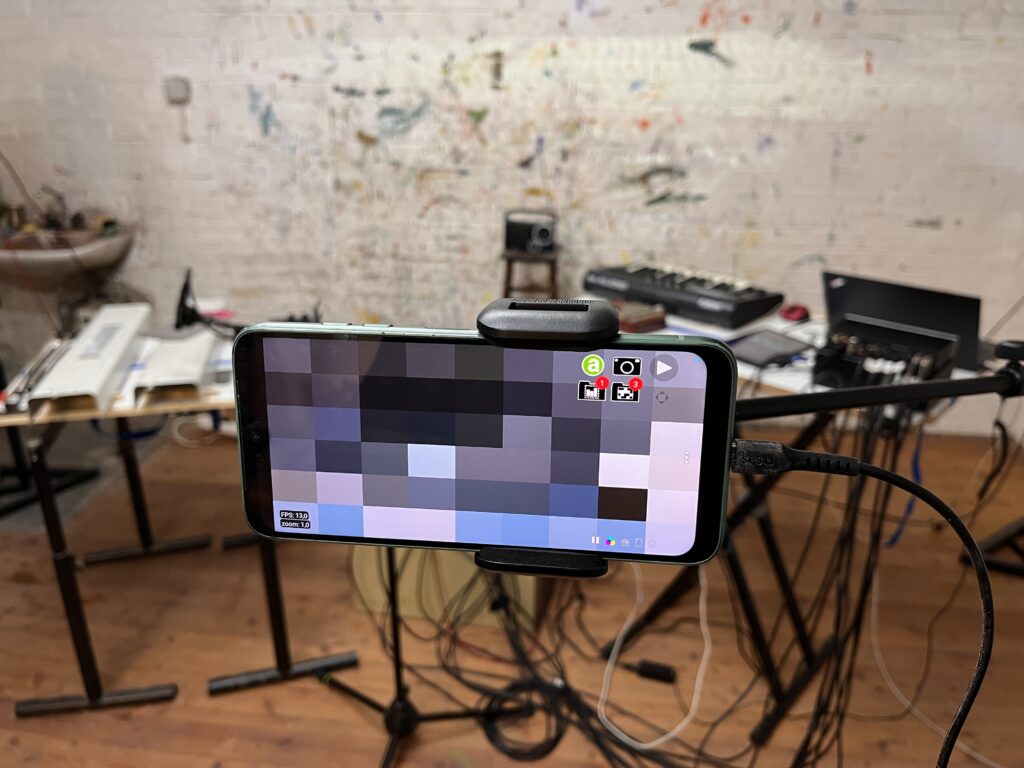
For more info on Schnitzelbank and how to make your own mini mo_pi_lette mobile streaming platform  :

https://p-node.org/actions/schnitzelbank-2025
https://p-node.org/documentation/pibox/mopilette-3000

Elsasser-ditsch /  àlamànisch:
A Kuddelmudel vum s’Schnìtzelbànk 3000 àwer in 2025
A geischtliga Wànderùng vu dr Mo∏letla duch dr Schnìtzelbànk3000
Meischta vu d’Ufgnuhma Ton sìn 1kbps

A Lieb Performànz: d’r Danos Frederic wu Eïer garn hàt
d’Ada, dr Sieben un dr Mabuseppi ìn dr Wàga
un d’Stìmma vu Reff Sylvie (stìckla vu sinna Biechla), Sabine üs la Réunion vu Elsasser Samossa kocht, Muringer Daniel, Irmgard, Buki
ufgnu mìt’m Mopilettla àwer nìt numma

Show 1095: To Communicate (Usmaradio)


To Communicate

By Andrea Gava

“To Communicate” is a composition for radio transmissions, feedback and live electronics by Andrea Gava created in collaboration with Sante Gava.

“To Communicate” is a site-specific performance that begins with the installation of an antenna designed by my father Sante Gava, radio amateur ‘till the late 70s with the name India Zulu Three Charlie India Xray (IZ3CIX), at the performance site, alongside with a radio. The signals captured with it is then processed in real time and combined with live electronics.

My dad has been a radioamatuer since his twenties. He is still very passionate about it. He builds is own antennas and in the past he also used to make them for other people. Probably, in a subconsciuos way, my interest in sounds, noise, electronic instruments and diy comes from this activity as a radioamateur I was exposed to since birth. A few years ago in my musical research process with aleatoric sound sources, soundscapes and improvisation, I started thinking about radio signals and how to incorporate them in my music. I asked my dad if I could listen to some of his sessions. With my adult ears, the ones of a musician and composer with a passion for Pauline Oliveros, John Cage and Murray Schaffer, I discovered some amazing things simply listening to him surfing the radio waves.

There is such a vibrant soundscape hidden in that background noise and the wonder of the research and discovery for someone (or something) out there is so exciting and inspiring. The fact that noise is also a big part of this sonic landscape is pretty important for me: it is a perfect representation of the fact that noise is everywhere, it is the space where we move, the time that we live, it is a sea where we swim, a sound that contains all of the sounds and it is no single one of them.

“To Communicate” cannot exist without my dad. He is an essential part of this composition not only for the technical side of it but also in the final concerts as an active sound element.

I’ve never talked that much with my dad. He is quite descreet and silent about his inner world, his emotions. We haven’t had many conversations during our lifetime about our feelings. Nonetheless we really love and support each other in every situation, both good and bad. But this lack of communication has always bothered me, more and more during the last years. I know that I’m responsible for this too so I decided to make a change: now that we are becoming older I want to try to create a new bridge between us, a way to communicate.

Music and sound. A creative process that involves one of his passions, the radio, specifically conceived to supply this basic human need for connections and communication seemed the perfect way to do it. A way to make things together, to be creative, to talk and to listen, to connect deeply with each other. “To communicate” for me has a personal and emotional value beside its universal meaning.

Of course this is just a little step. It’s an attempt to communicate, in a rudimentary way maybe, and failure is part of the process too. Communication doesn’t work everytime. It is full of compromises, misunderstandings, conflicts, distance. But it is important to try. Again and again. In these dark and violent times where borders and wars are part of our everyday lives to communicate is more necessary than ever. We need to do it. I want to do it. And I will.

“To Communicate” has been performed twice: the first time in May 2025 during “Closer” (www.borgodicolleameno.it/portfolio/closer/), a contemporary art exhibition at Villa Davia, Borgo di Colle Ameno, Sasso Marconi, Italy, dedicated to the 150th birthday of Guglielmo Marconi, the inventor of the radio, in the same places where he made his first experiments at the end of the nineteenth century. It was played on an acousmounium called Organo Motore, built by Nicola Facchini and Giuseppe de Benedittis (www.organomotore.com). For this performance, I connected via radio with Sante, who transmitted from his home hundreds of kilometers from the concert site.

The second performance took place in February 2026 during “Radia. Mini-festival di radioascolto” (https://radiafestival.com/), at the Memoriale Veneto della grande guerra, Villa Correr Pisani, Montebelluna, Italy. The festival is dedicated to collective radio listening practices: podcasts, contemporary music, sound poetry, listening parties. During this second concert, Sante joined me on stage and performed a radio amateur session. I collected his audio and manipulated it in real time with live electronics, no input mixers and feedback.

A documentary about “To Communicate” and its première in Villa Davia is available here: www.youtu.be/QLQkIHowWnM
More info: www.andreagava.com


Andreij Rublev

Andrea Gava (1990, Italy) is a musician, composer and sound designer.

His work focuses on electroacoustic music and improvisation techniques. He explores the topics of the unexpected, the musical value of broken instruments, of the relationship between man and machine, between presence and absence, of the soundscape as a real space and an imaginary one. His research in the field of electronic music has developed around no-input techniques and the use of audio feedback as the core of his aesthetics.

He plays concerts and records albums both on his own as Andreij Rublev and together with others.

He created soundtracks for theatre, short films, silent movies and contemporary dance performances. He collaborates with cultural institutions, galleries, schools and universities, associations and people from all over the world. He creates online informative content on contemporary music, connecting artists and audience through talks, listening sessions, radio broadcasts and much more.


Usmaradio – Centro di Ricerca Interdipartimentale per la Radiofonia (CRIR) / Interdepartmental Research Centre for Radio Studies, is a workplace of The School of Radio to develop an innovative radio pedagogy. Workshops, work sessions, meetings, presentations of live performance as sections of the project. Produced by UNIRSM | Università degli Studi della Repubblica di San Marino. usmaradio.org / theschoolofradio.org / unirsm.sm

Show 1094 Chronicles from the Arab Cold War by Ghazi Barakat

Chronicles from the Arab Cold War, for radia.fm
by Ghazi Barakat/Pharoah Chromium  for reboot.fm.

Pharoah Chromium is the project of German-Palestinian musician and sonic performer Ghazi Barakat.

With Chronicles from the Arab Cold War Pharoah Chromium continues his long-standing engagement with the Palestinian cause, following Gaza (LP, self-released 2015) and Jean Genet à Chatila (7”, self-released 2018).

Show 1091: Tiny Sounds Around Us by Radio Študent

Show 1091: Tiny Sounds Around Us by Radio Študent

Silence is never actually silent. Even in a recording studio at a radio station, there is a multitude of quiet sounds, constantly present, unintentionally produced, often unnoticed, which nevertheless make up the basic sonic environment we work out of.

By using the studio itself as an instrument, and its various noisy technological inhabitants as collaborators, this piece brings out the ambient voices which underlie all of the shows, jingles and tracks we produce on a daily basis. Condenser and contact microphones collect the hums of equipment, ticking of clocks, clacking of keyboards, etc, which are then passed through routine processes of effect chains in audio production software, as if they were any human voice or musical instrument.

In turning our attention to these tiny sounds around us, we are acknowledging and exploring the inextricable sonic nature of the studio itself from the audio products we craft within it. As Eno said, “Recording is not the same as reproducing – it’s producing something that couldn’t exist any other way” – sounds are brought into the studio and leave there in another form, with its presence imprinted; the studio has its own life, activity and agency, which co-authors the works made in it. Therefore, we can say that its voices are not necessarily annoying contingencies to be removed; rather, we can see them as intrinsic qualities, fundamental to the objects we produce, like a sonic DNA, or a distinguishing leitmotif, to be worked with rather than against.

.
.
.

Oliver Wagner (2002) is a sound, lighting, and stage technician, programmer and electrical engineer, based in Ljubljana, Slovenia. He works at the community radio station Radio Študent as a member of both the audio technical and IT teams; in addition to routine broadcast and production studio work, he manages infrastructural development projects and performs advanced technical tasks. He regularly provides technical support for lighting, sound and stage at concerts, intermedia art performances, cabaret and theater events in alternative venues. In 2024, he co-authored one transmission of the open radio investigative platform RADAR, as well as one for radia.fm (#997). Additionally, he collaborated creatively and technically in the production of the RAD+ART 15 and 16 events in 2024 and 2025, respectively, at Cirkulacija2, Ljubljana.

Robbie Hopper (1991) is a musician, biologist, audio technician, curator and sound artist who lives in Ljubljana but hails from Scotland. As a sound researcher and collaborator in the performing arts, they have completed artistic residencies at PIF Camp (Slovenia, 2023), Kino Šiška (Slovenia, 2024), the National Center for Dance in Bucharest (CNDB, 2024), the Independent Dance Stage in Talinn (STL, 2024) and the University of Applied Arts Vienna (dieAngewandte, 2025). They are an active member of experimental electronic collective Clockwork Voltage as an artist, of the culturo-artistic association Anarhiv as a workshop facilitator, and of Radio Študent as a broadcast/production technician and co-curator of the open radio investigative platform RADAR.

Show 1090: Startalk by Corey De’Juan Sherrard Jr. for Wave Farm

Startalk is an audio/visual radio art piece depicting a network and history of seven independent Black radio stations in the US through paint, chalk, and sound. This work was informed by an ever-expanding audio/visual system that converts absolute locations into frequencies based on prompts centering Black music and autonomous Black spaces/entities. The audio component for Startalk was first broadcasted on Wave Farm’sWGXC 90.7 FM in July 2025, and the visual component first showed at Sanman Studios in November 2025.

Corey De’Juan Sherrard Jr. engineers a developing system for composing songs and generating objects that respond to the deficit of black post-capitalist propaganda within a world culture. He is a School for Poetic Computation alum and graduated from the University of Houston with a BS in Digital Media in 2020. Sherrard has exhibited visual and sound works at Sanman Studios, Sabine Street Studios, Cleve Carney Museum of Art, Basket Books and Art, and the George Washington Carver Museum and Cultural Center and has performed at Contemporary Art Museum St. Louis, DiverseWorks, and Blaffer Art Museum. He was a recipient of the 2023 Jones Artist Award. He is a resident DJ and media manager at internet radio station Ice House Radio, spins jazz on his weekly radio show STEAM at KTRU-LP 96.1 FM, and is a member of experimental music group Essex Moor.

Show 1089 : MOUVEMENT De PANIK (Radio Panik)

MOUVEMENTS de PANIK

« Une onde est la propagation au cours du temps d’une perturbation produisant sur son passage une variation réversible des propriétés physiques locales du milieu.
Elle se déplace avec une vitesse déterminée qui dépend des caractéristiques du milieu de propagation »
Transmissions de digressions
Digressions en transmissions
Naviguer entre les émissions, naviguer entre les sons, naviguer entre les voix
Telles des ondines voguant sur les ondes.Mouvement de foules
Mouvement des corps
Mouvement des sons
Modulations sous tensions
Vibrations, altérations, révolutions et rotations
Pour sentir le monde vaciller et osciller
Pour sublimer en hertz les ersatz de nos résistances en perpétuelles modulations.

Cet épisode est un collage d’extraits d’émissions réalisées durant la programmation transversale « Mouvements de Panik» qui s’est déroulée du 17 novembre au 18 décembre 2026 sur les ondes de la Radio.
A ces extraits ont été ajoutés des sons et des fields recordings personnels enregistrés lors de mes voyages proches ou lointains.
https://www.radiopanik.org/topiks/thematiques/mouvements/
Un collage d’ondes collectives désorganisé et mis en sons par Madame Patate
https://madamepatate.com/

————————————————————————————————————

« A wave is the propagation over time of a disturbance that produces a reversible variation in the local physical properties of the medium as it passes through it.
It travels at a specific speed that depends on the characteristics of the medium through which it propagates. »

Transmissions of digressions
Digressions in transmissions
Navigating between broadcasts, navigating between sounds, navigating between voices
Like water sprites gliding across the waves.

Movement of crowds
Movement of bodies
Movement of sounds
Modulations under tension
Vibrations, alterations, revolutions and rotations
To feel the world wobble and sway
To sublimate in hertz the ersatz of our resistance in perpetual modulations.

This episode is a collage of excerpts from programmes produced during Radio Panik’s cross-disciplinary programming « Mouvement de Panik » which took place from 17 November to 18 December 2026.
Sounds and personal field recordings made during my travels near and far have been added to these excerpts.
https://www.radiopanik.org/topiks/thematiques/mouvements/
A collage of collective waves disorganised and set to music by Madame Patate
https://madamepatate.com/

——————————————————————–

Show 1088: Statue Of Liberty Live By Ed Baxter (Resonance)

Thousands of Radia fans have been asking what Ed Baxter has been doing since leaving Resonance after 23 years. Here is the answer. Statue of Liberty is an experimental big band featuring Otti Albietz (guitar, voice), Matt Armstrong (bass), Ted Barrow (electronics), Ed Baxter (concept, hand signals), Kit Bula-Edge (percussion), Toby Bula-Edge (saxophone), Adam Bushell (vibraphone), Fritz Catlin (drums), Helen Dodaki (voice), Stuart Griffiths (saxophone), Julian Juliano (percussion), Kitty McCarron (voice), Jude Montague (keyboards), Anthony Moore (electronics) and Tullis Rennie (trombone).

Engineer: Theo Passingham. This excerpt from its inaugural performance comprises El Derecho De Vivir En Paz (Victor Jara); Left Bank Two (Robert Dale); Love in Outer Space (Sun Ra); and Now O Now I Needs Must Part (John Dowland).

Thanks to XMTR Festival and Sono-Electro without whom this would not have happened.

Show 1087: Pins by Richard Foster (for RadioWorm)

PINS is a game for all anonymous egos, everywhere, made through repositioning and reproducing old dreams and documents. PINS is a game that rejects the word “practice”, a ponderous barrage balloon of a word, one with a thin skin that can be undone with a pin prick, revealing an awful lot of hot air. Leave it for the doctors and lawyers. Or call it “praccy”. PINS favours the word “process”. Process can mean the slow deconstructing of making art. Process also means something that can be tracked. It means repeated and unglamourous toil, uncertainty, silence, private actions with no hope of public validation, multiple failures and misunderstandings, and – eventually – something or other. In the 1960s you could enact “death by Process”. There is rarely a plan, just an idea. Chance, whim, accident and other people play a role in the end result.
What does Richard think about PINS?
Richard often feels between worlds. He remembers the congealed boredom of the analogue industrial past. He is often wary of the earnest, yet fly-by-night present with its assumed importances and digital fevers. Like Syd Barrett, he is “much obliged” to contemporary life for regularly “making it clear that he’s not here”. Richard realises that being between these worlds is both his natural state and his opportunity to act. Between 1840 and 2023 he spent an incalculable amount of time looking out of bedroom windows, or sitting in pubs listening to builders, plumbers and middle managers telling him what real art is. Now he wants to bring those worlds he saw together, somehow. He feels he has a lot to do, even if his work may not make much sense.
Back in 2004, Richard painted out all the images he didn’t like in hundreds of 12” record covers. Only those that momentarily interested him stayed. The record covers are still more interesting than Richard’s actions. They are now under the spare bed. One day he may photocopy them. Now for the RULES, and ILLUSTRATIONS: both here and at the Museum of Photocopies.

Mix & Edit by Lukas Simonis
Text & voice by Richard Foster

Production by Ash Kilmartin
a RadioWORM/Dr Klangendum/Concertzender production

This is nr 4 of a series of pins, you want more pins? check; Concertzender.nl


Show 1086: La Couleur des Rêves by Izabela Matos (for Jet FM)

https://archive.org/details/radia_s56_n1086_jetfm_LaCouleurDesReves-by-IzabelaMatost

La Couleur Des Rêves est un documentaire sur le parcours d’une créatrice textile Jacqueline Vrbica (1933-2024) mais aussi sur une femme et artiste engagée. Son travail est basé sur la “décréation”: découdre pour transcender dans une énergie créatrice.

“Sublimer une douleur permanente en quelqu’un qui veut contredire tout cela dans une explosion de joie et d’espoir.” La rencontre entre les deux artistes Izabela Matos et Jacqueline Vrbica était forte, délicate et onirique.

En décembre 2025 à l’occasion de l’exposition qui mettait à l’honneur le travail de Jacqueline à St Marc (44, France), Izabela Matoš a décidé d’ouvrir une nouvelle fenêtre pour son amie disparue en lui rendant hommage avec cette création sonore.

Avec les témoignages de: Laurent Vrbica, Stéphanie Triscos, Catherine Gaucher et Fabienne Swiatly.

Idées, montage, réalisation, voix, musique, bruitage, field recordings par Izabela Matoš

oppo

Izabela Matos est artiste, plasticienne, créatrice sonore et musicienne. Tout ce qu’elle touche devient art avec une évidence déconcertante. Elle vit à Saint-Nazaire.

https://www.izabelamatos.com/accueil