All posts by Bianca

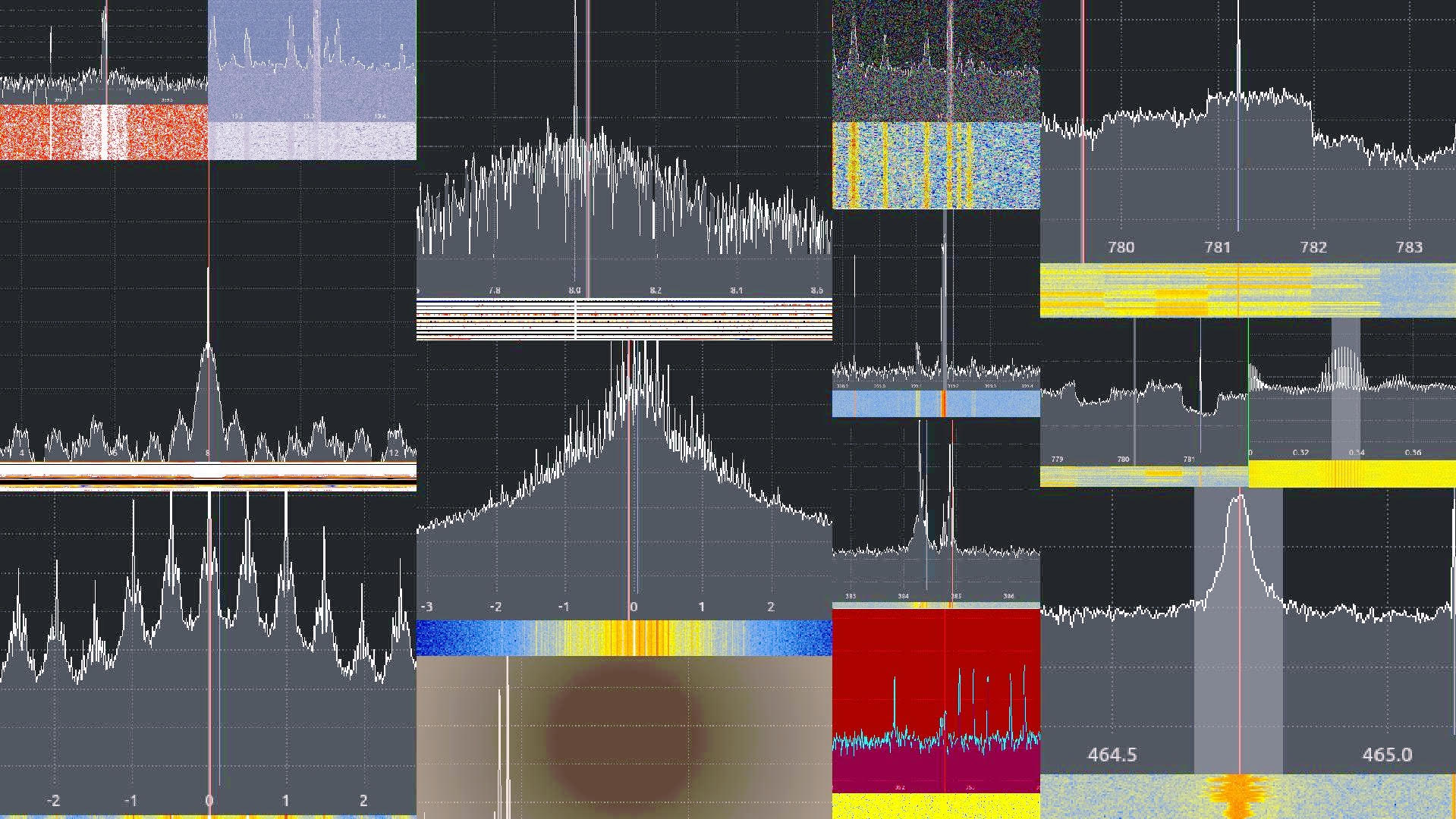
Show 1113: FOSSIL///NOISE by Fabiana Gibim for Wave Farm

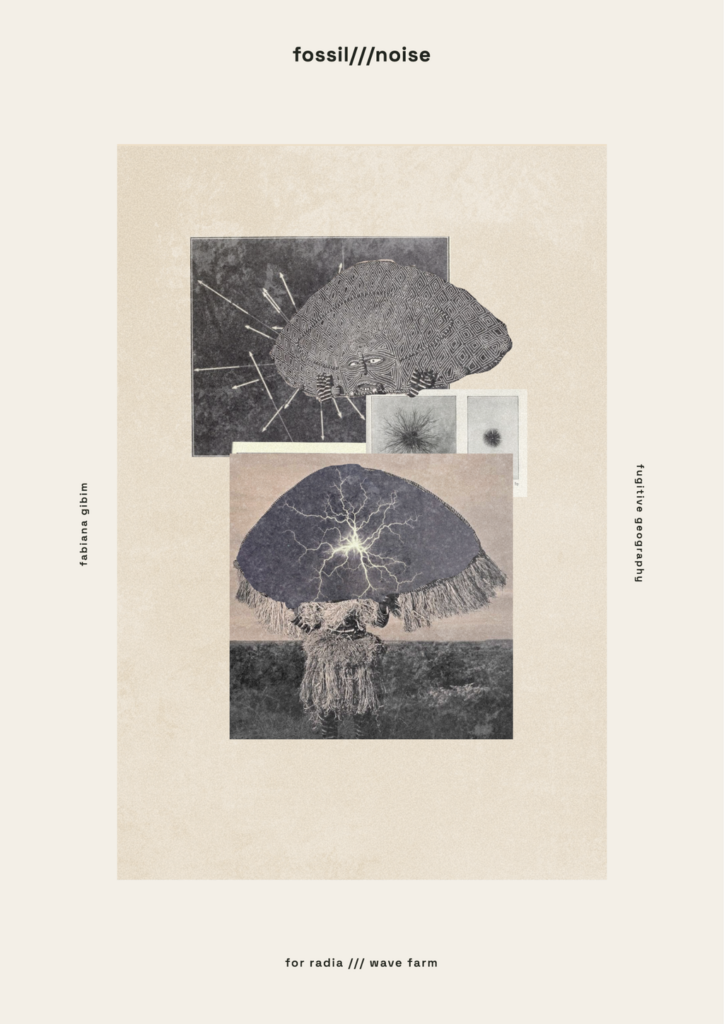
An archive on the regulatory sense offers two shapes to live in: the grid, discrete, indexed, metric, the space of the catalogue and the timestamp, where everything has a slot and a slot has everything, or the flow, smooth, continuous, borderless, the space of the algorithm that sorts by resemblance instead of by rule. The flow looks like an escape from the grid. It works instead as the grid’s next form. Control doesn’t need walls once it can modulate a stream. Smoothness rarely means freedom: it works as surveillance without edges. A technofossil, though, doesn’t live in either shape. It lives in the escape of a different dimension from them, a fugitive geography. Between any two points in an archive there are always more points, mysterious, semiopen parts that are somehow both separable and inseparable from their neighbors, a texture that is neither cleanly cut nor cleanly continuous. This is a mereotopology. A technofossil can then be a fragment that stays a fragment no matter which classification tries to absorb it. It works less like debris than like a lure. A technofossil behaves the way a living fossil like the Arctic lamprey hunts, offering part of itself as bait, a tongue that wiggles like prey, close enough to something known to be pulled in and named, then slipping the catch just as recognition closes over it, a catastrophe of recognition that keeps recurring. Fugitiveness works this way too, staying legible only to itself, moving in ways the archive’s capturing apparatus hasn’t learned to follow yet.

What makes this geography fugitive, rather than simply unmapped, is that the archive’s own attempt at closure produces it, from inside its own edges. Any finite set of rules, any index, any algorithm, any catalogue, throws off a remainder it cannot account for, an incompressible residue generated by the very act of trying to make the archive total. A technofossil behaves the same way a transmission behaves once it has outlived the station that sent it, an archive of doom still propagating after the system that made it has closed the file. It persisted, migrated onto substrates nobody built for it, the way certain organisms take a bomb crater or a subculture takes root in the wreckage of a project that already failed, an ecology of distortion. It can also work as an archive of the hypothetical, a wrong prediction still waiting in the record for a chance to act on the present again.

In an attempt to scavenge a technofossil in this mix, nothing is mourned back into coherence. It stays inhabited in its ruined form, activated at the exact pitch of its distortion, an affection for destruction, that distortion is still carrying a charge.

Here, we are interested in the incomputable residue that any act of transmission, capture, or archiving throws off, and in treating that residue as the actual terrain worth mapping. An archive that fully accounts for everything it holds has stopped being strange to itself. Fossil///Noise is built from the technofossils it can’t hold, the fragments left over once the filing is done.

Samples include:

André Damião – Deumaestrutura (from NARVA2) — 2022
Merzboom – un till ed #002 – The Nightmare Continues — 2024
Yuri Bruscky – Trava-Língua nº 3 — 2023
W. Halliday – Arctic Noise (WCS Canada Ice Sounds) — n.d.
W. Halliday – Fish Grunt Sachs — 2015
W. Halliday – Bearded Seal — 2016
God Pussy – Raízes em Transe (from Diáspora: Expressão Ancestral) — 2023
God Pussy – Contos de Sinhá (from Diáspora: Expressão Ancestral) — 2023
Jesse Paul Miller – Sounds of Secret Records — 1995/1998
Martín Rodríguez – Des Cloches À La Solidarité / Une Grande Onde, Entre Temps Perdus (Transmission Ecologies Ep.14) — 2022
Sbjtvo – Isla decepción (title track) — 2020
Budhaditya Chattopadhyay – Sonic Psychogeographies II — 2025
Ajítẹnà – Chuva (from Habitar as coisas) — 2023
Jordan Belson & Stephen Beck – Cycles — 1974
Len Lye (film) / Andrew Pask (soundtrack) – Tusalava — 2008
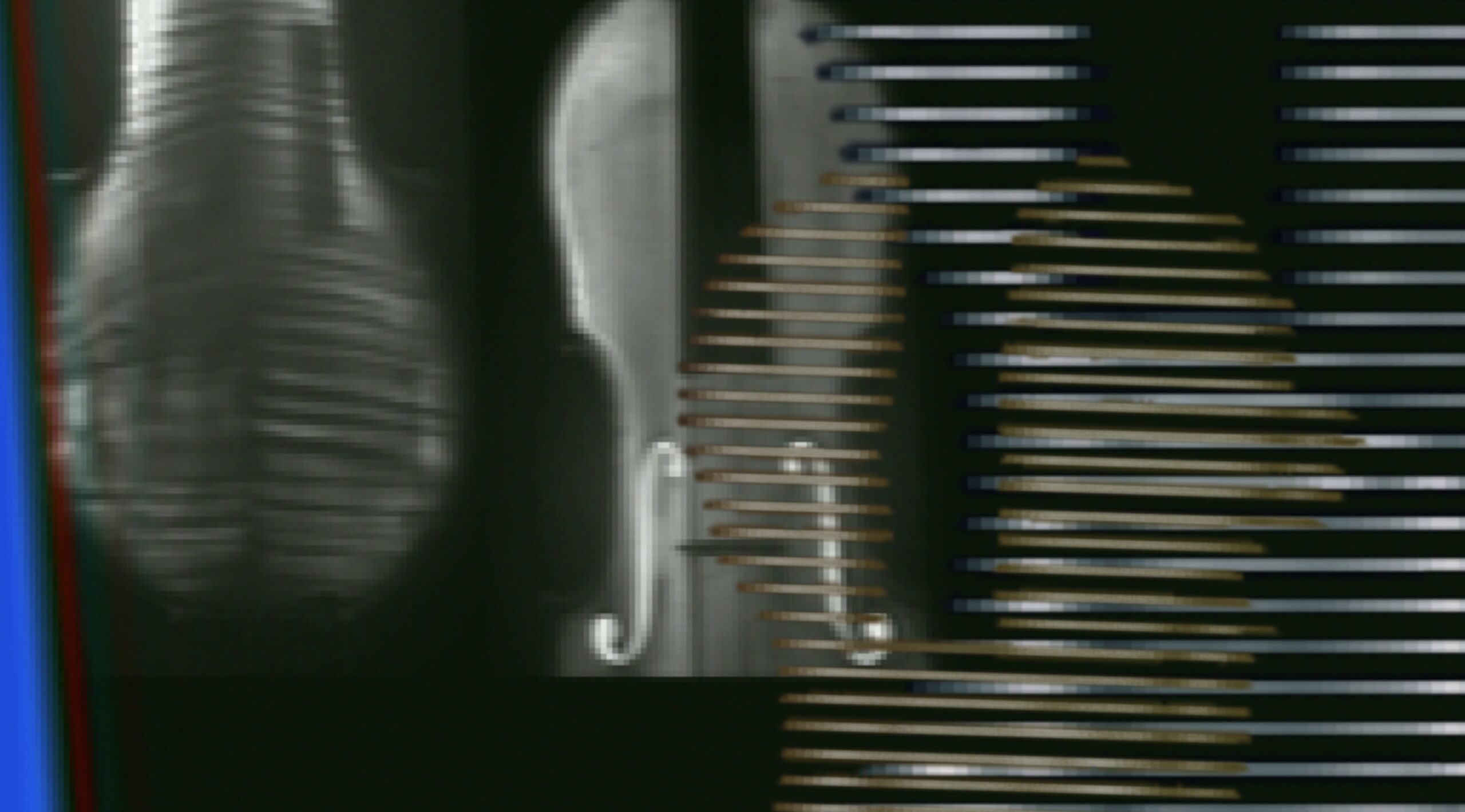
Takashi Ito – Thunder — 1982
Amy Ireland – Cultivating Darkness — n.d.
Class Divide (dir. Simon James) – Neolithic Cannibals Soundscape — 2024
Reza Negarestani – On the Practical Necessity of Having Demons (Session 4) — n.d.
Sadie Plant – Where to with Cyberfeminism (CTM 2014) — 2014

Show 1090: Startalk by Corey De’Juan Sherrard Jr. for Wave Farm

Startalk is an audio/visual radio art piece depicting a network and history of seven independent Black radio stations in the US through paint, chalk, and sound. This work was informed by an ever-expanding audio/visual system that converts absolute locations into frequencies based on prompts centering Black music and autonomous Black spaces/entities. The audio component for Startalk was first broadcasted on Wave Farm’sWGXC 90.7 FM in July 2025, and the visual component first showed at Sanman Studios in November 2025.

Corey De’Juan Sherrard Jr. engineers a developing system for composing songs and generating objects that respond to the deficit of black post-capitalist propaganda within a world culture. He is a School for Poetic Computation alum and graduated from the University of Houston with a BS in Digital Media in 2020. Sherrard has exhibited visual and sound works at Sanman Studios, Sabine Street Studios, Cleve Carney Museum of Art, Basket Books and Art, and the George Washington Carver Museum and Cultural Center and has performed at Contemporary Art Museum St. Louis, DiverseWorks, and Blaffer Art Museum. He was a recipient of the 2023 Jones Artist Award. He is a resident DJ and media manager at internet radio station Ice House Radio, spins jazz on his weekly radio show STEAM at KTRU-LP 96.1 FM, and is a member of experimental music group Essex Moor.

Show 1066: The Worst Radio Show in the World, part II by The Conduction Series for Wave Farm

This program was assembled by Conduction Series member Jimmy Garver, culled from 81 minutes of collaborative improvisational bursts created by the Conduction Series group.

The Conduction Series is a collaborative live radio broadcast produced by sound and transmission artists across the Americas on Wave Farm’s WGXC 90.7-FM Radio for Open Ears in New York’s Upper Hudson Valley. The collective comes together on the first Friday of every month at 3:02pm ET using custom-made software. Emphasizing live radio, interactivity, and media archaeological methods, the series explores themes of migration, noise, feedback, speculative fiction, transmissive theatrics, and recreational aesthetics. Members include: Betsey Biggs, August Black, Peter Courtemanche, Florencia Curci, Jeff Economy, Anna Friz, Jimmy Garver, Maximilian Goldfarb, Virginia Mantinian, and Rodrigo Ríos Zunino.

Show 1020: May It Come by Gregory Whitehead for Wave Farm

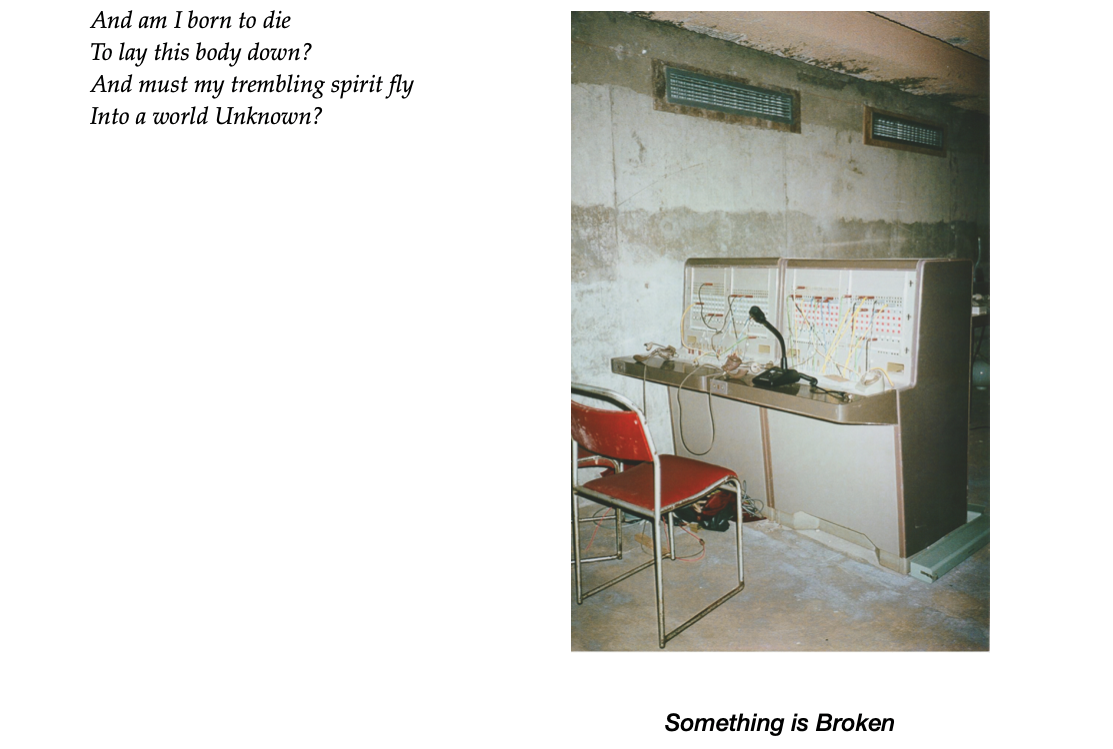
Photo of an obsolete telephone switchboard with a red chair in a concrete walled room.
Photo credit: Patrick Harkin, used with permission

With a title that descends from a well-known passage in the Tibetan Book of the Dead, May it come that the sounds of the bardo shall be known as one’s own sounds, the piece opens with an improvised DIY ventilator that fails to sustain my bravewaves, waves that eventually flatline into a heavily decomposed electromagnetic soup. Then comes a freely associative consideration of the Beefheart Affliction; the dangerous game of creating schizophonic monsters; the compost heap of radio’s intrinsic entropy and instability; the creative possibilities released through the fractures of a broken subjectivity; a synthetic voice ripened, to the point of bursting; a piece of flesh that we shall call Figgy Pudding; a bit of brain beneath a fingernail; a scratched radio thanatophony; and a pair of eyes reflecting a Hegelian Night that becomes —- awful.

Gregory Whitehead: Artist, writer, radiomaker, text/sound poet, singer of tales, playwright and media philosopher. Since his first tape and radio experiments made during the 1980s, he has created a long list of radio plays, hybrid documentaries and acoustic adventures for the BBC, Radio France, Deutschland Radio, Australia’s ABC, NPR and other broadcasters. Often interweaving documentary and fictive materials into playfully unresolved narratives, his aesthetic is distinguished by a deep philosophical commitment to radio as a medium for poetic navigation and free association. In his voice and text-sound works, he explores the tension between a continuous pulse and the eruption of sudden discontinuities, as well as linguistic entropy and decay.

Whitehead’s plays have won numerous awards, including a Prix Italia for Pressures of the Unspeakable, a Prix Futura BBC Award for Shake, Rattle, Roll and a Sony Gold Academy Award for The Loneliest Road, which was described by the jury as “a master class in sound”. His 2005 BBC production of Normi Noel’s play No Background Music, featuring Sigourney Weaver, also received a Sony Gold Academy Award. On the Shore Dimly Seen, a “boneyard cantata” enquiry into no-touch torture, was short-listed for the 2015 Prix Italia.

Whitehead has experimented and collaborated within acoustic theatre, puppet theatre, dance theater, installations and mixed media cabaret. In film, he wrote the script and played the main character Walter Sculley in the 2003 docufiction, The Bone Trade , later becoming the centerpiece for an installation at Mass MOCA. Over the past several years, he has contributed voiceworks and sound to two experimental documentaries: Awareness and Lift Up Your Voices, by Arttu Nieminen.

Co-editor of the pioneering anthology Wireless Imagination: Sound, Radio and the Avant-Garde (MIT Press), his philosophical essays and hybrid speculative fictions have appeared in a wide variety of publications. A selection of writings has been published as Almanach de plaies insensées. Since 2012, he has published online exploratory researches within the context of an ever-mutating Desperado Philosophy.

Show 996: Three Rules of Discipline and Eight Points for Attention by Hali Palombo for Wave Farm

“Interval Signals” are short pieces of musical phrasing, a sound effect or recorded speech that shortwave radio stations use to “introduce themselves” when broadcasting. The signals announce the start of a broadcast and create an identifiable touchstone for listeners old as well as those hearing the station for the very first time. Three Rules of Discipline and Eight Points for Attention (named for the title of China radio station’s Voice of the Strait’s highly recognizable interval signal) is a work that restructures interval signals from eight different countries into miniature compositions played on instruments and in styles that are significant departures from their original form.

Hali Palombo is a composer, visual artist, and filmmaker from Chicago, Illinois. Born in Northfield, Minnesota, she has had a natural curiosity about the Midwestern United States since a young age. Her work often weaves the absurd and mundane beauty of Illinois into her records, short films, drawings, and paintings. Palombo is an avid practitioner of “plunderphonics”: sampling existing musical/aural works and intertwining them into something brand new, whether its shortwave radio and CB radio samples, wax cylinder audio, or field recordings taken from Midwestern points of interest. She also draws great inspiration from endless adventures around the country—be they on Google maps or in her car—often photographing, filming, or drawing her findings.

Show 972: Variations on a Topography by Lia Kohl for Wave Farm

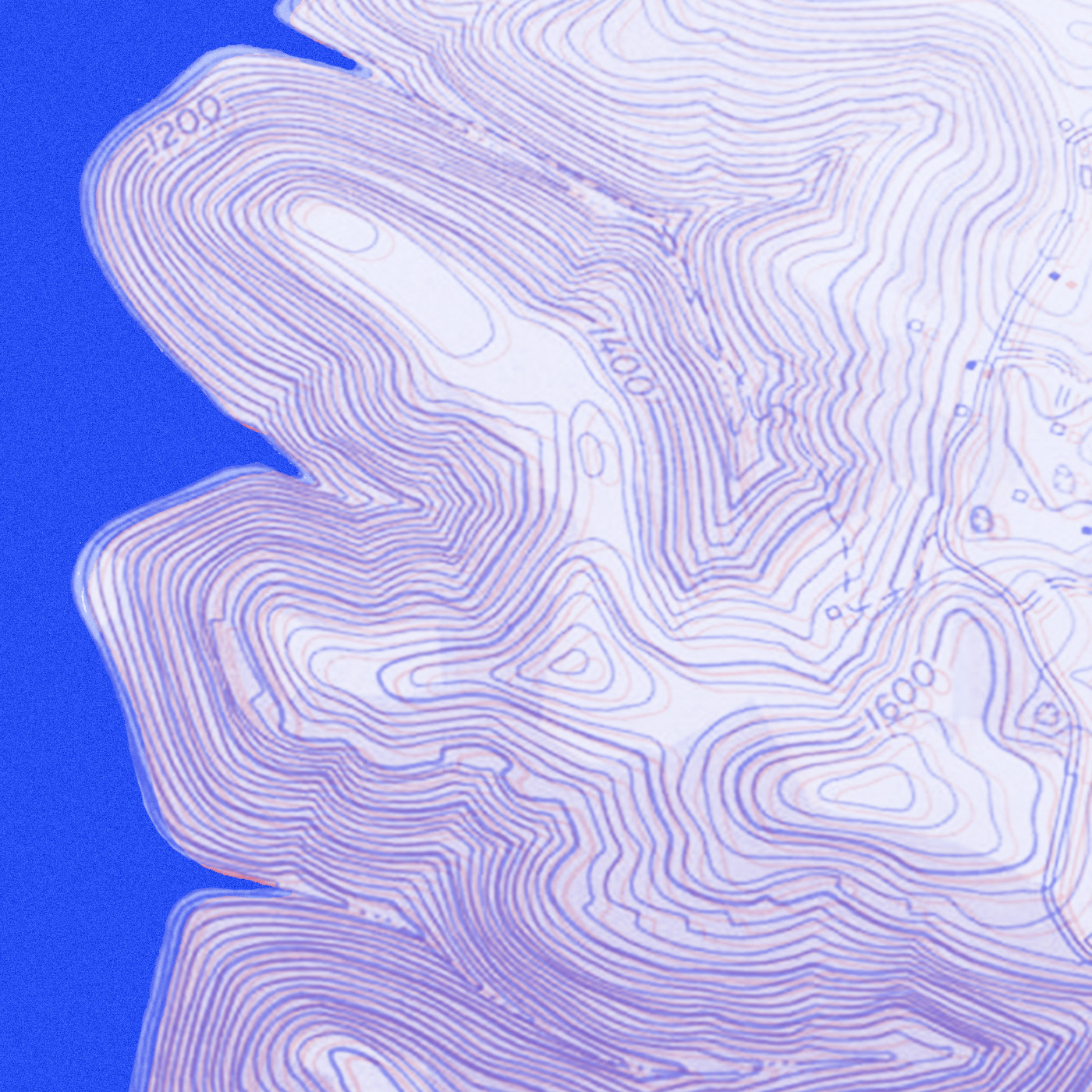
Variations on a Topography is constructed in stratified layers, each containing a recording of a full scan of the AM/FM spectrum from bottom to top and back down again. Tuning through the spectrum in the same place every time, Kohl charts a map of her specific signal, showcasing the geographic specificity of radio and drawing out its topography with additional musical sounds. Cello and synthesizer highlight moments of clarity and static, creating a counterpoint ruled by the dichotomy between them. These “signal sweeps” also offer a sedimentary view of time, capturing multiple 28 minute sections of what would otherwise be completely ephemeral sounds. The recordings, taken over the span of a few months, speak in various ways to the passage of time – the weather gets colder, traffic patterns shift, wars break out. The signal, like a ghostly mountain range, hovers around us.

Lia Kohl is Wave Farm’s fall 2023 Radio Art Fellow. She is a composer, cellist, and sound artist based in Chicago. Her wide-ranging practice includes solo composition and performance, installation, improvisation, and collaboration. Kohl tours nationally and internationally, working in theater, jazz, rock, and experimental contexts. Her work centers curiosity and patience, an exploration of the mundane and profound possibilities of sound.

Show 954: Conversations with My Deepfake Dad: Conversation One by Sarah Sweeney for Wave Farm

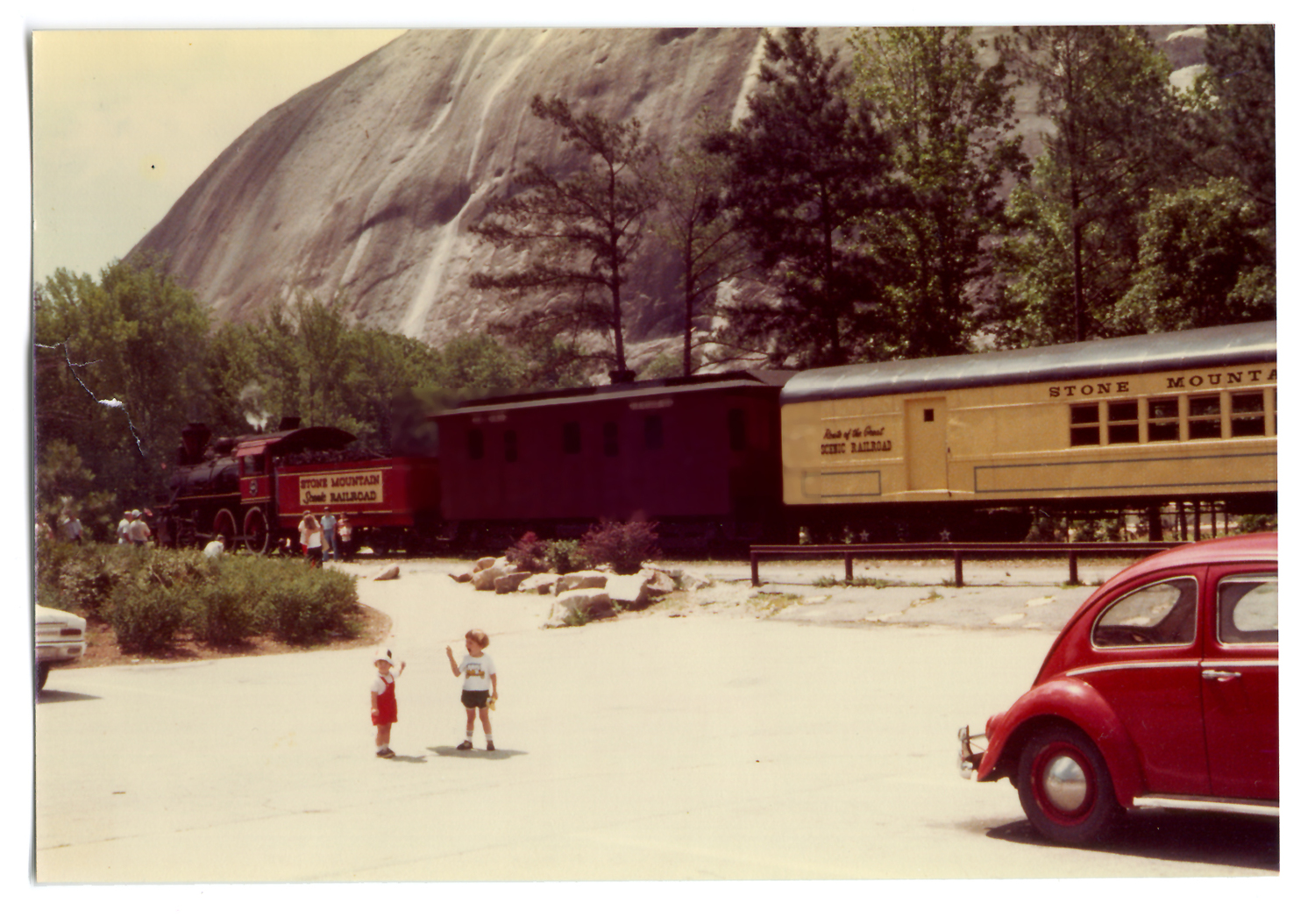
A photograph from the 1970s with two children standing in front of a passing train with part of a red Volkswagen bug in the foreground and mountains in the distance.
Image courtesy Sarah Sweeney.

Sarah Sweeney’s father died when he was forty-four and she was seventeen. When Sweeney turned forty-four, she wanted to talk to him again. She contacted Resemble AI, a company that creates clones of voices using machine learning, and they worked together to create an AI model of her father’s voice. When this model was completed Sweeney was able to type and speak words into the interface and hear him speak. Conversations with My Deepfake Dad is a series of six conversations created through Sweeney’s interactions with this audio deepfake of her father.

Sarah Sweeney received her BA in Studio Art from Williams College and an MFA in Digital Media from Columbia University School of the Arts and is currently Associate Professor of Art at Skidmore College. She is the creator of The Forgetting Machine, an iPhone app commissioned by the new media organization Rhizome. Her work has appeared nationally and internationally in exhibitions at locations including the Orange County Center for Contemporary Art, the Los Angeles Center for Digital Art, the New Jersey State Museum, the Black and White Gallery, and the UCR/California Photography Museum. Sweeney is a 2023 Wave Farm Media Arts Assistance Fund for Artists grantee for her project Conversations with My Deepfake Dad. https://www.sarahelizabethsweeney.com/

Show 946: Comfort Noise by Iru Ekpunobi for Wave Farm

“I have made a mark, and I do not know whether I am drawing or writing. I am thinking about marks and how they collect on a surface. I have accumulated marks, and I believe that this accumulation is at once a drawing, a text, and an archive.”. –Steffani Jemison

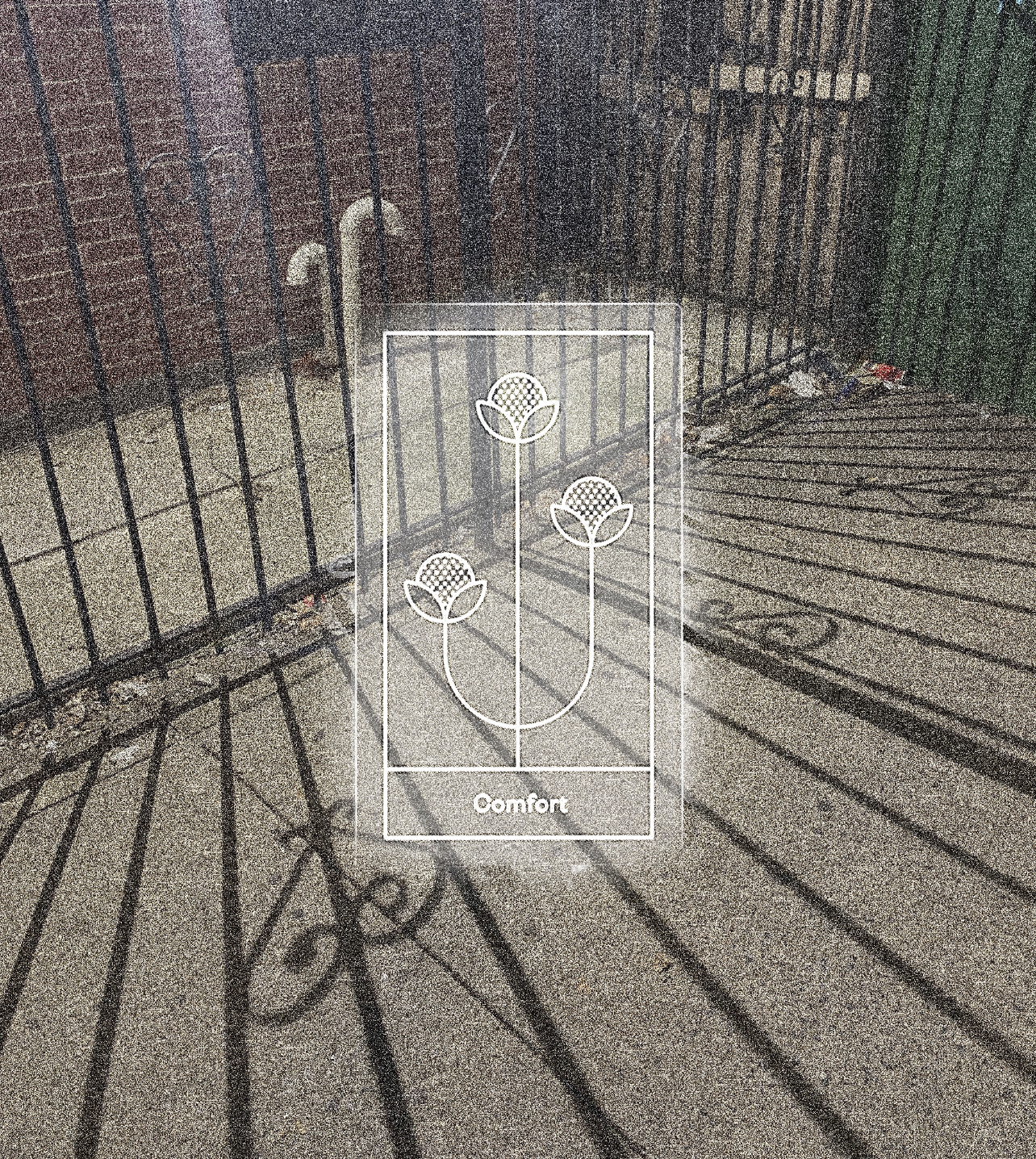
Writes Ekpunobi, “Comfort noise, or comfort tone, is synthetic background noise used in radio and wireless communications to fill the artificial silence in a transmission in which low volume levels are ignored by the transmitting device. In a system that disregards sound under a designated threshold, the absence of that sound must be reintroduced to ‘comfort’ the listening ear.

Drawing on Saidiya Hartman’s process of critical fabulation, comfort noise reintroduces speakers and practitioners of love, freedom, and memory in conversation with one another. In this sonic third space, audio samples originating from 1976 to 2023 not only coexist, but collaborate. ”

playlist:
Free, Deniece Williams (1976)
Relation, Anaïs Maviel (2018)
Speaking Freely, bell hooks (2002)
welcome, i are u (2023)
Iru’s Introduction, Bongo Herman (2022)
I Love Myself When I’m Laughing…And Then Again When I’m Looking Mean and Impressive (Zora Neale Hurston Tribute), Imani Uzuri (2016)
DNA Activation, Witch Prophet (2022)
Neptune Frost Q&A: Techno-Spiritual Overtones, Neema Githere + Saul Williams (2022)
Creative Matriarchy, Shantrelle P. Lewis (2022)
Slow tv, Thomas Hellum [Invisibilia Podcast, Season 7 Episode 5] (2021)
Hvnli, KeiyaA (2020)
Theater of the Black Church, Serpentwithfeet [reinventing gospel with complex visions of gay black love] (2018)
Neptune Frost Q&A: Encryption, Saul Williams + Anisia Uzeyman (2022)
How do you preserve freedom?, Anisia Uzeyman (2022)
blessings mantra, iru ekpunobi (2023)
Happy Birthday EmmaB, KillMovesNate (2016)
Othership 23, KMNate + MC Maggley + Aleon + Angel (2023)
Grandma E’s Wishes, Esther Igboko (2019)
Can I Hold The Mic (interlude) + Stay Flo, Solange (2019)
The Phone is a Confessional, Miss Cleo (2022)
Are We African Gods or African American Gods?, Jordan Gallimore + Kristin Dodson [Flatbush Misdemeanors, Season 2 Episode 4] (2022)
Gladys is With Me Right Now, Shantrelle P. Lewis [In Our Mother’s Gardens] (2021)
Grandma E’s Wishes: Remixed, Esther Igboko (2019)
We Wear The Mask / That Survival Apparatus, Maya Angelou (1988)
HAHA, Charlotte Adigéry + Bolis Pupul (2022)

Iru Ekpunobi is Wave Farm’s spring 2023 Radio Art Fellow, a deep listener, DJ, and audiofuturist. A recent graduate of New York University, Ekpunobi began their journey in FM radio as an DJ and show host at WNYU 89.1-FM, where they synthesized Black musicology, revolutionary history, and futurist transmission on a weekly, 90-minute broadcast. Culminating in their undergraduate thesis, Ekpunobi launched Third Space Radio, a digital media project and community radio station exploring sonic transmission as a ‘third place’ where community, education, and love can persist.

Show 920: Co-regulating the spectrum: Meanwhile, the wave by José Alejandro Rivera (proxemia) for Wave Farm

    I have undone the sob of the lost echoes…
    I have the deep infinite playing in my hands

    Become the caress. I don’t want you to limit
    your eyes in my body. My road is space.
    To travel me is to flee from all paths…
    I am the dancing imbalance of the stars.

    excerpts from a Julia de Burgos poem entitled, Mi senda es el espacio / My Road is Space

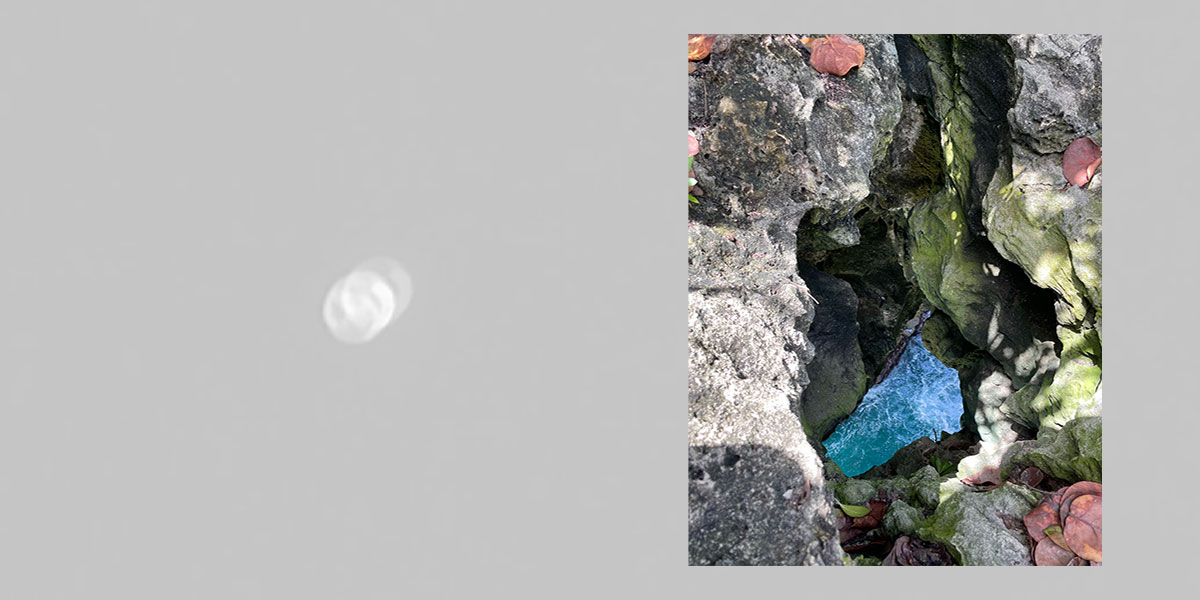
Writes Rivera,“Co-regulating the spectrum: Meanwhile, the wave is a radiophonic river of shifting reflections across neurodivergence and consciousness studies, radio and radar via the electromagnetic spectrum, language and communication, ufology and ET lore, and diasporic musings regarding the political and cultural history of Puerto Rico. Through a dense assemblage of sound design and field recordings, and cut-up bilingual samples from poetry, personal reflections, interviews and archival documentaries, the electromagnetic landscape becomes an imagined extrasensorial, polymorphic, carrier of consciousness; a pulsating presence that is inhabited, and that inhabits, in a myriad of Other ways.

What do you mean when you say “spectrum”? What of “being on another wave-length,” or “the same frequency”? Like tuning a radio, bats from a cave, or flying saucers from the deep waters beneath the island, possible meanings emerge via aqueous transmissions and various slippages of language and meaning. Moving between English and Spanish, the piece utilizes common tropes such as contacts with extra-terrestrials, and autistics and other neurodivergent minorities as aliens with the felt experience of being an other and being othered. At the same time, the piece references a 1901 US Supreme Court ruling (Downes vs. Bidwell) that, in response to categorizing shipments for tax purposes, determined that Puerto Rico and the “new” island territories like Guam and the Virgin Islands were “inhabited by alien races” and “foreign, in a domestic sense.”

In addition, the work is equally inspired by the radical Neuroqueer Theory of Dr. Nick Walker (she/her), an autistic trans scholar and writer, the diasporic longings of Puerto Rican poet, Julia De Burgos, Ida M. Kanneberg’s book, UFOs and the Psychic Factor, and the science fiction of Octavia Butler.

What does is it mean to experience communication differences, sensory sensitivities, or other ways of being? How might these communication differences serve as opportunities to experience time and space differently and/or connect in other ways? How can a bodymind listen to, regulate, and communicate with itself, others, and the environment? Do bodyminds receive and transmit signals to and from beyond the local, and like radio and radar, can the diasporic experience be related?

At times, the listener’s attention is signaled outwardly towards the stars through ominous drones and radio feedback. Simultaneously, a notion of embodiment and grounding is alluded to with the samples of yoga nidra and tai chi explanations, and sounds of shelling habichuelas (Puerto Rican beans) recently grown in Vermont. Woven throughout the piece are field recordings captured while camping across the island in the July of 2022. Serving as textural markers and place-holders of memory, the recordings feature bomba performances, conversations, city ambience during an apagón (black out), and street protests, as well as various environments such as farms, forests, beaches, and caves.

Though a spectrum is defined as “a condition that is not limited to a specific set of values but can vary, without gaps, across a continuum,” the piece ultimately lies in the curious space between the gaps of the spectrum; among the edits, along the time shifts and losses, and across the possible waves and feeling frequencies of meaning and energy.”

Special thanks to: Wave Farm (Galen Joseph-Hunter and Tom Roe), Gregory Whitehead, Anna Friz, Joan Schuman, Neil Verma; Dr. Mel Houser, Sierra Miller, and the Neurodivergent Community of All Brains Belong VT; Vermont Art Council; and PR, the land and its people across the island and diaspora.

José Alejandro Rivera is a 2022 Wave Farm Radio Art Fellow. Rivera (he/they) is a Puerto Rican, Ohio-born artist, composer, designer, and researcher currently based in SW Vermont. Their layered, place-based practice is informed by a background in music, architecture, and tending land. Working through sound and space to draw on critical cartography, technological ubiquity, systems, and flows of temporalities, José creates evocative, experimental soundworks, geo-notational maps, sound design for podcasts and the moving image, and multichannel, audiovisual installations and performances. Visit https://wavefarm.org/radio/wgxc/calendar/mvfqk3 for more information.