Show 1011 – The revolution will not be digitalized (Radio Campus)

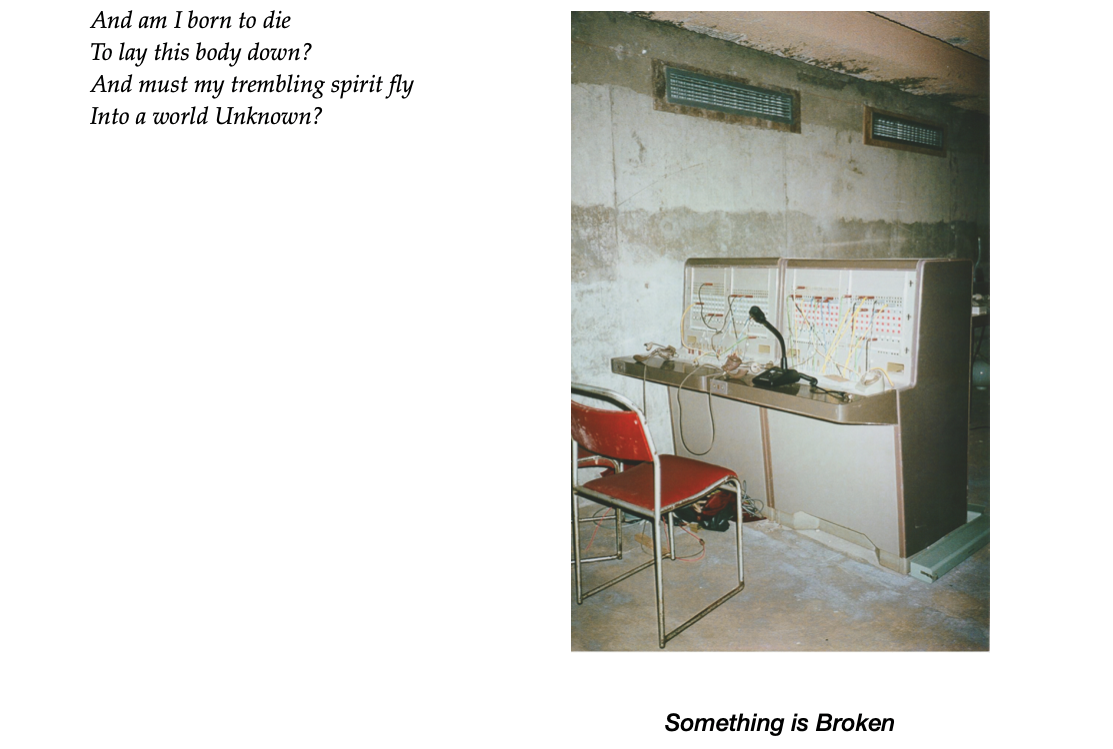
The tenth of may 2024 – Bodensee, a lake that seperates Germany from Switzerland. Above the dark and still waters, the majestuaous aurora borealis is visible in all it’s splendour. At the shoreline of the same lake, just a few hours before the electromagnetic solar storm carressed the earth, sound artists Gérald Wang and Sebastian Dingens gave the workshop The Revolution will not be digitalised, in which they returned to the roots of radio; analog technologie, live creation and electromagnetic communication.

In retrospect, the program sounds almost as a forecast of the upcoming events; With the use of any analog tools, we will explore the possibilities of the analog world, to make creative radio. From tape to vinyl, analog wireless transmission and echos from space. We will develop a setup, to perform together in a radio show. 25 radiopeople, professionals and amateurs, particpated. What you are about to hear is the almost intact registration of the final presentation, recorded on tape.

The revolution will not be digitalized – Learn how not to use a computer for making creative radio In this world, computers are everywhere.
It’s becoming very simple to broadcast from anywhere, using the tool everyone have in the pocket. But what if we try something else? With the use of any analog tools, we will enjoy the possibilities that offer the analog world to make creative radio. From tape to vinyl, to analog wireless transmission and echo from space. We will develop a setup, to perform together in a radio show.

Curation : Carine Demange for Radio Campus Bruxelles

Show 1010 : At the Garden (Radio Grenouille – Euphonia)


Sound arts in the garden

An action of collective practices with the Mutual Assistance Group bringing together people concerned by psychiatry (Léo, Parenthèses, Gem Marseille and Sentinelles-equality), with whom we have experienced many ways to take sound and listen in several gardens of Marseille.

The sound library made with several hands was staged and sound during a public restitution in the garden of the convent Levat by Julie Rousse, JB Imbert and Nelly Flecher.

Show 1009: Kaggen by pä (Radio Zero)

Kaggen is a demiurge and folk hero of the San people of Southern Africa. He is a trickster god who can shape shift, usually taking the form of a praying mantis but also a bull eland, a louse, a snake, and a caterpillar. This piece — inspired by this entity and informed by the elementary principles of neural synthesis — consists of a collage stemming from a series of recording sessions, employing both field recordings and phrases/ phonemes generated by a circuit of analogue components arranged in order to achieve self-generative feedbacks.
BIO:
pä (Paulo da Fonseca and Filipa Campos) started making music as a duo in Lisbon, back in 2015. The sound sources/ studying tools they took on consisted mainly of analogue synthesizers. From then on, pä has become a place of ongoing study, research and experimentation blending historically informed electroacoustic music, poetry, field recordings, graphic design, deep listening music and sound installations.

Show 1008: ZÄRTLICH GEHT DIE WELT ZUGRUNDE: STILL LOOKING FOR MEDUSA by NINA M. W. QUEIßNER & LINDA WEIß

radia season 52 – show #1008 (radio x) – ZÄRTLICH GEHT DIE WELT ZUGRUNDE: STILL LOOKING FOR MEDUSA – by NINA M. W. QUEIßNER & LINDA WEIß – playing from July 22 to July 28, 2024 –

ZÄRTLICH GEHT DIE WELT ZUGRUNDE: STILL LOOKING FOR MEDUSA
by NINA M. W. QUEIßNER & LINDA WEIß

ZÄRTLICH GEHT DIE WELT ZUGRUNDE: STILL LOOKING FOR MEDUSA is a tribute to corals, the sensitive critters of Gaia’s underwater realms, showcasing their profound ability to forge symbiotic relationships. Corals, as holobionts for zooxanthellae, epitomize interdependence; as reefs, they offer shelter to many marine creatures; as strong formations, they modulate the ocean’s ebb and flow into gentler currents. As the ancient ancestors of Medusa, they hold the spirit of nature’s often misunderstood and transformative powers. Medusa herself, a female figure of Greek mythology, represents the recurring theme of metamorphosis and the complex dynamics of power and seduction, banished to safeguard the male gaze.

Through a rich saturation of marine bioacoustics, noise pollution, mythic tones, Nina M. W. Queißner and Linda Weiß beckon you to immerse yourself in the deep, dark blue soundscape. Here, lose your way, welcome the feeling of otherness, and give yourself to the waves of yearning, and acknowledge cold shivers. Picture Medusa, whose symbiosis sustains the life that thrives beneath the waves.

underwater sound recordings: Coral reefs (Red Sea, Egypt), shipping traffic on the Main River and the English Channel of the Alabaster Coast; additional sound recordings: Baking soda in water, hot oil, ice cubes, crystal glass and water, tadpoles, rain on polyamide, etc., synthesizer, melodica, Sansa.

image: detail tentacular beings under salinity stress, space sound installation Looking for Medusa, Senckenberg Naturmuseum, Frankfurt a. M. (DE), 2023, photo by Linda Weiß.

concept/production: Nina M. W. Queissner

NINA M. W. QUEIßNER adopts a poetic and research-oriented approach using recording technologies and soundscape composition to explore the experiential dimensions of sound and listening, closely integrated with multidisciplinary concepts of landscape and environment. LINDA WEIß creates immersive installations that examine the dynamics of shared spaces, engaging in dialogue with more-than-human collaborators such as fungi and bacteria. Together, they work on the ongoing project LOOKING FOR MEDUSA that invites audiences on a journey through past and future mythologies. Starting with Ovid’s Metamorphoses, the project weaves together references from cosmologies and ecosystems to create an experimental habitat for speculative future coral creatures. Their audio-visual installation was first exhibited at the Senckenberg Nature Museum in Frankfurt am Main, Germany, in 2023. Follow their research on tempe-corals.tumblr.com

credits:
great many thanks to NINA M. W. QUEIßNER and LINDA WEIß for ZÄRTLICH GEHT DIE WELT ZUGRUNDE: STILL LOOKING FOR MEDUSA!

metadata:
ZÄRTLICH GEHT DIE WELT ZUGRUNDE: STILL LOOKING FOR MEDUSA by NINA M. W. QUEIßNER & LINDA WEIß
radia production: miss.gunst [GUNST + radiator x]
production date: july 2024
station: radio x, frankfurt am main (germany)
length: 28 min.
licence: (cc-by-nc-nd) NINA M. W. QUEIßNER & LINDA WEIß
www.radia.fm – www.radiox.de – www.gunst.info – tempe-corals.tumblr.com

additional info:
includes radia jingles (in/out), station and program info/intro (english)

links:
radio x & radiator x: www.radiox.de – www.radiox.de/radiator-x
GUNSTradio & radiator x: www.gunst.info – www.gunst.info/radiator
Looking for Medusa: tempe-corals.tumblr.com

pic:
Linda Weiß 2023

SHOW 1007. ESCUCHA/LISTEN (TEAFM RADIO WORKSHOP)

World Listening Day is an annual celebration held on July 18 to promote the importance of conscious and attentive listening in daily life. This event is organized by the World Listening Project, an organization dedicated to education and research on sound and listening.
The goal of World Listening Day is to raise awareness about the acoustic environment, fostering a greater awareness of the sounds around us and how they influence our lives and the environment.
This day also aims to highlight the importance of listening as a tool for understanding and connection between people, as well as for environmental care, helping to identify and mitigate noise pollution and other sound-related issues.
The celebration includes activities such as soundwalks, field recordings, workshops, concerts, and other forms of sound-related art and education.
This year, we went to the town of Escucha in the Bajo Aragón region, in the Cuencas Mineras district, to honor the name of the town and… listen.


Show 1006: shiny reflexions (Wiener Radia Kollektiv)

Erwin Reiter, Linz Foto: Barbara Huber

Another programme from the “Elements” series. Previous parts: Earth, water. This time it’s about metal.

“Heinrich, der Wagen bricht!” 
“Nein, Herr, der Wagen nicht, Es ist ein Band von meinem Herzen, 
Das da lag in großen Schmerzen, Als Ihr in dem Brunnen saßt 

Und in einen Frosch verzaubert wart.” 

Gebrüder Grimm – Der Froschkönig

The Viennese radia collective thematically revolves around the largest group of chemical elements. In addition to the collage of characteristic soundscapes, the group embarks on a fabulous and mystical search for clues.

A programme by (in alphabetical order):

Barbara Huber, Barbara Kaiser, Stefan Nussbaumer, Marian Potocar, Karl Schönswetter, Kaiser Wilhelm

Thanks to: Martina, Cuco

Recording Session at Radio Orange 94.0. f.l.t.r.: Karl Schönswetter, Barbara Huber, Barbara Kaiser, Stefan Nussbauer. Foto: Karl Schönswetter

spoken passages of text:

Peter Schilling – Metall (Song):

Metall Um meinen Hals
Metall Auf meiner Haut
Metall Wir fühlen nichts Doch uns geht es glänzend
Metall An meiner Hand
Metall Auf meinem Haupt
Metall Wir sind schön Wir sind blank polierte Menschen

A ballad poet (around 1887) – “Die Sage vom Erzberg” (The tale of the Erzberg):

Und wählet Ihr ein silbern Herz,
Wählt Ihr den gold’nen Fuß
Bedenkt, daß Silber und auch Gold
Gar bald Euch schwinden muß.
Doch wählet Ihr von dunklem Erz
Den festen Eisenhut,
Das Eisen, – ew’ge Zeiten währt’s,
Der Hut hält lang und gut.

Gebrüder Grimm – Der Froschkönig:

“Heinrich, der Wagen bricht!”
“Nein, Herr, der Wagen nicht,
Es ist ein Band von meinem Herzen,
Das da lag in großen Schmerzen,
Als Ihr in dem Brunnen saßt
Und in einen Frosch verzaubert wart.”

Ovid – Metamorphosen:

Latin:

Aurea prima sata est aetas, quae vindice nullo, sponte sua, sine lege fidem rectumque colebat. poena metusque aberant, nec verba minantia fixo aere legebantur, nec supplex turba timebat iudicis ora sui, sed erant sine vindice tuti.

German:

Als erstes entstand das Goldene Zeitalter, welches ohne einen Strafvollstrecker, freiwillig und ohne ein Gesetz immer die Aufrichtigkeit und das rechte Tun hochhielt. Strafe und Furcht gab es nicht, auch las man keine drohenden Worte, in Erz geschrieben; keine flehende Menge zitterte vor dem Spruch ihres Richters, sondern alle waren in Sicherheit ohne einen Rächer.


show 1005: Scratch (*Duuu Radio)

*Duuu Radio invites Théo Robine-Langlois, Mia Trabalon and Emilien Chesnot to broadcast a sound piece on the edge of poetry, recorded reading and scratching practice. SCRATCH lets you hear loops where punchlines, words or phrases shouted, sung or rapped are amalgamated. These vocal loops, polyphonic and sometimes abstract, combined with moments of reading and reflection around this practice, constitute the sound activation of the first tracks produced of the CROSS VOLUME vinyl, published by *Duuu Radio.

Project supported by the CNAP – Support for digital arts.
Recorded at *Duuu studio in Paris.

Show 1004: Stopcock (for Radia) by Clinton Green (Radio One 91 FM)

“Stopcock” was recorded July-August 2023, with malfunctioning Walkmans playing loose parts of themselves (speakers) rather than cassettes.

Bio:
Clinton Green makes something akin to music. He has been active in Australian experimental music since the 1990s as a recording and performing artist, curator, facilitator, writer and researcher. He has worked with unconventional approaches to guitars, turntables and found objects as tools for new forms of musical expression. He has also worked with dancers, theatre and performance artists in improvised collaborative situations, and has developed a performance practice incorporating projections. Clinton runs the Shame File Music label and writes on/researches historical and contemporary aspects of Australian experimental music. He has completed artist residencies in Taiwan (2015) and Cradle Mountain, Tasmania (2017), and has performed/exhibited in Canada, Germany, Spain, Japan, Taiwan, New Zealand, and throughout Australia. His current interests include using deconstructed Walkmans as beat-generating machines, and processing text via compositional procedures and cassettes.

ClintonGreen.com

Photo credit – Colin Hodson

Show1003 : The Jingle Book by Alan Dunn (TT Node)

During lockdown, artist Alan Dunn established ‘orchestras’ across seven dementia care homes, using everyday objects as instruments and tongue twisters as lyrics. To everyone’s surprise, these tongue twisters became a precious activity, with participants (and the artist’s 6-year-old grandson) creating new ones, reciting them in different styles and even mastering some of the world’s hardest ones! This new mix brings together versions from one of the care villages in Chester that was part of the longer Where the Arts Belong research project between Bluecoat and Belong. The recent publication The Jingle Book documents these tongue twister adventures that brought laughter and new verbal fluency to many during dark times: https://alandunn67.co.uk/jinglebook.html

Show 1002: Sasayaki o kiitekudasai (Usmaradio)


Vittoria Assembri is an experimental sound artist and independent researcher in sonic arts and public architecture. Her sound research is about field recording, sound objects, experimental music that reflect on the theme of marginal and liminal territory, in close relationship with urban plans and its crossing (human and non-human).

Her practice develops from site-specific deep listening, focusing on urban dynamics, sociocultural processes and public sphere, with which to rewrite an affective and political landscape of resistance.

Vittoria is currently in Japan since the beginning of May, where she is doing a live performance tour and working on a few artistic residencies’ projects (Kyoto Kinugasa Art Residence for Community in Kyoto, Aomori Contemporary Art Center, Lake Haruna Artist Residence). 

This track is a cut-up of her analog and digital recordings around Japan: Haruna and Fuji-san volcanoes, Kinugasa district in Kyoto, tatami’s and bonsai’s artisans in Okayama, izakayas in Shinjuku-Tokyo, Taka-san cellist, nightingale flooring of the Ryōn-ji Temple, shishi odoshi, radio fm-am interferences, jingles and alerts from megaphone loudspeaker, Aomori forest’s fauna, memorial songs from inhabitants and fishermen of the Haruna cadera, etc.


Usmaradio – Centro di Ricerca Interdipartimentale per la Radiofonia (CRIR) / Interdepartmental Research Centre for Radio Studies, is a workplace of The School of Radio to develop an innovative radio pedagogy. Workshops, work sessions, meetings, presentations of live performance as sections of the project. Produced by UNIRSM | Università degli Studi della Repubblica di San Marino. usmaradio.org / theschoolofradio.org / unirsm.sm