Tag Archives: Radio Panik

Show 599: Noisy Casseroles by Geronimo, lyl6baz, ArtU ( Radio Panik )

radia_radio-panik_noisy-casseroles

Mardi 12 juillet 2016, 8h du matin. Bruxelles, Quartier Européen, en pleine semaine de négociations autour du TTIP, ce traité entre les États-Unis et l’Europe discuté depuis des mois dans le plus grand secret. La population s’indigne et exprime son mécontentement à travers « TTIP Game Over », une série d’actions de désobéissance civile. 300 personnes se postent devant le lieu des négociations, casseroles et cuillères à la main, pour faire du bruit à l’arrivée des négociateurs. Pendant que le peuple bat la casserole, à quelques mètres, trois individus, situés dans un espace parallèle, créent un autre bout du réel. Quand un slogan est crié à tue-tête sur le trottoir, incitant la fin des négociations, la voix lointaine d’un objet perdu se remémore son terrible chemin vers une grande surface. Quand une cuillère frappe le tintamarre sur une casserole, un ongle gratte le dos d’une poêle striée.
Ce trio explore la situation sonore en portant ce réel dans une fiction radiophonique, comme témoin in situ et acteur de ce prolongement. Le dispositif utilisé reprend celui des activistes : casserole de métal, poêle en fonte, bidon d’huile, boîte de conserve, etc., tout ce qui peut faire du bruit. La démarche consiste à offrir une expérience sonore au public non présent sur place : celui qui écoute la radio, en l’occurence, ici, une radio libre bruxelloise, Radio Panik (www.radiopanik.org). Le collectif a travaillé sur un dispositif d’ustensiles de cuisine et de micros contacts permettant de nuancer les sonorités, de démontrer la portée de la casserole, cet objet de tous les jours et de tout le monde, dans sa dimension musicale.
La démarche est empreinte d’un esprit de liberté et d’une idée de réappropriation : les différents objets-instruments se sont passés de mains en main durant la performance et chacun a pu les expérimenter selon sa sensibilité. Cette pièce sonore est une improvisation.

Tuesday July 12, 2016, 8 am Brussels, European quarter, in the midst of a full week of negotiations about the TTIP, this treaty between the United States and Europe, which has been discussed for many months in deepest secrecy. The population reacts and voices their disapproval through civil disobedience demonstrations, known as “TTIP Game Over.” Three hundred people take up positions at the site of the negotiations, pans and spoons in hand to create a hullabaloo at the arrival of the negotiators. While the people beat their pots and pans, three individuals situated in a parallel space, create another version of reality. While a slogan is shouted loud enough to be heard across the land, encouraging the end of negotiations, the lone voice of a lost object looks back on its terrible journey towards a supermarket. While a spoon hits on a casserole, a nail scratches the back of a grill pan.

This trio explores the auditory soundscape, transporting this reality into a radiophonic fiction, as a witness in situ and as an agent of this ongoing event. The devices used are similar to the ones used by the activists: metal pans, cast-iron pans, oil cans, cans etc., anything that can make a racket. The objective is to recreate a sound experience for the public who is not on site: the radio audience, a community radio from Brussels, Radio Panik (www.radiopanik.org). The coalition has worked on a device based on kitchen tools and contact microphones creating fine nuances of sound, to demonstrate the significance of the pots and pans, these everyday tools for everyman, showcasing their musical dimension.

The proposed procedure is characterised by freedom and an idea of appropriation: the different objects-instruments were passed from hand to hand during the performance and everyone experienced them according to their own perception. This sound piece is an improvisation.

Geronimo | lyl6baz | ArtU
Radio Panik (Bruxelles)

Show 573: Other (Radio Panik)

Others
Librement inspiré de “Huis Clos” de Jean-Paul Sartre, cette création
radiophonique est animée par trois personnages principaux : deux
femmes et un son (la voix de Sartre inclue). Ces trois là échangent,
se rencontrent puis se détestent… Laissant place à la coalition ou à
sa dissolution. Il s’agit d’aborder cette manière dont l’autre nous
forme par son regard… et comment l’on souhaite alors manier ses yeux
qui nous forment. Et puis finalement abandonner… s’abandonner.

Ou peut-être que cette pièce aborde une autre triangulation celle de
deux langages cherchant à dessiner un code commun.

Entre le bruit et le silence, tracer un chemin vers la compréhension.
Ou alors il s’agit peut-être simplement de vous et de votre autre vous
Ou alors il s’agit peut-être de moi et de mon autre moi ….

Une réalisation d’Anne Lepère
Avec Lenka Luptakova
Mars 2016
Durée : 24’10

Carte Blanche : Radio Panik for Radia
Merci à Guillaume Abgrall, Leslie Doumerc, Pierre De JaegerOthers 2016

Show 549: Une ville sans cloches est comme un aveugle sans baston, un asne sans cropiere, et une vache sans cymbales

Une ville sans cloches

Alice Just / Flavien Gillié / Liv / Sylvain van iniitu Une ville sans cloches est comme un aveugle sans baston, un asne sans cropiere, et une vache sans cymbales.

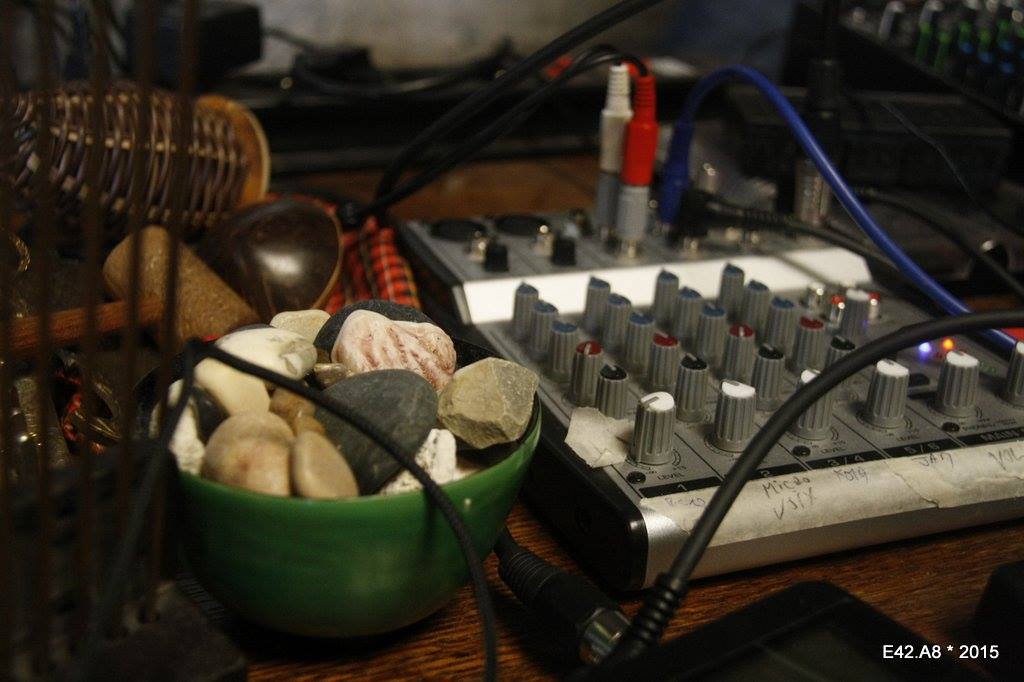
This edit tells the story of a day of improvisation at E42.A8, creation and meeting around an inspiring place, in the peace and quiet,

firmly,

at the farm.

file under : Improvisation, electronics, found objects, field recordings.
editing and mixing by Flavien Gillié.

E42.A8

Is first a place ;

A place where we try to create the conditions that make an improvisation possible, a pretext for meeting, but also an end in itself.

A place on the fence : not useful anymore for its previous purpose, and yet without a new and definitive form

To take the time ;

To think not in terms of composition and efficiency, but rather in terms of freedoms-constraints, texture-range, inside-outside, games-interactions, pulse-stretch, moments-intensity, diversion-obviousness, amazement-oblivion, silence-saturation, space-sound +++

Opening
https://www.facebook.com/E42.A8

Alice Just / Flavien Gillié / Liv / Sylvain van iniitu Une ville sans cloches est comme un aveugle sans baston, un asne sans cropiere, et une vache sans cymbales.

Ce montage retrace une journée d’improvisation chez E42.A8, création et rencontre autour d’un lieu inspirant, au calme,

fermement,

à la ferme.

file under : Improvisation, electronics, found objects, field recordings..
Montage, mixage, Flavien Gillié.

E42.A8

Est tout d’abord un lieu ;

Un lieu où nous essayons de mettre en place les conditions de possibilités d’une improvisation, prétexte à rencontres, mais aussi finalité.

Un lieu entre deux eaux ; qui n’est plus utile à sa fonction première ; et qui n’a pas encore trouvé de forme définitive ;

Y prendre le temps ;

Y penser non pas en termes de composition et d’efficacité, mais plutôt libertés-contraintes ; textures-tessitures ; intérieur-extérieur ; jeux-interactions ; pulsation-étirement ; moments-intensités ; détournements-évidences ; étonnement-oubli ; silence-saturation ; espace-sonore +++

Ouverture
https://www.facebook.com/E42.A8

Show 499: Meanwhile in Fukushima, Dominique Balaÿ + Suzy Vincens (Radio Panik)

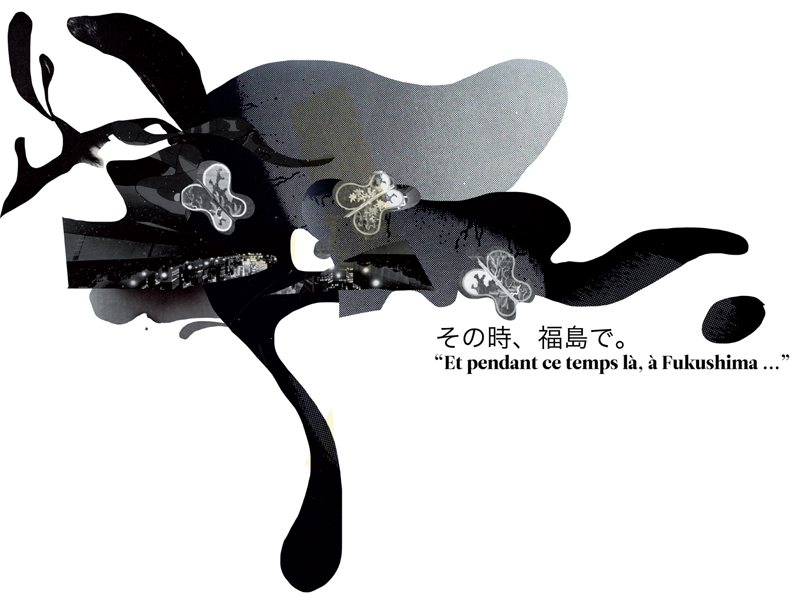
Discover Dominique Balaÿ’s project : Meanwhile in Fukushima.
Some tracks here to introduce you to his open sound and collaborative project in support to the japaneses after the nuclear catastrophe.
His « open sounds » creation is a library of sounds collected during his trip to Japan, as well as his proposal to invite artists respond to this material in the form of sound.
More here : http://fukushima-open-sounds.net


tracks :
Koji Nagahata, field-recording, fukushimas station
Philippe Petit, Daiichi Melts Down
Cristian Vogel, CandleSong
MERZBOW Richard PINHAS, FUKUATOMKILLUS
Yasuaki Shimizu, Sense-and-Nonsense
Koji Nagahata, field recording, hanamiyama top

Show 475: BE scape

BE scape
by VMW (Vincent Matyn-Wallecan) for Radio Panik
Wether you’re about to, already have or will be listening to this piece, BE scape is a collage of recordings made at various places in Belgium on different moments over the past four years.
Binche, Mechelen, Sint amands, Eupen, Namur.
Carnavals, bell towers, riverboats, music school courtyards are superposed and mixed together in the form of a sound stroll.
Adults interact on public places, children play, everything is peaceful, until now.
Thanks to Mélanie Godin, Cécile Ibarra and Jacques Darras.

Show 450: The Death of the Authors (Radio Panik)

The Death of the Authors, James Joyce & Virginia Woolf & Their Return to Life in Four Seasons.

Every year on New Year’s Day, due to the expiration of copyright protection terms on works produced by authors who died seven decades earlier, thousands of works enter the public domain – that is, their content is no longer owned or controlled by anyone, but it rather becomes a common treasure, available for anyone to freely use for any purpose.

This is a radio reading of a few pages of The Death of the Authors, James Joyce & Virginia Woolf & Their Return to Life in Four Seasons (a Constant remix). The Death of the Authors is a generative novel made with Python and nltk, based on texts by Virginia Woolf, James Joyce, Rabindranath Tagore, Elizabeth Von Arnim, Sherwood Anderson and Henri Bergson, some of the authors we welcomed on 1-1-12.

The selection of the texts used for this publication is very much influenced by the availability of works online. Famous authors are easy to find, English works and translations are often available as free e-books, thanks to an initiative such as The Gutenberg Project.

This publication was the first in a series. By creating a new work every year on Public Domain Day, Constant wants to give an incentive in making public works electronically available and rediscovering them.

Voices :

Spring : Peter Westenberg

Summer : Clémentine Delahaut

Autumn : Milady Renoir

Winter : An Mertens

Recording and editing : Pierre De Jaeger

More info : http://publicdomainday.constantvzw.org/

Show 426: Ultrasonic city by Wendy Van Wynsberghe (Radio Panik)

“What do you hear in the city? What sounds are only perceptible in the ultrasonic realm, where bats and crickets communicate? Sounds which are so high, our human ears cannot perceive them. This acoustic world becomes audible in Ultrasonic City and they get their place in the sounds of the city and the world.

Director and narrator:
Wendy Van Wynsberghe

Fieldrecordings:
Marion Guillemette

Edits : Vincent Mattyn and yours truly

Thanks for your patience, support and tenacity: Acsr, Carmello, Clementine & Carine

And thanks to
acclivity
hanstimm
roubignolle
aguasonic
dobroide
cajo
Corsica_S
FreqMan
fons
Jovica
pera
klankbeeld
for their sounds under various Creative Commons licenses from Freesound

2013 Creative Commons Attributions Non Commercial Share alike

More:

The urban sound world is quite dense. By extracting the ultrasound I wanted to reveal a sonic universe or even add another layer to the field recordings. When you hear only the ultrasonic layer of the city, you hear a place devoid of human voices. They simply do not reach that high. Some very quiet sounds get enhanced, such as rubbing your fingers together, frottements in French. In a park at sunset you hear the foraging bats, whilst at the same time, our human ears only register ducks, planes and other humans. A swimming pool gets reduced to splashes, you do not hear the children shriek nor play. Plastic, metal, water all produce ultrasounds.
With the help of ACSR, I was able to record the same place in the city ultrasonically and with high quality “normal” microphones. This revealing/unravelling/hiding of layers of sound I want to present in this documentary.

Show 403: ‘Don’t panic’ A live performance by Chris Farmer in the Panik studio

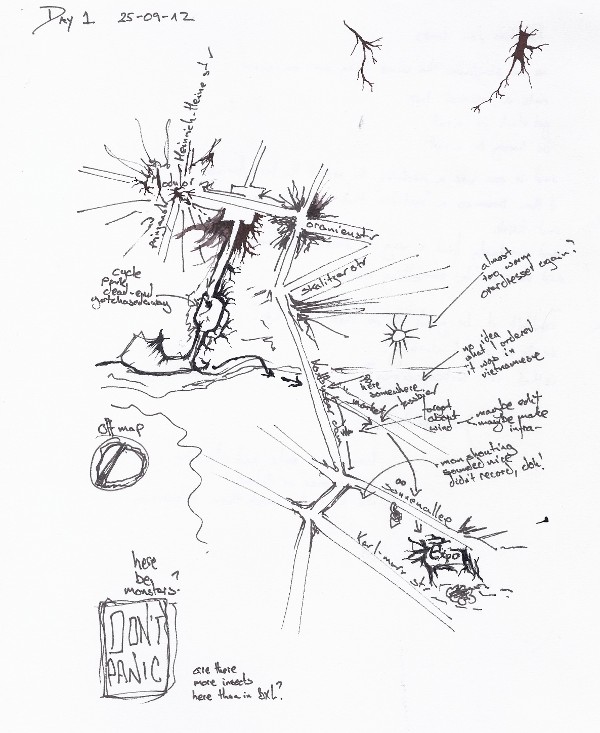
A live perfomance by Chris Farmer in the Radio Panik studio, based on a previous work he did a few months ago for a german galery (Expo Berlin). The work he did in Berlin resulted in an improvised performance which was an electronic, harmonic and visual echo of the surrounding urban space.

In Brussels, Chris farmer proposed to the Radio Panik listeners to recreate the poetic and harmonic experience of that particular urban landscape, which he recorded and translated with his sound recorder and coloured pencils.

**

Living and working in Brussels, Belgium, Chris Famer is of vaguely British origin and a self-taught gardener, linguist, musician and artist who composes and improvises in all of these media. Since the early 1990s, he has gardened, translated and created his way through France, Belgium and the UK.

His quest is to find poetry in noise and the botany of language, hoping to one day compile a formally chaotic and above all subjective monograph of the world that confronts him, and us, every day.

Since an early age, Chris Farmer has been influenced, or obsessed, by song and sound, and especially how it can be transformed or dismantled, as seen in the works of Anthony Milton, Michael Gira, Richard Skelton.

He currently experiments with the relation between languages, culture, sound, structure, horticulture and art, in various random combinations.

Chris Farmer’s website.

Chris Farmer’s mixcloud.

Chris Farmer’s soundcloud.

Berlin In Art’s blog about the performance in Berlin

Expo-Berlin galery

Chris Farmer pour une performance en live dans les studios de Radio Panik.

À l’origine de sa proposition, une invitation de la galerie allemande Expo-Berlin qui avait donné lieu à une écoute aux casques d’une composition, improvisée en live, résonance sonore, visuelle, électronique et harmonique de ce que lui a inspiré l’espace urbain berlinois au cours de ses déambulations.

À Bruxelles, et en studio, ce jeudi 13 décembre, Chris Farmer propose aux auditeurs de Radia de retrouver et de recréer la poésie et l’harmonie surgies de ce paysage urbain que son enregistreur et ses crayons de couleurs s’étaient amusés à traduire.

À propos de Chris Farmer :

Installé à Bruxelles depuis 3 ans, Chris Farmer est un autodidacte protéiforme : jardinier, linguiste, musicien et artiste, il compose et improvise à partir de ces différentes sémantiques. Depuis le début des années 90, il jardine, traduit et créée ainsi son chemin à travers la France, la Belgique et la Grande-Bretagne.

Faire émerger la poésie du bruit et la botanique du langage constitue une constante dans sa démarche qui vise l’espoir d’un jour, parvenir à recenser en une monographie, formellement chaotique, et par dessus-tout, subjective, notre rapport au monde.

Chris Farmer est influencé, sinon obsédé, par la chanson et le son, en particulier par la manière dont ils peuvent être déformés et démantelés, à l’instar des travaux d’Anthony Milton, Michael Gira et Richard Skelton.

Il expérimente actuellement les variations aléatoires qui peuvent résulter de la relation entre les languages, la culture, le son, la structure, l’horticulture et l’art.